Pyramid sets change the weight and the reps from one set to the next. You start light with more reps, add weight while reps drop, and finish heavy with just a few. It’s a fun way to train, and it works fine for beginners if you keep the weights honest and the form clean.
Maybe you’ve seen someone at the gym stacking plates set after set and wondered if you’re missing a secret. You’re not. Pyramids are one useful tool, not a requirement. Here’s how they work, how they compare with straight sets, and how to try them in a 2-3 day week.
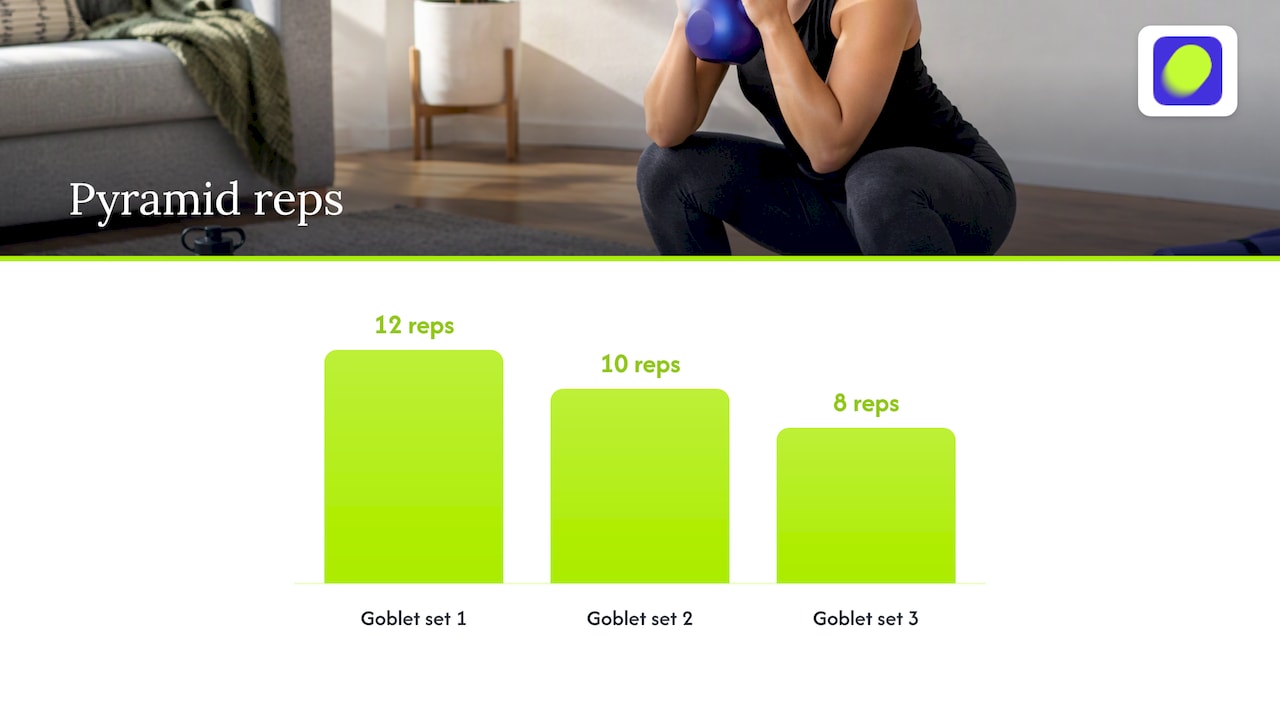
A pyramid set is a way to structure one exercise across several sets. In the standard version, reps decrease as weight increases from set to set. Picture the shape: a wide base of light, higher-rep work, then a narrow top of heavy, low-rep work.
Here’s a simple example for a goblet squat, using weights you’d adjust to yourself:
Some people then come back down the other side, adding reps and dropping weight. That’s a full pyramid, up and down.
A standard pyramid starts with light weight and high reps, then builds. A reverse pyramid starts with heavy weight and low reps, then decreases the weight and increases reps.
Research published in an American College of Sports Medicine journal found that linear and reverse pyramid training both increase total volume load and muscular strength. It also noted that people may enjoy the reverse version more because the session feels easier as fatigue builds.
So which should you pick? Here’s how we’d think about it:
Because ascending pyramids give you a built-in warm-up, we suggest starting there. It still doesn’t replace a few minutes of movement prep, so try our 5-10 minute dynamic warm-up before you touch the bar.
Straight sets mean the same weight and the same reps every set, like 3 sets of 10. One hospital health system describes them as the most common exercise variation, with 90 to 120 seconds of rest, and calls pyramid sets slightly more advanced because weight goes up as reps go down.
That “slightly more advanced” part is real. With straight sets you change one thing, usually the weight, when it’s time to progress. With a pyramid you’re changing weight and reps at once, and changing two variables at once makes progress harder to track.
Here’s the honest breakdown:
If you train 2-3 times a week, straight sets should be your base. Use pyramids on one or two lifts to keep things interesting. Not sure how many sets and reps to use in the first place? Our guide to sets and reps for new lifters walks through it, and the 3 sets of 12 explainer covers the notation you’ll see in programs.
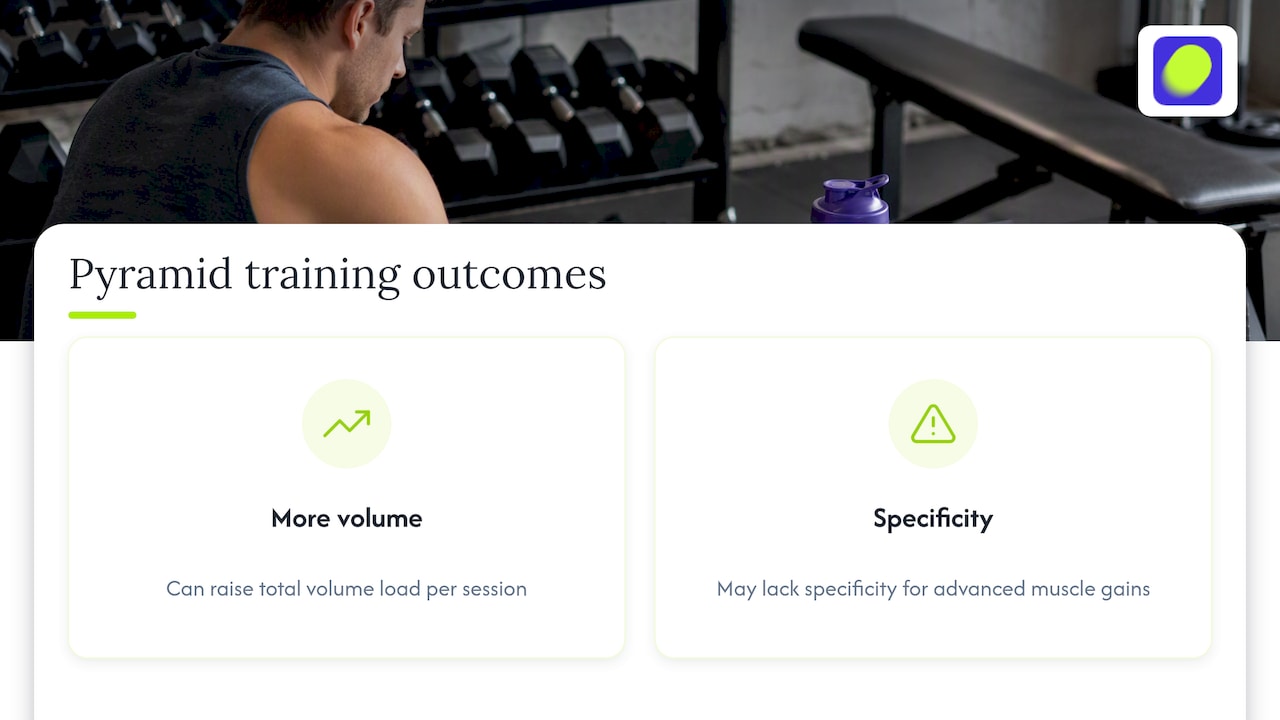
Yes, with realistic expectations. The same ACSM-journal paper explains that pyramid training can raise total volume load in a session, and total volume load has a strong relationship with strength and muscle growth. More quality work, done safely, tends to move you forward.
The limits matter too. Pyramid workouts might not be specific enough for advanced lifters seeking targeted muscle gains. That isn’t your situation as a beginner, but it’s a good reminder that you’ll likely outgrow any single method.
The takeaway: pyramids aren’t magic and they aren’t a trap. They’re a flexible way to add volume and keep sessions fresh. Consistency still does most of the heavy lifting. If you’re wondering how many reps drive muscle growth, our research-backed rep range guide breaks it down, and hypertrophy vs. strength templates help you choose a goal.
Safety comes first, and it’s simple. Here’s a step-by-step approach:
If you ever feel sharp pain, dizziness, or something that doesn’t feel like normal effort, stop and check in with a doctor or a qualified coach before you continue.
For the exercise selection, the Women’s Health trainer advice is useful: do only one compound exercise and save it for the finisher, with three to five isolation exercises for different muscle groups. We’d tweak that for beginners: keep most lifts as straight sets and pyramid just one or two.
Here’s a sample full-body day using the idea. The weights are yours to choose.
Repeat 2-3 times a week with a rest day between. When you can finish the top set with great form, add a little weight next session. Write your numbers down so you can see progress, even if the method changes the math a bit.
Prefer a split? Our push-pull-legs for beginners and beginner pull day posts show how to organize your week.
Tracking weights, reps and rest by hand can kill the fun fast. That’s where we come in. Onemor gives you coach-led workouts and guided sessions with sets, reps and rest timers, plus streaks, XP and tribe challenges so you keep showing up. You can start on the free plan and look at what Pro adds when you’re ready. If you’re just beginning, start strength training with 2-3 coach-led sessions a week, or follow our guided strength workouts.
They can be, if you keep the weight jumps small and your form tidy. They’re a bit more complex than straight sets, so use them on one or two exercises at first, not your whole workout.
No. Pyramid sets aren’t required to reach strength goals and work well as an occasional change of pace. Straight sets with steady progress get you there too.
Not necessarily. Studies reviewed in an ACSM journal found both styles improve volume load and strength. Beginners often feel safer with the regular version because the light sets warm you up first.
A common guideline is 30-60 seconds for moderate sets and 60-90 seconds for heavy ones. Take a bit longer if your form starts to wobble.