Push pull legs, or PPL, is one of the most practical ways to build muscle and strength, and it works for beginners and intermediates alike. If you have three days a week, start with a simple 3-day PPL rotation built around one main lift per session. If you can commit to four days, a 4-day hybrid gives you extra volume without burning you out. Either way, aim for roughly 10 sets per muscle group each week, the benchmark that keeps your training effective without overcomplicating things.
TL;DR:
- Training each muscle group around 10 sets weekly optimizes growth and strength without overtraining, whether spread across 3, 4, or 6 days.
- Push, pull, and legs workouts group muscles by movement pattern, allowing full recovery for each group and increasing training frequency effectively.
- Heavier loads of 80% or more of maximum strength promote better results, but consistent volume and rep ranges between 8 to 12 are equally critical for hypertrophy.
- Starting with a 3-day routine suits beginners or busy schedules, while intermediate lifters benefit from 4 or 6-day programs that enhance volume and frequency for better progress.
- Proper programming, progressive overload, and recovery strategies are essential to avoid stagnation and ensure continuous development in push pull legs training.
Push pull legs groups your workouts by movement pattern instead of by body part. Push day covers everything where you press weight away from you: chest, shoulders, and triceps. Pull day covers everything where you draw weight toward you: back and biceps. Legs day takes care of quads, hamstrings, glutes, and calves.
This grouping matters because it lets each muscle group rest while you train something else. Your chest gets a full break during pull and leg days, so you can train it hard again sooner without dragging fatigue into the next session. That’s the whole appeal of PPL: you get more frequency without more soreness stacking up.
A few reasons this split has stuck around for so long:
If you’re new to lifting, coming back after a break, or juggling a busy schedule, this split meets you where you are.
Good programming isn’t complicated, but it does have a few rules worth following closely. Here’s what actually moves the needle:
A large Bayesian network meta-analysis of resistance training studies found that higher-load, multiset programs rank best for strength, while multiset training performed at least twice weekly ranks best for hypertrophy. That means you don’t need to chase extreme loads to grow muscle. What matters more is showing up consistently and doing enough total sets.
The ACSM’s 2026 position stand on resistance training recommends training each major muscle group at least twice a week and cites approximately 10 sets per muscle group weekly as a solid benchmark for hypertrophy. A 3-day PPL typically hits each muscle once a week, so many lifters move to 4 or 6 days to spread volume across multiple sessions per muscle, supporting better recovery and growth.
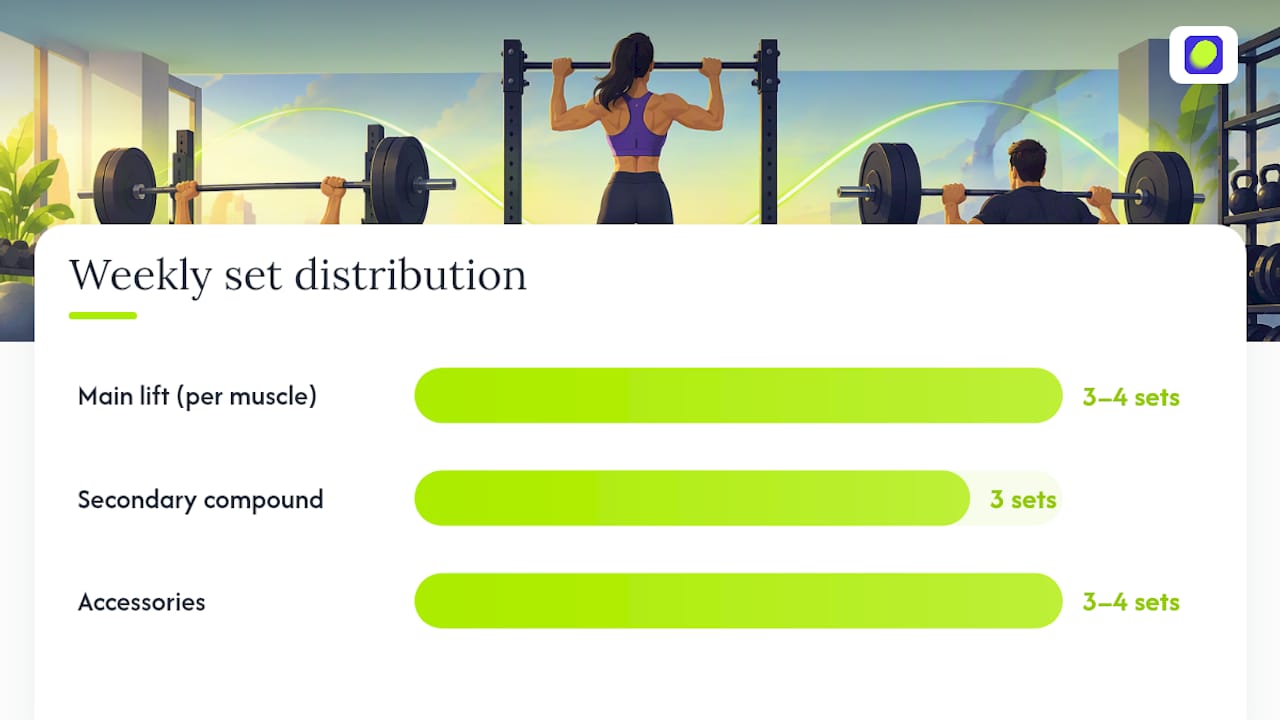
Here’s a simple way to distribute those 10 sets on a 3-day split: your main lift gets 3 to 4 sets, a secondary compound movement gets 3 sets, and one or two accessory exercises pick up the remaining 3 to 4 sets. On a 6-day split, you can split volume evenly, doing around 5 sets per muscle group on each of the two weekly sessions. For a full breakdown of how rep ranges affect your results, our guide on sets and reps for new lifters walks through the basics in plain language.
Picking a template comes down to how much time you have and how much recovery you need. Here are three that work well at different levels.
The 3-day starter template runs Monday push, Wednesday pull, Friday legs, with weekends off. It’s the most time-efficient option and a great entry point if you’re new to structured training or coming back after time away. Our piece on training three days a week covers why this frequency builds real strength without demanding a huge time commitment.
The 4-day hybrid adds one extra session, letting you either repeat a favorite day or split legs into a quad-focused and a hamstring-focused session. A common layout is push, pull, legs, then a second push or pull day, cycling which one gets the extra attention each week. This works well if your schedule allows four sessions but not six, and it gives you room to add volume where you’re lagging.
The 6-day classic PPL runs push, pull, legs, then repeats the cycle, training each muscle group twice weekly. This suits intermediate lifters who have built a base of strength and want higher frequency to keep progressing. The main risk here is overtraining, so keep accessory volume in check and watch for lingering soreness or dropping performance, both signs you need to scale back.
To choose between them:
Newer lifters are almost always better served starting with 3 days and letting consistency build before adding volume. Our guide on the 3-day workout split breaks down how to structure those sessions for maximum benefit early on.
Once you’ve picked a template, the exercises themselves matter less than doing them consistently and with good form. Still, some choices give you more return for the effort.
Push day works best built around one heavy press and a couple of accessory movements:
Our beginner shoulder workout has safe progressions if pressing overhead feels uncomfortable at first.
Pull day should balance a heavy pull with rowing and direct arm work:
If pull-ups feel out of reach right now, our pull-up progression plan gets you there in a few weeks, and our beginner back workout covers additional rowing variations.
Leg day needs the most variety since it covers the largest muscles in your body:
If squats feel intimidating early on, our beginner leg day routine ramps up intensity gradually.
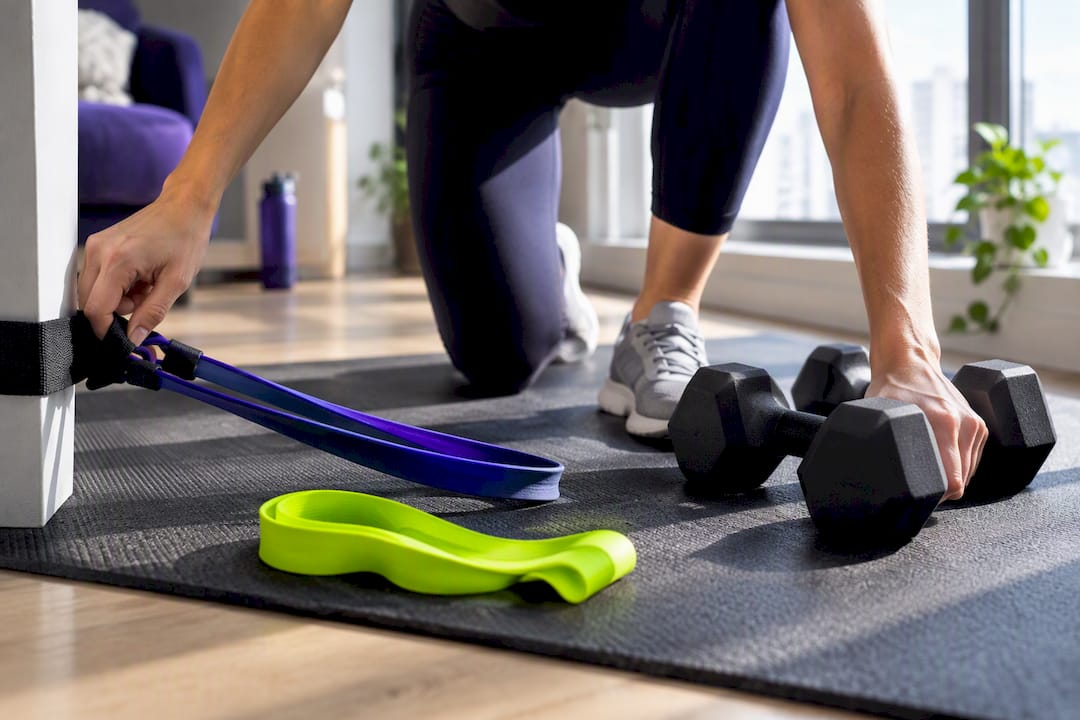
No barbell or gym access? Resistance bands and dumbbells cover almost every movement here. Bands substitute well for rows, presses, and pulldowns, and resistance training research shows hypertrophy happens across a wide range of loads as long as your weekly volume adds up. Our resistance band starter guide shows exactly how to set that up at home.
Pro Tip: Swap one accessory exercise every 4 to 6 weeks to keep sessions interesting without changing your main lifts, which is where most of your progress actually comes from.
Progress in PPL follows a clear order, and skipping steps is usually what causes frustration.
Watch your total weekly volume as you go. If you’re stuck around 6 to 7 sets per muscle group, look for a session where you can add one more exercise or an extra set rather than overhauling the whole plan.
A deload week, meaning a week of reduced sets and lighter loads, is worth scheduling every 6 to 8 weeks, especially once you move to a 4 or 6-day template. Signs you need one sooner include lingering soreness, dropping performance on lifts you were previously progressing on, or trouble sleeping despite normal habits.
If your progress stalls despite consistent training, check your form before anything else since technical breakdown often masquerades as a plateau. From there, try trimming accessory volume and putting more focus into your main lifts, which tend to drive the bulk of your strength and size gains anyway.
Recovery is where a lot of PPL progress is won or lost. The Physical Activity Guidelines for Americans recommend muscle-strengthening activity on two or more days a week alongside 150 to 300 minutes of moderate aerobic activity, and that broader activity supports how well you recover between lifting sessions. Beyond that, prioritize consistent sleep and eating enough protein and total calories to support the muscle you’re building.
A simple session structure keeps you efficient and reduces injury risk:
Common mistakes worth avoiding:
Pro Tip: If a session runs long, cut accessory sets before cutting your main lift. The compound movement is doing most of the work.
This guide was put together by Alb, who focuses on translating exercise science into routines people can actually stick with rather than abandon after two weeks.
Some fitness apps support exactly this kind of structured training, offering guided sessions with built-in sets, reps, and rest timers, so you’re never guessing what comes next mid-workout. Coach-led programs can walk you through push, pull, and leg days step by step, and progress tracking can show you when you’re ready to add a rep, a set, or more weight, matching the same progression order covered above. Following a PPL template with such structure removes the guesswork of planning it yourself.
Following a PPL split on paper is one thing. Sticking with it for months is another, and that’s where most people actually fall off. Onemor turns your push, pull, and leg days into guided sessions with built-in timers, so you always know your next set, your rest period, and when to increase load, without opening a spreadsheet.
Coach-led programs from trainers like Coach Branden, Coach Kayla, and Coach Jahson bring structure to exactly the kind of programming this guide covers, and tribe-based challenges give you people to train alongside, which makes showing up on a tough week a lot easier. You can start with the Free plan and explore guided PPL-style sessions right away, or check out Pro for expanded coach access and premium programming.
If you’d rather have a ready-made program matched to your goals and schedule, our program finder points you to the right fit in a couple of minutes.
The volume and frequency guidance in this article draws from the ACSM 2026 position stand on resistance training, a Bayesian network meta-analysis on load and volume, and the Physical Activity Guidelines for Americans for broader activity context.
Yes, PPL works because it groups muscles by movement pattern, letting each one recover fully between sessions while still training with enough frequency and volume. The ACSM position stand supports this structure, recommending each major muscle group be trained at least twice weekly with around 10 sets per week for solid hypertrophy results.
Push pull legs means splitting your training week by movement direction rather than by individual body part. Push day covers chest, shoulders, and triceps, pull day covers back and biceps, and leg day covers your entire lower body.
PPL and PLP are the same three workout types in a different order, and neither has a clear advantage over the other. Choose whichever order fits your schedule better, such as doing legs first if you find lower-body training draining and prefer it earlier in your week.
Yes, a 3-day PPL routine builds real muscle and strength, especially for beginners, since it hits every major muscle group once a week with focused, well-programmed sessions. It won’t provide quite as much weekly volume as a 4 or 6-day version, but it’s an effective and sustainable starting point, and the Physical Activity Guidelines support muscle-strengthening activity on as few as two days a week as a baseline.