Your beginner back workout starts with three to five exercises, two sessions per week, and sets of 8–12 reps. Harvard Health recommends starting with one set per exercise and building to three as your form improves. Here is a ready-to-use routine you can run today:
Aim for a couple of back-focused sessions per week for your first months. If a movement feels too hard, drop the weight, shorten the range of motion, or swap to the bodyweight regression listed in the exercise section below. Onemor’s coached beginner programs include built-in regressions and rest timers so you never have to guess.
Most beginners focus on visible muscles like chest, arms, and abs, often neglecting the back. This can lead to imbalances and issues.
Cleveland Clinic notes that back muscles control posture, trunk movement, and assist limb locomotion. Strengthening them reduces injury risk and improves how you move every day, from picking up a bag to sitting at a desk for eight hours. Weak back muscles are one of the most common contributors to chronic lower-back pain, especially in people with sedentary routines.
There is also a performance reason to start early. Beginners gain strength fast in the first few months, mostly through neuromuscular improvements: your nervous system gets better at recruiting muscle fibers before the muscles themselves grow significantly. That beginner phase is valuable for developing good movement patterns that will benefit long-term training.
The NSCA recommends that novice trainees start with one to three nonconsecutive resistance sessions per week to give connective tissues and the central nervous system time to adapt. Starting conservative is not timid. It is smart programming.
ACE’s EMG research confirmed there is no single best back exercise. Different movements activate different muscle groups, so a mix of vertical pulls, horizontal rows, and spinal extension gives you the most complete back development. Here is what to include and how to do each one well.
Purpose: Target the latissimus dorsi, the large wing-shaped muscles that give your back width.
Form cues:
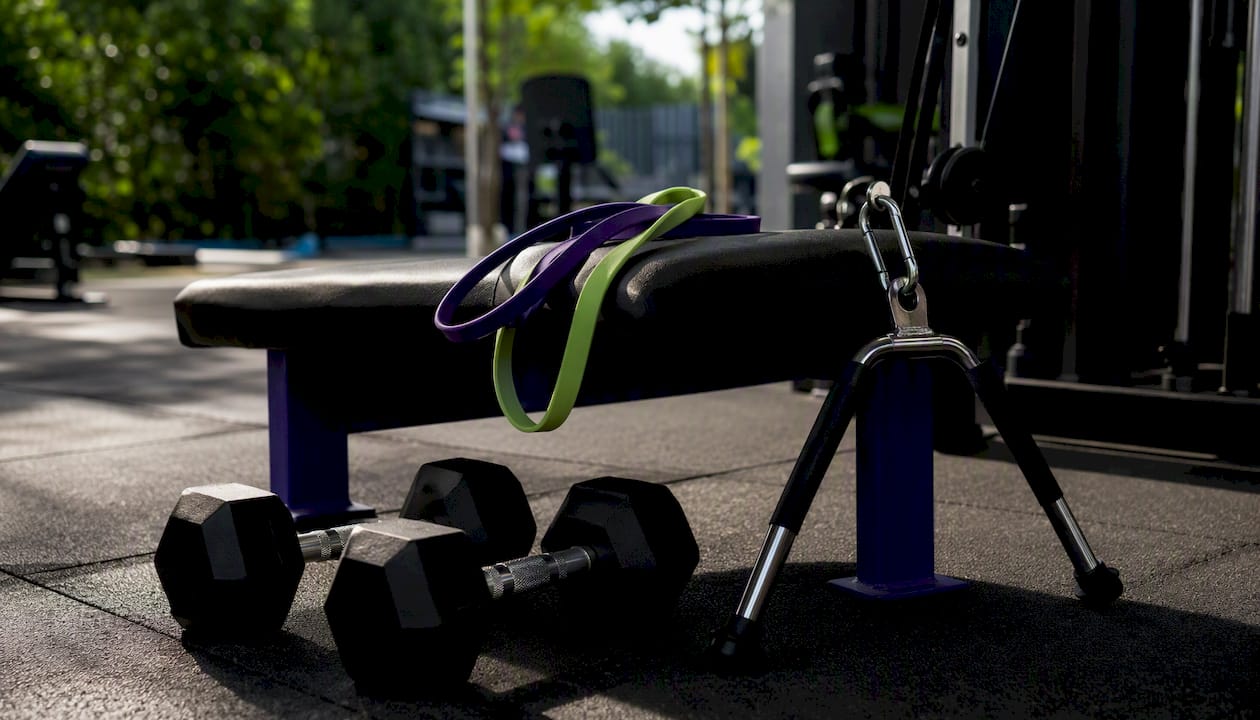
Regression: Use a resistance band looped over a pull-up bar for assisted chin-ups, or reduce the weight stack on a cable machine.
Progression: Add one rep per session until you hit 12, then add a small amount of weight.
Sets and reps: 2–3 sets of 8–12 reps
Purpose: Build mid-back thickness and strengthen the rhomboids, rear delts, and traps. ACE’s research found bent-over rows activate multiple back muscles simultaneously, including the mid-traps, infraspinatus, and erector spinae.
Form cues for seated row:
Form cues for one-arm dumbbell row:
Regression: Use a resistance band anchored to a door or post for seated rows. For dumbbell rows, reduce the weight and focus on the squeeze.
Progression: Add one rep per week, then increase weight by the smallest available increment.
Sets and reps: 2–3 sets of 10–12 reps
Purpose: Strengthen the erector spinae and glutes, which protect your lower back during all other lifts.
Form cues:
Regression: Lift only your arms, then only your legs, alternating sides.
Progression: Add a two-second hold, then progress to a back extension bench with bodyweight.
Sets and reps: 2–3 sets of 10–12 reps
Purpose: Strengthen the rear deltoids and lower trapezius, which are often underdeveloped and contribute to rounded shoulders.
Form cues:
Regression: Use a lighter band or a low cable with a rope attachment.
Sets and reps: 2–3 sets of 12–15 reps
Pro Tip: Exhale as you pull or row, inhale as you return. Matching your breath to the effort cue keeps your core braced and reduces the urge to use momentum. This one habit eliminates most of the form errors beginners make in the first month.
Structure matters as much as exercise selection. A good back session has a warm-up, a logical exercise order, and a frequency that lets you recover.
A short yoga-style mobility flow before lifting reduces stiffness and prepares your spine for loaded movement.
Run one of these sessions one to two times per week for your first three months. Pair it with a full-body beginner plan that hits your other muscle groups on separate days. A simple structure looks like this: back session on Monday, full-body or lower-body on Wednesday, rest or light activity on Thursday, back session again on Friday if you are feeling recovered. If you are only training twice a week total, one dedicated back session plus one full-body session covers you well.

Progression is where most beginners either stall or get hurt. The key is a simple, stepwise approach.
A PMC narrative review found that training to failure and high volumes often lengthen recovery times. For beginners, starting at the lower end of volume and monitoring how you feel the next day is the safest strategy. If you are still sore 48 hours after a session, hold your volume steady for another week before adding more.
Recovery is not passive. Sleep quality directly affects muscle repair, and skimping on it slows the gains you worked for in the gym.
You will make some of these. Everyone does. The goal is to catch them early.
On lower-back safety specifically: maintain a neutral spine (a small natural curve, not flat and not exaggerated) during every row and hinge. If you feel sharp or shooting pain during any exercise, stop immediately. Muscle soreness 24–48 hours after training is normal. Mayo Clinic advises seeing a provider if pain persists beyond a week or if you experience any neurological symptoms like numbness or tingling down your legs.
Yes, and for many beginners, bodyweight and band training is the smarter starting point. It forces you to control your own body before adding external load.
When load is limited, use a slower tempo to increase time under tension. A three-second lowering phase on every rep makes a light band feel significantly harder and drives more muscle adaptation. You can also add reps or sets rather than weight. ACE’s guidance on beginner exercises emphasizes that regressions and small, consistent wins build the confidence that keeps you coming back.
The exercise selection, rep ranges, and frequency in this guide are not arbitrary. Here is the short version of why they work.
On exercise selection: ACE’s EMG research showed that no single exercise activates all back muscles equally. Bent-over rows produced high activation in the mid-traps, infraspinatus, and erector spinae. Lat pulldowns and chin-ups were superior for the latissimus dorsi. I-Y-T raises targeted the lower trapezius most effectively. That is why this guide combines vertical pulls, horizontal rows, and spinal extension rather than picking one “best” exercise.
On rep ranges: Harvard Health’s guidance on building a strong back recommends 8–12 reps per set for beginners, starting with one set and progressing to three as form improves. This range sits at the intersection of strength and hypertrophy, making it the most efficient starting point for someone new to lifting.
On volume and recovery: A PMC review on resistance training microcycles found that manipulating volume and frequency affects recovery significantly. Starting at the low end of volume recommendations and titrating up is the safest strategy for novices.
On frequency: The NSCA’s guidance on training frequency supports one to three nonconsecutive resistance sessions per week for novices, allowing connective tissues and the CNS to adapt alongside muscle strength.
Practical takeaways from the research:
The biggest mistake beginners make is not choosing the wrong exercise. It is skipping the back entirely because they cannot see it in the mirror.
Back training is the foundation of everything else you will do in the gym. Your lats stabilize your bench press. Your erectors protect your squat. Your rhomboids keep your shoulders healthy through every overhead movement. When beginners build a strong back early, the rest of their training improves faster and with fewer setbacks.
What works in practice is starting with one or two movements per session, focusing obsessively on feeling the right muscles work, and adding complexity only when the basics feel automatic. A lat pulldown done with full control and a genuine mind-muscle connection beats a heavy barbell row done with a rounded spine every single time.
Onemor’s approach to beginner programming reflects this: guided sessions with built-in form cues, rest timers, and regressions so you are never left guessing whether you are doing it right. The structure removes the friction that makes most beginners quit in the first month.
Most beginners know what to do but not how to put it together. Onemor solves that with coached, guided sessions that include sets, reps, rest timers, and regressions built in, so you follow a real program instead of piecing one together from YouTube tabs.
For back training specifically, Onemor’s beginner programs walk you through the exact movement patterns covered in this guide, with coaches like Coach Wilbert and Coach Kayla available to give feedback on your form and progression. You also get tribe-based accountability so you stay consistent past the first two weeks, which is where most beginners drop off.
Ready to make your back training stick? Join a tribe on Onemor and start your first coached session today.
A beginner back workout works best when you combine vertical pulls, horizontal rows, and spinal extension, train one to two times per week, and progress reps before adding weight.