Start with a three-day full-body split if you're a beginner or returning trainee. It's the most effective structure for building strength, learning movement patterns, and staying consistent when you're training three days a week. If you've been lifting for over a year and want to push a specific muscle group harder, Push/Pull/Legs or a hybrid upper/lower format is the smarter move.
Best for most beginners — Full-body 3x/week: hits every major muscle group each session, maximizes practice on compound lifts, and keeps recovery manageable.
Best for intermediates with a specialization goal — PPL or a hybrid split: more volume per muscle group per session, better for targeted hypertrophy once your technique is solid.
For most people, the best 3-day split is full-body training three times a week, for example Monday, Wednesday and Friday. Every muscle gets trained several times a week, which research links to better strength and size gains than once-a-week splits. A missed day also costs less. Push/pull/legs suits experienced lifters who want more volume per session.
Three non-consecutive days. Each session takes 45–60 minutes. Full exercise lists with sets, reps and rest are below.
Equipment needed: a full gym is ideal, but every session has a home substitution that works with adjustable dumbbells and a pull-up bar.
Which structure suits you:
The research backs this up. A large systematic review and Bayesian network meta-analysis confirmed that training with at least two sessions per week reliably increases both strength and muscle size. Three sessions programmed well are more than enough to make real progress.
A 3-day workout split is a training schedule where you complete three resistance training sessions per week, with each session targeting specific muscle groups or your full body, depending on the structure you choose. The word "split" refers to how you divide your weekly training volume across those sessions.
Here's what it looks like in practice:
Session length — Most sessions run 45–60 minutes, including warm-up. Beginners often finish closer to 45 minutes; intermediates doing more volume may push to 70 minutes.
Weekly time commitment — Roughly 2.5–3.5 hours of actual training per week, not counting travel or changing time.
Equipment options — A full gym gives you the most exercise variety, but a solid 3-day split works with just a set of adjustable dumbbells and a pull-up bar. For home-gym substitutions, a dumbbell-focused program covers most of the same movement patterns.
Cost — A gym membership in the US typically runs $10–$50/month. A home setup with adjustable dumbbells costs $150–$400 upfront, with no recurring fees.
Three days a week is genuinely enough. What matters is that those three sessions are structured, progressive, and consistent.
This format works for a wider range of people than most training guides admit. Here's who gets the most out of it:
True beginners (0–6 months) — You're still learning how to squat, hinge, press, and pull. A full-body 3-day split lets you practice every pattern three times a week, which accelerates skill development faster than a body-part split ever could.
Time-pressed trainees — Three sessions a week is sustainable for people with jobs, school, or family commitments. Consistency beats frequency every time.
Natural lifters focused on strength — Without pharmaceutical assistance, recovery is the limiting factor. Three days gives your body enough time to rebuild between sessions.
Returning exercisers — Coming back after a break? A 3-day gym split rebuilds your base without overwhelming your joints or schedule.
Intermediates (6–24 months) — You can run a full-body split or step up to PPL or a hybrid. The choice depends on your goals, not your ego.
When should you not use a 3-day split? If you're a competitive powerlifter or bodybuilder preparing for a show, you likely need more frequency and volume than three sessions can deliver. If your goal is pure sport performance with multiple skill sessions per week, a 3-day lifting plan may need to be compressed further.
By experience level:
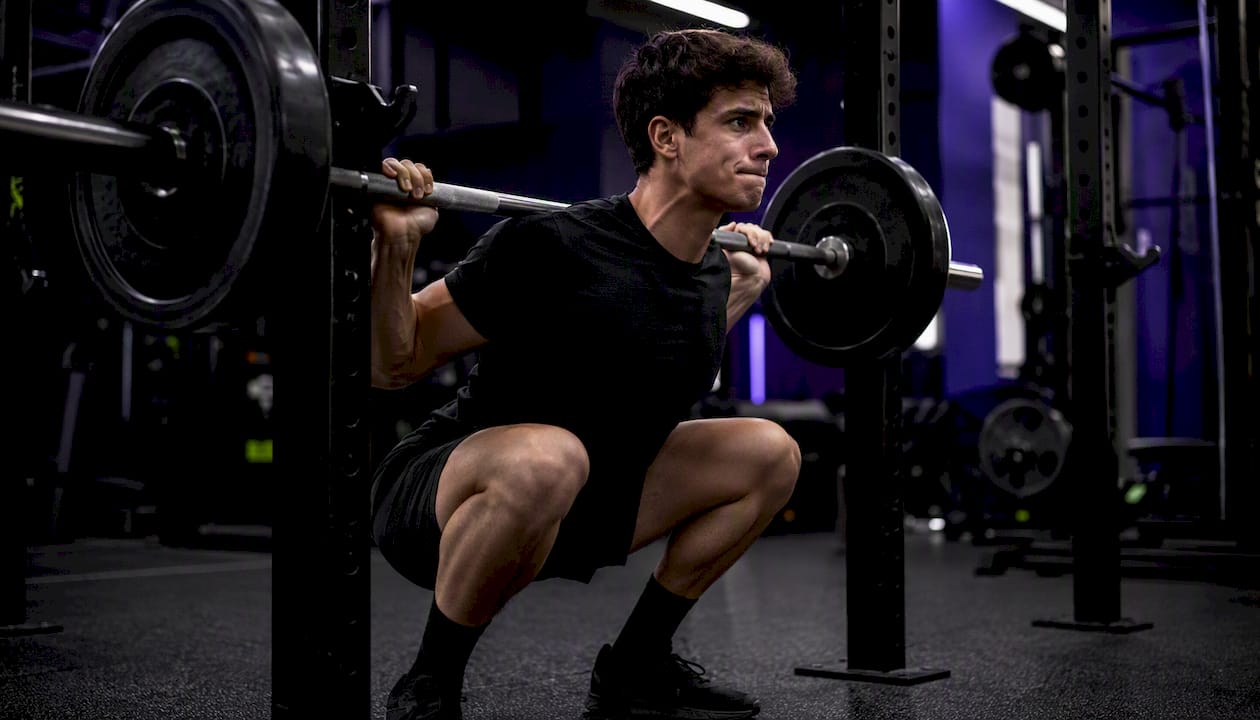
Three structures dominate the 3-day training schedule world. Each has a different logic, and picking the wrong one for your situation slows progress.
Every session trains your entire body: a squat or hinge pattern, a push, a pull, and usually a carry or core movement. Volume per muscle group per session is moderate, but you hit each muscle three times a week.
Pros — High practice frequency for compound lifts, great for beginners, manageable session length, strong evidence base.
Cons — Less total volume per muscle group per session, which can limit hypertrophy specialization for advanced trainees.
Pick this when — You're a beginner, you're returning after a break, or your primary goal is strength and general fitness.
Day 1 trains pushing muscles (chest, shoulders, triceps). Day 2 trains pulling muscles (back, biceps). Day 3 trains legs. Each muscle group gets one dedicated session per week.
Pros — High volume per muscle group per session, good for intermediate hypertrophy, clear session structure.
Cons — At three days a week, most muscles only get trained once per week. Coaches like Dr. Milo Wolf argue that PPL can underdeliver at this frequency because it sacrifices the frequency advantage that makes resistance training effective.
Pick this when — You're an intermediate trainee (6+ months), you have solid technique on all major lifts, and you're willing to manage volume carefully.
A flexible structure that mixes elements: two upper-body sessions with different emphases (e.g., chest-dominant and back-dominant) plus one lower-body day, or a push/pull day combined with a full-body day.
Pros — Allows some specialization while keeping frequency higher than pure PPL, adaptable to individual weak points.
Cons — Requires more programming knowledge to balance correctly, can drift into the "cramming too much in" trap.
Pick this when — You have a specific lagging muscle group you want to bring up, and you've been training consistently for at least a year.
These three sessions rotate across your week (Monday/Wednesday/Friday or any three non-consecutive days). Each includes a beginner and intermediate version.
Rest between sets: 2–3 minutes on the first two compound lifts of each session, 90 seconds on everything else, 60 seconds on core and carries. Rest longer if your next set would otherwise be sloppy.
Equipment: barbell or dumbbells, bench, cable or dumbbell for rows.
Home substitution: Replace barbell squat with Bulgarian split squat using dumbbells. Replace bench press with push-ups (add a weighted vest or elevate feet to increase difficulty).
Equipment: barbell or dumbbells, pull-up bar or lat pulldown, incline bench, cable or resistance band.
Home substitution: Replace lat pulldown with resistance band pull-downs or doorframe rows. Replace Romanian deadlift with single-leg hip hinge using a dumbbell.
Equipment: barbell or dumbbells, bench, something heavy to carry (dumbbells, kettlebells or farmer's handles).
Pro Tip: Pair your warm-up set of the first exercise with a mobility drill for the same joint. For squats, do 10 bodyweight squats with a 3-second pause at the bottom before loading the bar. This cuts warm-up time without skipping it.
Running PPL at three days a week means each muscle gets one session per week. To make that work, you need higher volume per session and smart progression. Keep this in mind before you start: practitioners recommend avoiding the trap of compressing a six-day pro routine into three sessions. Pick 4–5 exercises per session, not 10.
Rest between sets: 2–3 minutes on the main compound lift, 90 seconds on secondary compounds, 60 seconds on isolation work.
Equipment: barbell or dumbbells, bench, incline bench, cable or dumbbells for triceps.
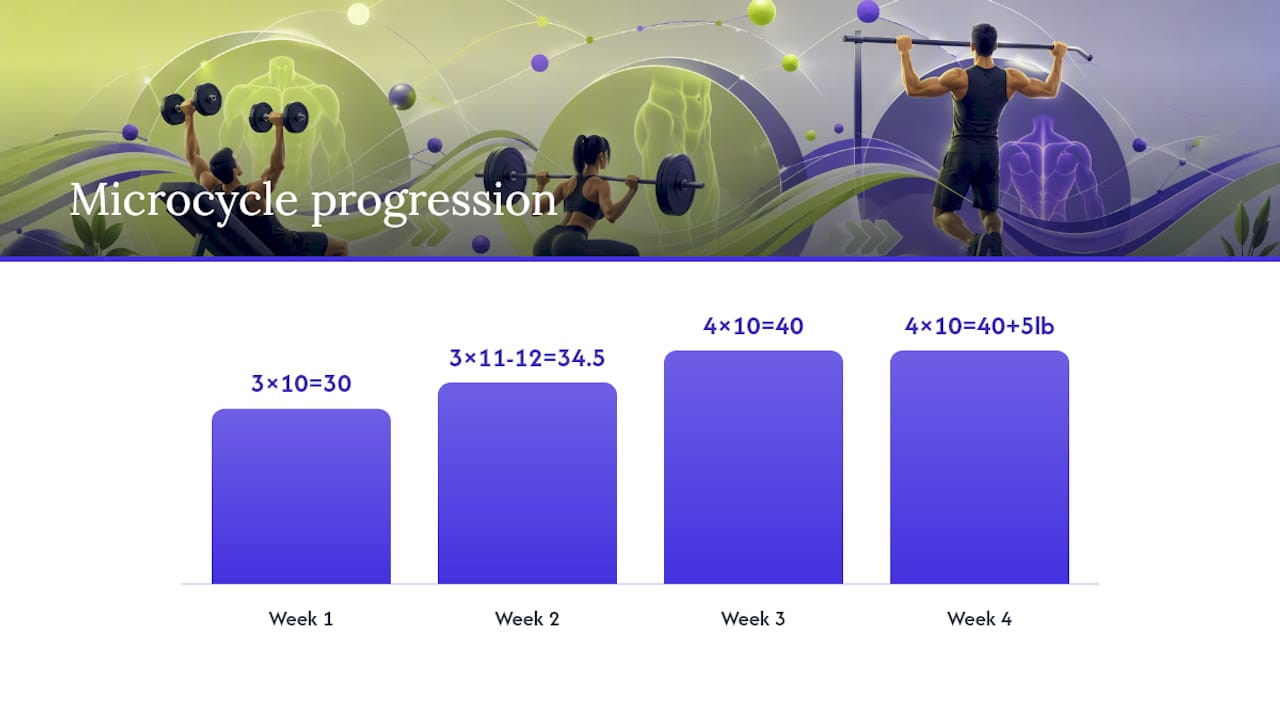
Progression note: Add one rep per set each week. Once you hit the top of the rep range across all sets, add 5 lbs and drop back to the bottom of the range.
Equipment: barbell or trap bar, pull-up bar or lat pulldown, cable or dumbbells.
Short-session tactic: Superset face pulls with curls. They use different muscles, so there's no performance cost, and you save 5–8 minutes.
Equipment: barbell or leg press, dumbbells, leg curl machine (or floor/bench substitute).
Equipment swap: No leg curl machine? Use a Nordic hamstring curl on the floor or a dumbbell leg curl lying face-down on a bench.
A hybrid split gives you the best of both worlds: some specialization, without dropping to once-per-week frequency on your weakest areas. Here's a practical structure:
Day 1: Upper body (push emphasis) — Bench press, overhead press, incline press, lateral raises, tricep work. Higher volume on chest and shoulders.
Day 2: Lower body and posterior chain — Squat, Romanian deadlift, leg curl, glute bridge, calf raises. Full lower-body session with a hinge emphasis.
Day 3: Upper body (pull emphasis) — Deadlift or rack pull, pull-ups, rows, face pulls, bicep curls. Higher volume on back and biceps.
This structure trains your upper body twice a week (once push-dominant, once pull-dominant) and your lower body once. If legs are your priority, flip it: two lower sessions and one upper.
When to use a hybrid split:
Weekly volume on a hybrid: Expect 12–18 working sets per major muscle group per week when you add both upper sessions together. That's within the range that research associates with meaningful hypertrophy for most intermediates.
Showing up three times a week is the foundation. Progressing each week is what turns those sessions into results. Here's how to do it:
Frequency floor — Train each major muscle group at least twice per week. A network meta-analysis published in the British Journal of Sports Medicine found that higher-load, multiset training three times per week ranked highest for strength gains, while twice-weekly training ranked highest for hypertrophy. Full-body 3x/week satisfies both thresholds.
Weekly sets per muscle — Aim for 10–20 working sets per muscle group per week as an intermediate. Beginners can make progress with 6–10 sets per muscle per week.
Load guidance — For strength, use heavier loads (3–6 rep range, 80–90% of your max). For hypertrophy, moderate loads in the 6–15 rep range work well. You don't need to choose one exclusively.
Progressive overload — Add load, reps, or sets over time. Without this, your body has no reason to adapt.
A simple 4-week microcycle:
A small randomized trial comparing 2x vs 3x per-muscle weekly frequency found both produced similar strength and size gains when weekly sets were equated, with some effect-size advantages favoring the 3x condition. The takeaway: total weekly volume matters more than any single session, but spreading that volume across three sessions tends to produce slightly better outcomes for some measures.
Track your progress in a training log. Write down the exercise, weight, sets, and reps every session. This single habit is what separates trainees who plateau from those who keep improving. For progressive overload principles applied across limited weekly sessions, the core rule is the same regardless of sport: add a small, measurable stimulus each week.
Recovery is where your muscles actually grow. Training breaks them down; rest builds them back stronger. Here's how to structure your week:
Three realistic weekly schedule options:
Recovery checklist:
Deloading:
Every 4–8 weeks, take a light week. This isn't weakness; it's how you avoid accumulated fatigue that silently tanks your performance. Signs you need a deload: persistent joint soreness, motivation dropping sharply, or your lifts stalling for two or more consecutive sessions.
The most common error is trying to cram a five-day bodybuilder program into three sessions. The result is 90-minute sessions, 15 exercises, and muscles trained only once a week. That's the worst of both worlds.
Pro Tip: Missed a session? Don't try to cram two sessions into one day. Just pick up where you left off. One missed workout in a week has almost no impact on long-term progress. Two missed weeks in a row does.
Work through this checklist before you commit to a structure:
Three scenario examples:
Red flags that mean you should switch splits or add a day:
A practical comparison of 3-day and 5-day splits confirms that a well-designed 3-day plan can match a 5-day approach in results when weekly volume and frequency per muscle are equated. The difference is specialization potential, not effectiveness.
Knowing the plan is one thing. Following it for 12 weeks straight is another. That's where structure and accountability make the real difference.
Onemor is built specifically for this. Here's how its features map to the real challenges of a 3-day training schedule:
How to use Onemor for each split type:
Pro Tip: Use Onemor's progress log after every session, not just when you hit a PR. The habit of logging consistently is what lets you spot plateaus early and adjust before they cost you weeks of progress.
The best 3-day split for a beginner isn't the most sophisticated one. It's the one that gets you in the gym three times a week, moving well, and adding a little more weight or a few more reps each session.
Full-body training three times a week is my preferred starting point for anyone in their first year of lifting. Not because it's trendy, but because it gives you the most practice on the movements that matter most: squats, hinges, presses, and pulls. You get three chances per week to improve your technique, and technique is what determines how much you can safely load over the long term.
The one coaching tip I'd give every beginner: track one lift per session and focus on beating that number each week. It doesn't have to be your max. It can be your squat for 3 sets of 10. Write it down. Come back next week and try to do one more rep or add five pounds. That single habit, repeated consistently, is what separates people who make progress from people who stay stuck.
You've got the plan. Now you need the structure to follow it week after week without second-guessing yourself. Onemor gives you coach-led 3-day programs with guided sets, reps, and rest timers built in, so every session feels like training with a trainer, not guessing alone.
Getting started takes three steps:
Start your first session free at Onemor and see what a coach-led 3-day split actually feels like.
A full-body 3-day split is the most effective starting point for beginners and returning trainees, with PPL or a hybrid split offering better specialization for intermediates once technique and consistency are established.