Start with a guided, full-body strength program you follow three times a week. It should include compound lifts, real-time coach cues, and built-in rest timers so you never have to guess what comes next. Guided sessions remove the two biggest reasons beginners quit: confusion about form and the mental load of planning. Stick with it and you’ll see measurable strength gains, plus a habit that actually sticks, within a few weeks to a few months.
TL;DR:
A guided strength workout is a coach-led, follow-along session. Someone else has already decided the exercises, sets, reps, and rest periods, and a trainer walks you through each move in real time, either on video or inside an app. You’re not staring at a spreadsheet trying to remember if today is squat day or arm day. You just press play and follow the cues.
This is different from a self-directed plan, where you write your own program, track your own numbers, and make your own calls about when to add weight. Self-directed training works great once you know what you’re doing. For beginners, it’s often where things fall apart. A guided session gives you consistency and real-time form feedback without hours of planning on your end.
Most guided sessions run 20 to 45 minutes. Some are built for a full gym setup with barbells and racks, others need nothing but dumbbells or your own bodyweight. That flexibility is part of the appeal. You can do a guided session in a hotel room or a fully loaded gym floor, and the structure stays the same.
You don’t need a custom program to get moving. These three formats cover almost every beginner and intermediate situation, and they’re built around the big five compound lifts that maximize muscle recruitment in less time.
1. Beginner full-body, three times a weekDo this on non-consecutive days (Monday, Wednesday, Friday works well). Pick 5 to 7 movements covering squat, hinge, push, and pull patterns:
2. Intermediate four-day splitGraduate here once you can complete the full-body routine with clean form for four straight weeks and you’re recovering well between sessions. Split by movement pattern (upper push, lower, upper pull, full-body or accessory day). Rep ranges shift depending on the goal:
3. Home or bodyweight optionNo equipment doesn’t mean no progress. Swap goblet squats for split squats, push-ups for decline push-ups, and rows for towel rows anchored under a door. Increase difficulty by slowing the tempo, adding pauses at the hardest point of the movement, or moving to single-limb variations. A resistance band adds load without needing a single plate.
Onemor’s free workouts follow this same logic, structuring sessions by pattern rather than random exercise selection, which is exactly what a beginner needs to actually see progress.
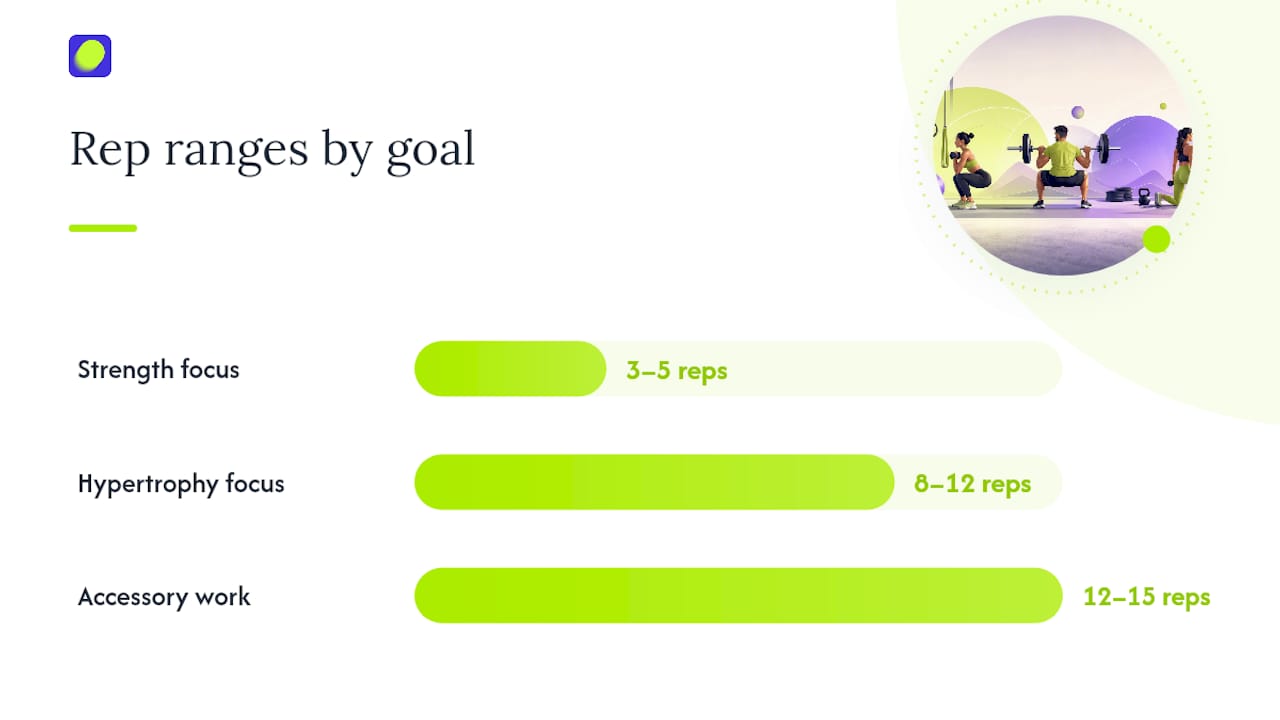
Every guided workout communicates the same four things: sets, reps, tempo, and rest. Once you can read those four numbers, you can follow any coach-led session confidently.
If your goal is muscle size, stay in the 8 to 12 rep range with moderate rest. If you’re chasing raw strength numbers, lower reps and longer rest wins. Onemor’s guide to sets and reps for new lifters breaks this down further if you want more detail.
Pro Tip: Log three numbers after every set: the weight you used, the reps you completed, and how hard it felt on a 1 to 10 scale. That’s all the data you need to decide whether to push harder next time.
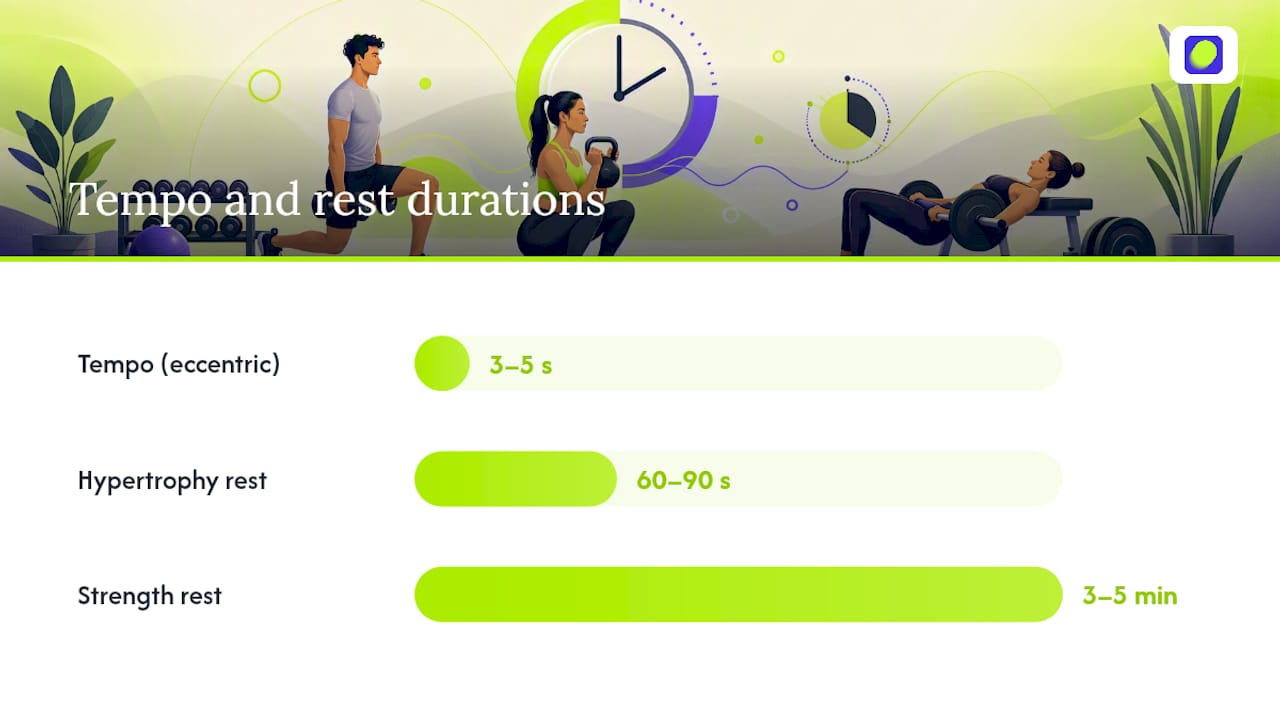
You don’t need a periodization spreadsheet to get stronger. Beginners respond well to small, boring, repeatable increases.
Three sessions a week is the sweet spot for beginners because it allows enough recovery between sessions while building the movement pattern into memory. Onemor’s breakdown of training three days a week covers why this frequency outperforms more ambitious schedules that beginners rarely stick to. Set a 4 to 12 week checkpoint, and track weight lifted, reps completed, and how sessions feel overall.
Guided videos can’t watch your knees cave in or your lower back round. That’s the tradeoff. A few checkpoints keep you safe on the big lifts:
If a lift causes pain that doesn’t resolve after a rest day, if your numbers stall for several weeks despite consistent effort, or if you’re attempting a technical lift like a barbell deadlift for the first time, get a filmed form check or a session with a real coach. Onemor’s trainer profiles, including Coach Geraldine and Coach Paulina, exist for exactly this kind of guidance layered on top of your regular guided sessions.
A trial found that people trained by a personal trainer built more muscle and posted bigger strength gains on the bench press and squat than people training alone or with a workout partner. Full supervision wins when you measure it head to head.
But a separate randomized trial found something just as useful: app-guided training beat static, self-guided plans on both adherence and strength outcomes, even though it didn’t quite match full one-on-one coaching. In plain terms, guided apps sit in the middle. They won’t outperform a personal trainer standing next to you, but they beat winging it with a PDF, and most people stick with them longer. The practical move: use a guided app for your weekly structure, and bring in a coach or filmed review when you’re learning a new technical lift.
Most guided workout apps are built around whoever the algorithm decides to show you. Onemor is built around actual programming. Every session comes from a real coach, with sets, reps, and rest timers already built in, so you show up and train instead of spending twenty minutes deciding what to do.
Onemor fits Gen-Z and young millennial lifters who want short, structured sessions that respect their time and still deliver real results, not just something to post. Streaks, XP, and tribe-based challenges keep you showing up on the weeks motivation runs low, and coaches like Coach Branden and Coach Kayla bring the kind of cueing that usually only comes from paying for a trainer. If you want to compare what’s included at each level before committing, the Pro plan comparison lays it out clearly.
Start with the free plan today, pick a beginner full-body program, and complete your first guided session before the day is over.
Definitions of the 3-3-3 rule vary across trainers and programs, so there’s no single universal standard. If you come across it in a specific program, check that source’s exact definition rather than assuming a fixed meaning.
Compound lifts, the squat, deadlift, bench press, overhead press, and barbell row or pull-up, build the most total-body strength per session because they recruit multiple muscle groups at once, according to Tom’s Guide’s breakdown of the “big five” lifts. A guided full-body session built around these movements, done 3 times a week, gives beginners the most efficient path to visible strength gains.
Yes, 20 minutes is enough if the session focuses on compound movements and stays consistent across the week. Harvard Health’s guide confirms that shorter, well-structured sessions done regularly outperform longer, sporadic workouts for beginners.
The big five are the squat, deadlift, bench press, overhead press, and barbell row or pull-up, according to Tom’s Guide. These multi-joint lifts form the backbone of most guided beginner and intermediate programs because they build strength across the whole body rather than isolating single muscles.