Start with full-body strength training two to three times a week using core compound movements: squat, hinge, push, pull, and a core exercise. Pick a two day or three day template, grab a pair of dumbbells or your body weight, and complete one guided session today. If anything causes sharp pain, stop and adjust the movement rather than pushing through it.
TL;DR:
You don’t need a spreadsheet or a certification to begin strength training basics this week. You need a plan simple enough to actually follow, which is the whole point.
Here’s how to structure your first seven days:
Pro Tip: Book your first three sessions on your calendar right now, like real appointments. A plan you schedule is a plan you keep.
Most beginners notice real, measurable strength gains within four to six weeks of consistent training. That number holds up well: Harvard Health reports that two sessions a week can produce noticeable strength changes in healthy young adults within that window.
What happens in those early weeks isn’t really muscle growth yet. It’s your nervous system getting better at recruiting the muscle fibers you already have. Think of it as your brain learning to “dial up” the right muscles more efficiently. Visible muscle growth, called hypertrophy, tends to show up a bit later, usually after a couple of months of consistent work.
Here’s what tells you the plan is working before the mirror does:
A few habits quietly stall progress. Skipping sessions here and there breaks the consistency that drives results. Sticking with the same light weight for a month straight removes the challenge your muscles need to adapt. Poor sleep and undereating protein slow recovery more than almost any training variable. The 2026 ACSM Position Stand makes a point worth remembering here: the best program is the one you’ll actually stick with, not the most complicated one.
Two workout templates cover almost every beginner’s needs. Pick based on your schedule, not on what looks more impressive.
Option 1: Two Days a Week (Monday / Thursday, for example)
Same full-body workout both days. Simplicity wins here.
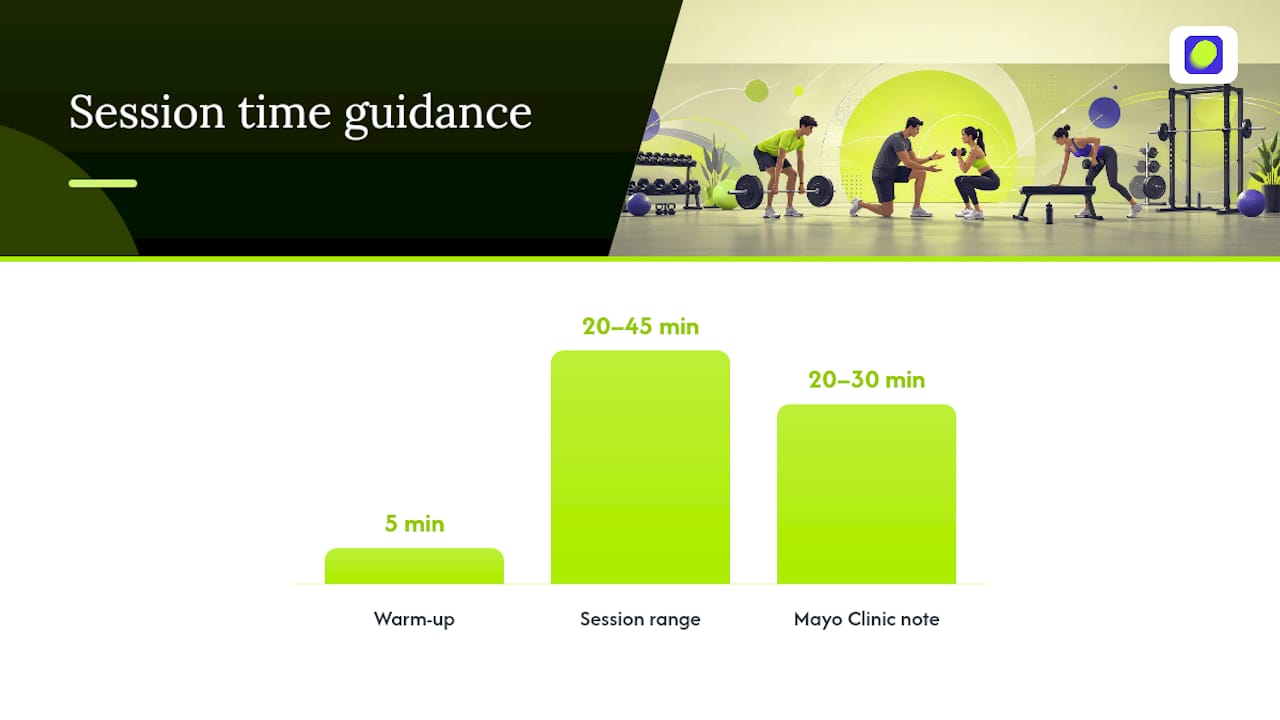
Total time: roughly 30 minutes including warm-up.
Option 2: Three Days a Week, Day A / Day B Split (Monday / Wednesday / Friday)
Alternate Day A, Day B, Day A across the week, then flip the order the following week.
Day A:
Day B:
Total time: 35 to 45 minutes per session.
If you’re training at home without a barbell, substitutions work just as well. Swap a barbell squat for a goblet squat holding one dumbbell at chest height. Swap a barbell deadlift for a kettlebell or dumbbell Romanian deadlift. Resistance bands anchored to a door replace cable rows and pulldowns almost seamlessly. A 4-week starter plan built around these exact movement patterns can help you see how the progression unfolds week by week, and a dedicated dumbbell-only program is worth checking out if you’re training entirely at home with no gym access.
Progression from week to week stays simple: once you hit the top of your rep range across every set with clean form, add a small amount of weight the next session and drop back to the bottom of the rep range. That’s the entire system for the first three months.
Progressive overload sounds technical, but it just means gradually asking your muscles to do a little more over time. That’s the entire mechanism behind getting stronger.
Here’s the practical version:
You do not need to chase muscle failure to make progress. Harvard Health’s reporting on newer resistance training guidance points out that working at a challenging but manageable intensity, with solid form, is both safer and just as effective for beginners as grinding out every last rep.
Recovery matters as much as the workout itself. Most beginners do well with at least one rest day between sessions, and full-body routines two to three times a week naturally build that in. Watch for signs you need more rest: lingering soreness past 72 hours, a noticeable drop in strength from your last session, or trouble sleeping. Any of those mean it’s time to ease off, not push harder.
Pro Tip: Write your working weight on your phone after every session. When memory gets fuzzy after a long day, that thirty-second note removes all the guesswork next time.
The gear question stops a lot of people before they even start. It shouldn’t. Both paths work, and the research backs that up: a large evidence synthesis covering 137 systematic reviews found that home-based training, resistance bands, and free weights all improve strength and function when done consistently.
Home setups worth considering:
Gym advantages worth the membership fee:
If your gym doesn’t have the exact equipment from a program, substitutions are almost always available. A barbell squat becomes a goblet squat. A barbell deadlift becomes a Romanian deadlift with dumbbells or a kettlebell hinge. Budget and space matter too: a $30 set of bands takes up a drawer, while a home dumbbell set that goes heavy enough to last you a year can run considerably more.
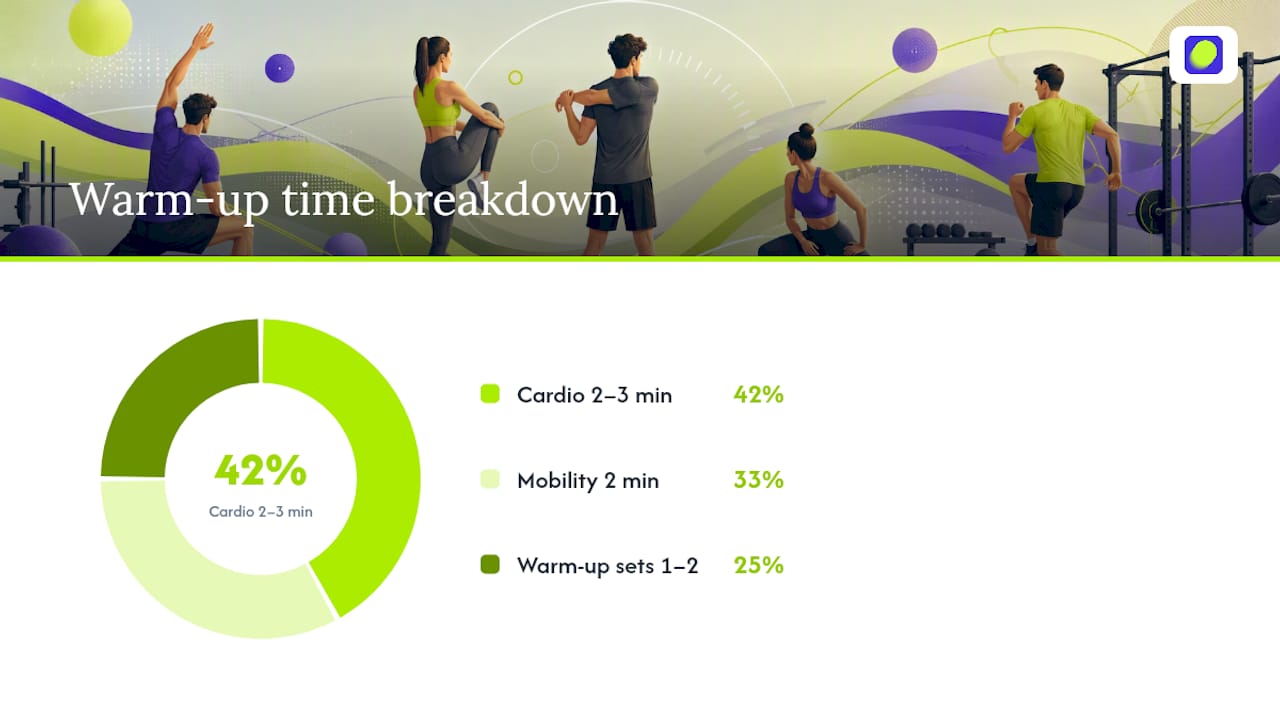
A five to ten minute warm-up isn’t optional padding. It’s the difference between a joint that’s ready to load and one that isn’t.
Structure it in three parts: two to three minutes of light cardio to raise your heart rate, two minutes of dynamic mobility for your hips, shoulders, and ankles, and one or two light warm-up sets of your first exercise before you load it heavier.
Learning correct form matters more than almost anything else in these first few months. Three approaches work well:
A few technical errors show up constantly among beginners. Knees caving inward during a squat usually means the glutes aren’t firing hard enough. A rounding lower back during a hinge usually means the hips aren’t moving first. Shoulders creeping up toward the ears during a press usually means the weight is a bit too heavy for now. A partner resource on posture and neck strain covers some of these compensation patterns in more detail if you notice tension creeping into your neck during upper-body work.
Stop and get medical guidance if you feel sharp, sudden pain, joint swelling that doesn’t settle within a day, or numbness radiating down an arm or leg. Muscle soreness two days after a workout is normal. Joint pain during the movement itself is not.
Every template in this article, the sets, the reps, the rest periods, maps directly onto how Onemor runs a guided session. You open the app, follow a coach-led workout, and the timers handle the counting so you’re focused on form instead of math.
That structure solves a real problem for beginners training alone: decision fatigue. When you don’t have to guess your next set or rest period, you’re more likely to finish the session and come back for the next one. Guided sessions also give you a consistent model to copy your form against, which matters most in these early weeks when a couple of coached reps can save you months of built-up bad habits.
If you’re following the Day A / Day B split from earlier, Onemor’s guided sessions let you run that exact structure with a coach walking you through each movement. Streaks and tribe-based challenges add a layer of accountability that a printed workout sheet simply can’t match.
You’ve got the plan. Onemor gives you a way to run it without second-guessing every set. The app pairs coach-led workouts with built-in sets, reps, and rest timers, so the beginner full-body sessions above become something you press play on instead of something you have to plan from scratch.
It’s built for exactly the situation this article covers: someone who wants short, structured strength sessions two or three times a week without spending an hour designing a spreadsheet first. Streaks and XP keep you coming back on the days motivation is low, and tribe challenges mean you’re training alongside other people instead of alone in a room.
Coaches like Kayla, Denis, and Branden lead the guided sessions that map onto the Day A / Day B templates above, so your first workout can be led rather than guessed at. Start with the Free plan today, complete your first guided session, and see how it feels to have the thinking done for you.
The 3-3-3 rule isn’t a formally established training standard, and definitions vary online. If you’ve seen it, treat it as informal advice rather than a proven method, and stick to the evidence-backed frequency and rep guidance covered above instead.
A squat, a hip hinge (like a Romanian deadlift), a push (push-up or press), a pull (row), and a core movement (plank) cover every major muscle group beginners need to train.
Start with whichever weight lets you complete 12 to 15 reps with good form and only moderate fatigue by the last rep, following Mayo Clinic’s guidance; most beginners find 5 pounds too light for lower-body moves but reasonable for smaller upper-body exercises.
Yes. Mayo Clinic notes that 20 to 30 minutes of strength training twice a week can be effective for beginners, and the CDC recommends muscle-strengthening work on two or more days weekly rather than daily sessions.
Look for more reps at the same weight, easier daily tasks like carrying groceries, and faster recovery between sets. Most beginners see measurable strength gains within four to six weeks of consistent training.