A good post-workout cooldown takes 5 to 10 minutes of easy movement, like walking, so your heart rate and body temperature settle back toward normal. Stretching is optional. Think of it as a nice bonus, not a requirement. Here’s how to build a cooldown you’ll actually do, whether you just lifted, ran through a HIIT session, or finished a home workout.
You’ve just finished the hard part. It’s tempting to grab your phone, drop onto the couch, and call it a day. We get it.
But during exercise your heart is pumping hard and your blood vessels are wide open. If you stop abruptly, blood can pool in your extremities. According to MedlinePlus, a gradual cooldown helps prevent blood pressure swings and lightheadedness. That’s the real job of a cooldown, and it’s more important than most people realize.
So the question isn’t “Do I need to stretch for ten minutes?” It’s “Can I give my body a few minutes to come down gently?” The answer is almost always yes.
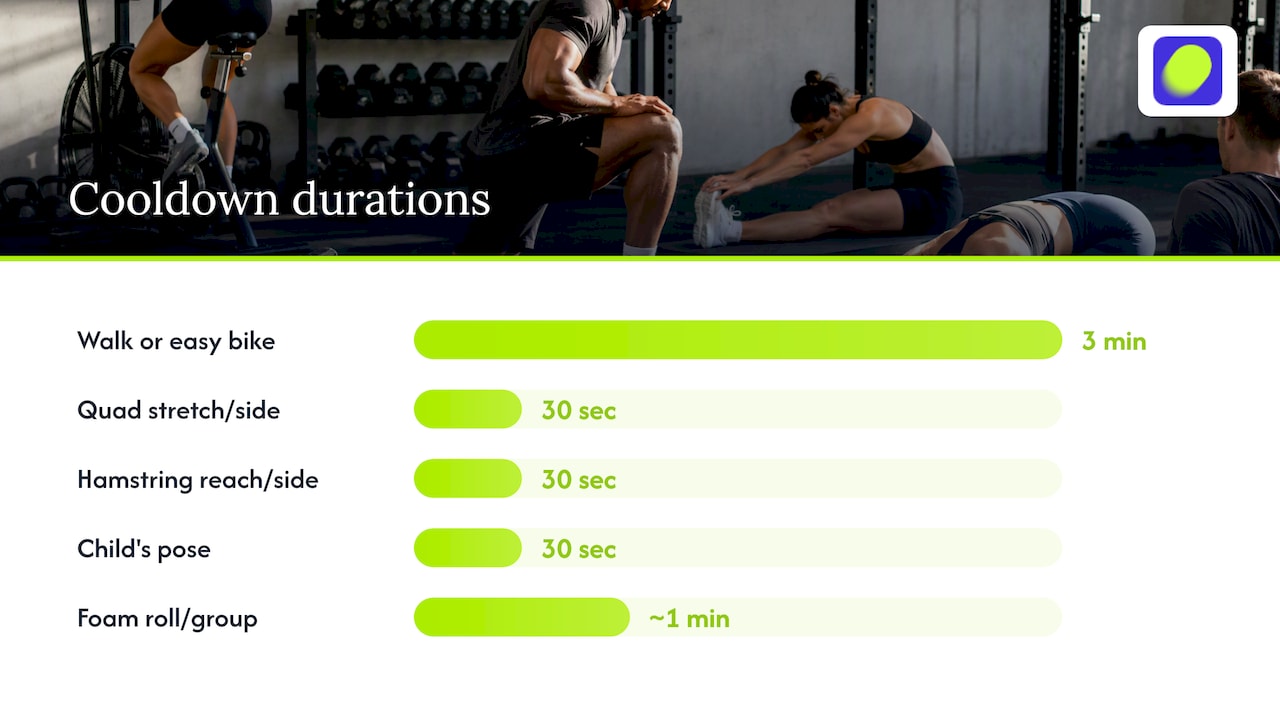
No equipment, no complicated flow. Follow these steps in order.
That’s it. If you only have three minutes, do step 1 and step 4 and call it a win.
If you want to stretch, keep it gentle. You should feel mild tension, never sharp pain.
Don’t bounce. Fitness pros often remind beginners that pain isn’t the goal. Your body has a protective stretch reflex, and if you push too hard the muscle can tighten instead of relax. Ease in, breathe out, and stop where it feels like a mild pull.
Want a longer routine for days when you have time? Our 10-minute beginner mobility routine and yoga for mobility flows are good next steps.
Here’s the honest answer: less than you’ve probably been told.
A 2025 Delphi consensus of international stretching researchers notes that stretching is often used in cooldowns to reduce soreness or speed recovery, yet the evidence doesn’t back it up as a required recovery tool. A 2025 meta-analysis on post-exercise stretching and lower-limb recovery also looked at this question, because the benefits have long been debated.
What does that mean for you?
The mental side counts, too. A slow exhale at the end of a session tells your nervous system the work is done. If stress is a big part of why you train, whole-body approaches to stress relief are worth reading about.
After lifting, your heart rate is usually lower than after cardio, but your muscles are fatigued. A short walk followed by light stretches for the muscles you trained works well.
A quick leg day example:
Foam rolling is another option. When you roll, relax the muscle completely instead of holding yourself tense, and aim for about a minute per muscle group, per guidance from the California Highway Patrol’s training manual. It’s a pleasant habit for some people, though not essential.
Resting between sets is part of the same recovery picture. See our breakdown of rest between sets if you’re unsure how long to wait.
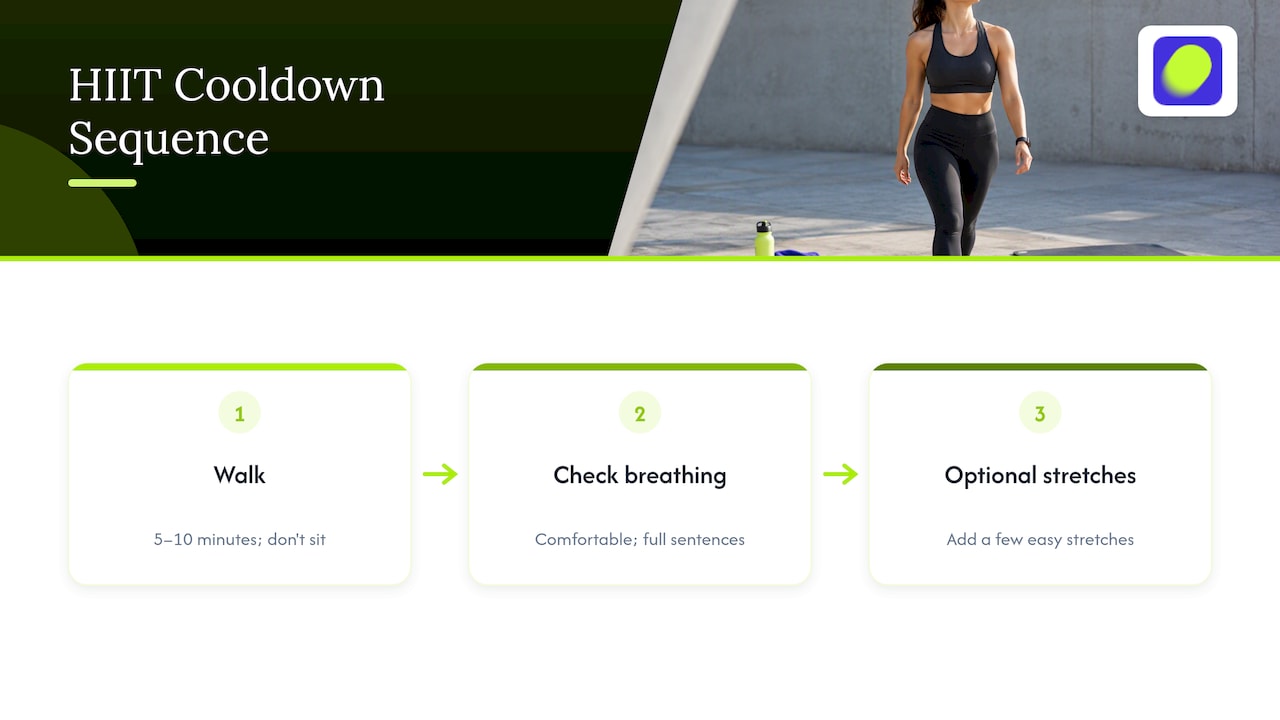
HIIT pushes your heart rate high, so the walking phase matters most here. Don’t sit down right away. Walk until your breathing is comfortable and you can talk in full sentences, usually 5 to 10 minutes. Then add a few easy stretches if you like.
If your joints complain after jumping moves, try our low impact HIIT guide. And if you feel dizzy, faint, or have chest pain, stop and sit or lie down, and get medical help if it doesn’t pass quickly. Talk with a doctor before returning to intense workouts.
Training in Florida means sweating more, and a cooldown is a perfect moment to deal with it. University of Florida Health points out that recovery in hot climates should include replacing fluids and electrolytes, which helps guard against exertional heat illness.
A few practical habits:
Our hydration guide for workouts goes deeper, and the post-workout nutrition basics cover what to eat afterward.
The best cooldown is the one you do every time. That’s where structure helps. Onemor guided sessions walk you through sets, reps, and rest timers with coach-led workouts, so you don’t have to design everything yourself. Pair that with streaks, XP, and tribe challenges, and finishing strong becomes part of the habit.
Ready to try it? Start with the free plan on Onemor and train with structure at the gym or at home.
Want to round out your week? Pair your cooldown with a dynamic warm-up before training and an active recovery plan on rest days.
Five to ten minutes is the standard recommendation from MedlinePlus. Most of that time should be easy movement like walking. Add stretching on top only if you want it.
Yes, in most cases. Recent research shows static stretching doesn’t significantly reduce soreness or speed recovery. Just make sure you’ve lowered your intensity first, so your body transitions safely to rest.
You can, if you enjoy it. Relax the muscle fully while you roll and spend about a minute on each area. It’s a comfort tool, so skip it when you’re short on time.
Stop, sit or lie down, and sip water. Dizziness can come from stopping too suddenly or from heat, which is why walking afterward helps. If it doesn’t pass quickly, or you faint or feel chest pain, seek medical care.