If you're on the lookout for a yummy treat that fits right into your fitness goals without emptying your wallet, you've stumbled upon the perfect recipe. With so many options for protein-packed ice creams and low-sugar desserts crowding the shelves, it's easy to get overwhelmed. Sure, some of them taste alright, but have you seen the prices? That's why whipping up your own batch of protein ice cream at home is such a game-changer.
Not only does it hit the spot when you're craving something sweet, but it's also a fun twist on the usual protein shake. Plus, you get to say goodbye to all those extra additives and sugars that sneak into store-bought versions.
This homemade pistachio ice cream with vanilla protein powder is the perfect mix of tasty and healthy as well as a great way to cool down after a workout.
Let’s get to it:
Ingredients:
-120g unshelled and unsalted pistachios
-280ml milk
-200ml full fat canned coconut milk
-2 tbsp of raw honey-1/8 tsp salt
-1 tbsp melted coconut oil-1 scoop of vanilla protein powder
-1 tbsp of melted chocolateInstructions:
1️⃣ Begin by adding the pistachios to your blender. Change the speed, starting from low and gradually increasing to medium and high until the pistachios break down into small bits.
2️⃣ While blending, slowly pour in the milk. Continue blending until the mixture achieves a smooth and creamy consistency, free of any chunks.
3️⃣ Incorporate all the remaining ingredients, except for the chopped pistachios, and blend until everything is thoroughly combined.
4️⃣ If you have an ice cream machine, transfer there.
5️⃣ In case you don’t have an ice cream machine, place the mixture into a metal or glass container, and cover it with parchment paper. Gently press the parchment paper down onto the ice cream to prevent any air from getting in during the freezing process. Then, put it in the freezer.
6️⃣ After about 2 hours, take the container out of the freezer and give the mixture a good stir. Add in the chopped pistachios during this mixing step, as it will help prevent ice crystals in the final product.
7️⃣ Cover the container again and return it to the freezer for a 24-hour freeze.
8️⃣ The following day, remove the ice cream from the freezer and let it thaw for approximately 15 minutes, until it’s easy to scoop and dip it in some melted chocolate.
There you have it: delicious, healthy and protein-packed homemade pistachio ice cream! The best part about this recipe is that you can customize it with whatever flavors you’d like. Whether you're in the mood for something fruity, chocolatey, or even more nutty, you can tweak this base to suit your cravings. It's a wonderful way to enjoy a treat that's not just good, but also good for you. After all, who said healthy eating couldn't be fun and delicious?
Hey there! Ready to whip up something super tasty and good for you?
If you were looking for a sweet and healthy snack to keep you full throughout the day or something to have after a workout, then you’re in the right place. High-Protein smoothies and shakes are not just delicious, but they’re also great for your health. It's all about mixing some cool ingredients like banana, avocado, blueberries, and a bit of protein powder to keep you powered up.
Whether you're looking to get more muscles or just want a sweet treat that's good for you, this protein packed smoothie has got your back.
Protein Powder: With whey protein in the mix, this smoothie is perfect for keeping your muscles happy, especially after a workout.
Good Fats: That creamy avocado? It's full of healthy fats that are great for your heart.
Berry Goodness: Blueberries aren't just tasty; they're full of antioxidants that keep your body feeling great.
Energy Boost: Bananas are awesome for a quick energy pick-me-up, plus they make your smoothie sweet and smooth.
Ingredients:
- 250 ml whey
- 1 ripe banana
- 1/4 avocado
- 30g blueberries
- 1 scoop vanilla whey protein
- 1 scoop hazelnuts
Instructions:
Begin with 250 ml of whey in your blender.
Add a ripe banana and a quarter of an avocado for sweetness and smoothness.
Include a generous portion of blueberries for a flavor kick.
Mix in a scoop of vanilla whey protein and a scoop of hazelnuts to enhance the nutty, creamy texture.
Blend until smooth and enjoy the rich, satisfying taste!
Customize Your Smoothie
The beauty of this smoothie lies in its versatility. Here are a few ways to tweak it to your liking:
Vegan-Friendly: Substitute whey protein with a plant-based protein powder and use almond milk or coconut water as the liquid base.
Boost Fiber: Add a tablespoon of chia seeds or flaxseeds to increase fiber content, which can aid in digestion and keep you feeling full longer.
Increase Antioxidants: Swap blueberries for mixed berries or add a handful of spinach to pack in more antioxidants without compromising taste.
This banana and avocado protein smoothie is more than a tasty drink; it's a way to fuel your body right, whether you're hitting the gym hard or just need a healthy snack.
So, blend it, sip it, and enjoy the good vibes it brings to your day!
We all have our preferences—some people jump out of bed ready to train fitness, while others don’t hit their stride until after sunset. But when it comes to getting real results—muscle, weight loss, strength, or overall wellness—does the time of day you workout actually matter?
Whether you're squeezing in dumbbell workouts before your morning coffee or closing the gym with a post-dinner grind, this guide will help you decide what works best for your lifestyle and your goals.
Let’s settle the debate once and for all: early morning vs. late night workouts—which one wins?
✅ Boosts Energy for the Day
Starting your day with a workout can increase focus, productivity, and overall mood. Morning sessions help you feel accomplished before most people are even awake.
✅ Improves Consistency
Fewer distractions = fewer excuses. Morning routines tend to be more repeatable and easier to stick to long term.
✅ May Help With Weight Loss
Some studies show fasted training may boost fat burning (if done safely and under guidance from a coach or personal trainer).
💡 With the Onemor app, you can schedule your morning training sessions in your planner, follow short routines, and even track performance before breakfast.
✅ Strength Peaks Later in the Day
Your body is naturally warmer and looser in the evening, which can improve performance and reduce injury risk during exercise—especially workouts for men focusing on power and muscle gains.
✅ Great for Stress Relief
After a long day, a workout can help you decompress, clear your mind, and sleep better.
✅ Flexibility for Busy Schedules
Not everyone can rise at 5 AM. Night sessions allow more time to warm up, fuel properly, and really commit to your fitness goals.
💡 Use Onemor to find a suitable evening workout app routine from the comfort of your living room, office, or even hotel room.
The truth is - the best time to workout is the time you can consistently stick to.
🌞Morning Workouts
Best for :
Habit-building, discipline, early energy
Downside :
Early wake-up, colder joints
Ideal for :
Busy professionals, parents, early risers
🌜Night Workouts
Best for :
Strength training, flexibility, stress relief
Downside :
Can disrupt sleep if done too late
Ideal for :
Night owls, shift workers, gym closers
Need help choosing? Let Onemor personalize your schedule. Whether you train at 6 AM or 9 PM, you can find the right exercise, log it with a tracker, and follow a trainer plan based on your goals.
Seven days. Six workouts. One habit. And if you finish — 70% off a year of having a real coach plan your training for you.
That's the Onemor Try Not to Cry Week. Running from March 30th to April 5th, it's not a marketing gimmick or a sponsored post. It's a real challenge, with a real reward, designed for the people who've been saying "I'll start this week" for the last four months.
This week, the starting line is right in front of you. Here's everything you need to know.
🔥 THE CHALLENGE: Train 6 times between March 30 and April 5. Complete all 6 and unlock 70% off Onemor's annual plan — that's areal coach planning your workouts every week for just $4.5/month.
The name says it all — this is a week of training that's going to push you. Six sessions in seven days is not easy. It's not supposed to be. The point is to do something your past self would have quit, and your future self will thank you for.
Here's the structure:
Dates: March 30 (Sunday) through April 5 (Saturday), 2026
Challenge: Complete 6 workouts within that 7-day window
Reward for finishing all 6: 70% off Onemor's annual plan
Price after discount: $4.5/month — with a real coach planning your workouts every single week
Platform: Onemor app —available free on iOS
You can train in the morning, at night, at home, at the gym, or wherever you do your thing. The only rule is that you show up six times. That's it.
📲 Download Onemor free at onemor.com and join the challenge before March 30. Your plan, your coach, your tribe — ready and waiting.
This isn't random. There's real science behind why a week-long challenge structured like this is one of the most effective ways to build a habit that sticks.
One workout doesn't change your body or your mindset. But six consecutive days of showing up — of making a decision before you feel ready, of doing it tired, of doing it when your schedule is messy — that starts to rewire something. By day six, you're not the same person who almost skipped day one.
Seven days is a container your brain can wrap itself around. "I'll do this for a week" is a completely different mental agreement than "I'll be consistent forever." One of those feels possible right now. The other feels exhausting before you even start.
That's the genius of the Try Not to Cry Week — it's an invitation, not a life sentence. Start here. See how it feels. Then decide what comes next from a position of strength instead of avoidance.
Day 1 you train because of the challenge. Day 3 you train because you don't want to break the streak. Day 6 you train because you've become someone who trains. That's the shift. The challenge is just the door — you have to walk through it.
Let's talk about what's on theother side of completing this challenge, because it's worth being specific.
Finishing all 6 workouts unlocks 70% off Onemor's annual plan. That brings the price down to $4.5 per month —which, for context, is less than a single gym class, less than a coffee, and a fraction of what a personal trainer costs in any city in the world.
What you get for $4.5/month:
A real coach — not an algorithm — planning your workouts every week
A personalized program matched to your goals via Onemor's quiz
Follow-along workout videos with pro demonstrations so you always know exactly what to do
Access to strength, HIIT, pilates, yoga, and mobility programs
Streak tracking, XP, and a leaderboard that makes showing up actually fun
A tribe — a community of people training alongside you and keeping you accountable
Smart reminders that fit your schedule, not the other way around
Most people spend more than $4.5/month on apps they barely open. This is a coach-built training plan for less than a dollar a week more. The math doesn't need a calculator.
💸 Complete the Try Not to Cry Week and lock in 70% off Onemor Pro — just $4.5/month for a full year of coach-planned workouts. The offer is exclusive to challenge completers. Join at onemor.com.
The Try Not to Cry Week is built for people who are done with the cycle of starting and stopping. Specifically:
The person who's been "about to start" for weeks and needs something external to actually begin
The person who trains solo and struggles with consistency because there's no accountability
The person who keeps paying for fitness apps they don't open
The person who knows they'd train more if they had a real plan — not just random YouTube videos
The person who wants to see if they can actually do something hard
Anyone who's ever thought "I just need to get into a routine" and never did
If any of that sounds familiar —this is quite literally designed for you. Not for the person who's already training six days a week. For the person who needs one good week to prove to themselves they can.
Wanting to complete the challenge and actually completing it are different things. Here's how to make the gap smaller:
Map your 6 sessions before March 30. Look at your calendar right now. Pick 6 slots. Put them in. Don't decide each day — decide once and execute.
Make day 1 non-negotiable.The hardest session is always the first one. If you do day 1, the momentum of not wanting to waste it carries you to day 2.
1Lower the bar for hard days. A 20-minute session still counts. Showing up at 60% is infinitely better than not showing up at all. Done beats perfect every time.
Tell at least one person. Social accountability is the most underrated consistency tool in existence. Text a friend. Post it. The act of saying it out loud creates a commitment that silence doesn't.
Use Onemor's follow-along player. You don't need to decide what to do — the coach has already decided.Open the app, press play, do the thing.
Remember what's on the other side. 70% off isn't just a discount — it's a year of having someone else handle the planning so you can just show up and train.
Let's be honest: $4.5/month is a great deal. But the real prize of the Try Not to Cry Week isn't on your credit card statement.
It's the version of you who finishes. The one who proved — not to anyone else, but to themselves — that they can do hard things when they decide to. The one who no longer says "I want to get into a routine" from a place of wishful thinking, but from a place of recent evidence.
That version of you is available.It's one week away. The week starts March 30th. The challenge is on.
❤️🔥 The challenge is on. Will you accept it?Train 6 times between March 30–April 5 on Onemor. Finish all 6 and unlock 70%off — $4.5/month for a coach who plans your workouts every week. DownloadOnemor free and start your journey at onemor.com.
The Try Not to Cry Week is a 7-dayfitness challenge run by Onemor from March 30 to April 5, 2026. The challenge requires participants to complete 6 workouts within that window. Users who complete all 6 workouts unlock an exclusive 70% discount on Onemor's annual Pro plan.
Completing all 6 workouts unlocks 70% off Onemor's annual subscription plan, reducing the price to $4.5 per month. This gives you 12 months of access to coach-planned workout programs,follow-along training videos, community features, and Onemor's full Pro suite.
After the 70% discount unlocked by completing the Try Not to Cry Week, Onemor Pro costs $4.5 per month (billed annually). This is one of the lowest price points available for an app that provides real coach-planned workouts.
The Try Not to Cry Week runs from Sunday, March 30, 2026 to Saturday, April 5, 2026. Participants must complete 6 workouts within this specific 7-day window to be eligible for the reward.
No. The 6 workouts can be completed on any 6 of the 7 days between March 30 and April 5. The only requirement is completing all 6 within the challenge window.
Onemor offers strength training, HIIT, pilates, yoga, mobility, and home workout programs. All workouts are led by real coaches and include follow-along video demonstrations. Programs are personalized based on your goals through Onemor's quiz.
Yes. Onemor is free to download on iOS (App Store). The app offers a free tier with daily workout access and a 21-day Pro trial with no credit card required. The Try Not to Cry Week challenge is available within the app.
The challenge is designed for people who want to build a consistent workout habit, especially those who struggle with motivation or accountability. It is particularly suited to Gen Z users and fitness beginners who want structure, community, and a reward for showing up.
Onemor is built around a tribe model — members join communities led by real coaches, rather than following generic workout libraries. The app includes gamification (XP, streaks, leaderboards), social accountability features, and personalized program matching. It is specifically designed for Gen Z users who want fitness to feel engaging and social, not transactional.
Massage, light active recovery, and correctly timed cold or heat exposure have the strongest research support for DOMS relief in the first 48 to 72 hours after a tough workout. If you take one action today, make it this: move gently for 10 to 15 minutes and follow it with a self-massage or foam-rolling session. Photobiomodulation (PBMT) shows real promise where it’s accessible, and compression or contrast immersion can add comfort on top. Here’s the timeline you’re working with and what to prioritize when.
## What Is DOMS and Why the Timing of Treatment Matters
Delayed onset muscle soreness is the ache you feel after eccentric or unfamiliar exercise, the kind of movement where your muscles lengthen under load, like the downward phase of a squat or the eccentric portion of a bicep curl after months off. Microscopic damage to muscle fibers triggers a local inflammatory response, and that response is what you actually feel as stiffness and tenderness, not “toxins” leaving your muscles.
The timeline follows a predictable pattern:
Timing matters because the physical therapy modalities with the best evidence, including massage, heat, and PBMT, work best when applied within that first 48 hour window, according to a network meta-analysis of DOMS treatments. Wait too long and you’re just letting the natural recovery process run its course.
## Is Your Soreness Normal DOMS or Something Else?
Ordinary DOMS feels uncomfortable, not alarming. You’ll notice stiffness getting out of a chair, tenderness when you press on the muscle, soreness that increases with movement, temporary strength loss, and a smaller range of motion than usual. All of that is expected and usually peaks by day three.
Watch for these red flags instead, which point toward something beyond typical soreness:
A quick functional check helps you track progress objectively. Try a bodyweight squat or a 20 to 30 second single-leg balance and compare how it feels to your baseline. If you’re moving close to normal by day four or five, you’re on the expected DOMS curve.
## Which DOMS Relief Methods Actually Reduce Soreness?
Not every recovery tactic deserves your time, but a handful have real evidence behind them. Here’s what to prioritize, starting with the strongest performer.
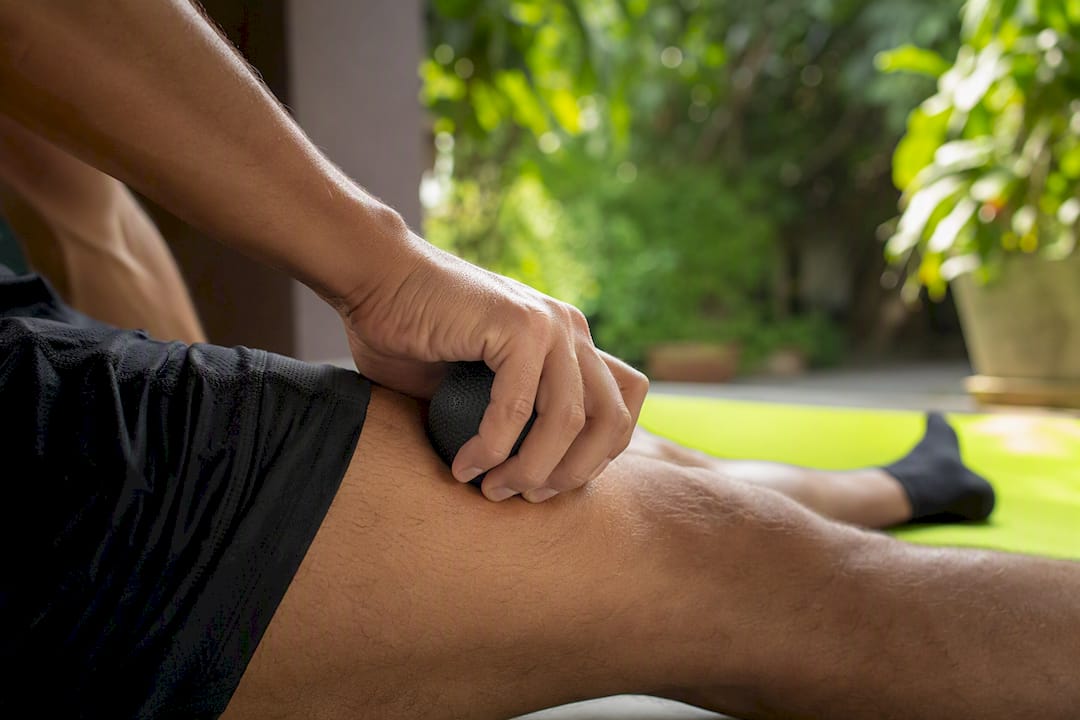
Massage still ranks as the single most effective tool for DOMS relief. A systematic review and meta-analysis of massage for DOMS found significant reductions in soreness ratings at 24, 48, and 72 hours, with the biggest effect showing up at the 48 hour mark. Massage also improved short-term muscle performance and lowered markers of muscle damage in the blood. You don’t need a professional every time. Self-massage with your hands, a massage ball, or a foam roller on the affected muscle for 10 to 15 minutes captures much of that benefit, especially when applied during the 24 to 72 hour peak window.
Active recovery works because it keeps blood moving without adding new damage. A light 10 to 20 minute walk, an easy cycle, or a mobility flow raises circulation to sore tissue and appears to raise your pain tolerance temporarily. It won’t erase soreness, but it makes moving through your day noticeably easier, and it’s the cheapest tool on this list.
Cold and heat both help, but at different moments. Meta-analytic data on thermal therapies shows hot pack application produces a large reduction in soreness both within and beyond the first 24 hours, while cold-water immersion applied within an hour of exercise also reduces pain, though with a smaller effect. Use cold immediately after an unusually hard session if the soreness feels sharp or you want quick relief. Reach for heat, a warm bath or heating pad for 15 to 20 minutes, once you’re past the acute phase and want to loosen tight tissue.
Hot pack therapy produced a standardized mean difference of -2.31 within 24 hours and -1.78 beyond 24 hours in pooled analysis, a notably larger effect than cold-water immersion’s -0.48, according to research on thermal therapies for muscle soreness.
Compression garments and water immersion add measurable, if modest, benefit. An evidence-based review of post-exercise recovery techniques found compression sleeves and contrast water therapy produced small to large decreases in perceived soreness. Wear compression gear for a few hours after training rather than all day, and there’s no need for extreme pressure. Comfortable, snug is enough.
PBMT is the modality worth watching if you can access it. Photobiomodulation, low-level light or laser therapy applied to sore muscle, showed significant benefits at 24 and 48 hours post-exercise in Bayesian network analysis, ranking among the top treatments in that window. Availability is the catch: it usually requires a clinic, sports therapy office, or specialized device, so it’s not a first-line option for most home training setups.
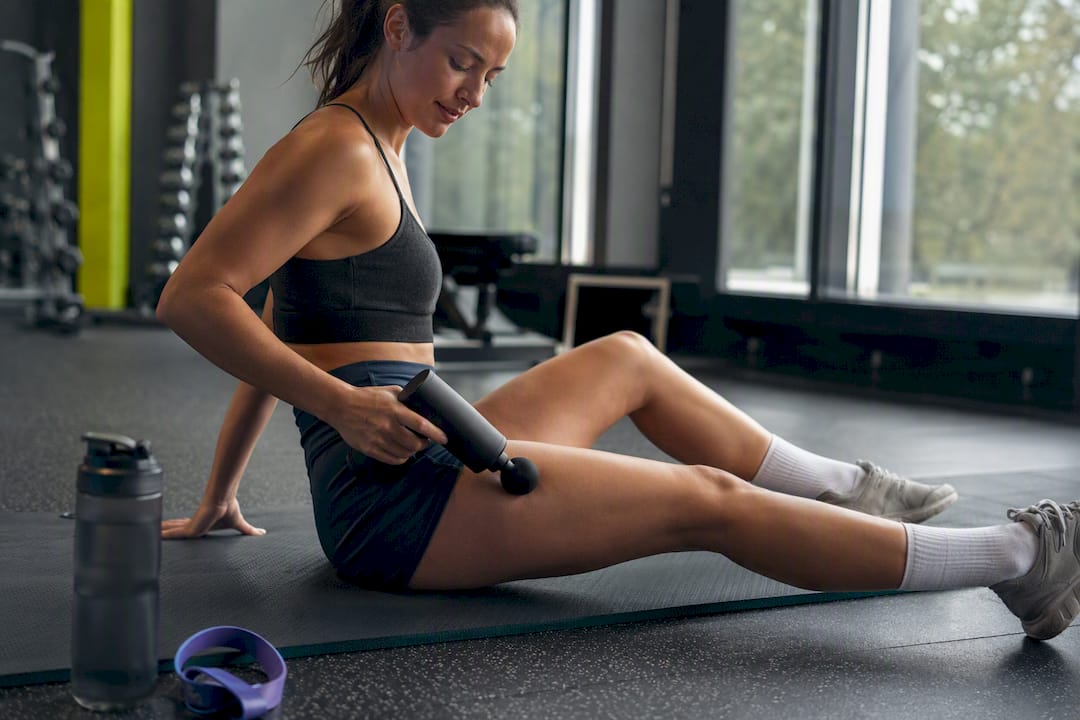
Percussive massage devices and foam rolling work, but only at the right dose. A randomized trial on percussive massage therapy found two longer sessions produced significantly better pain scores, jump height, and range of motion at 48 hours than shorter sessions or static stretching. A quick 60-second pass with a massage gun before you leave the gym probably won’t move the needle much. Benefit here is genuinely dose-dependent.
Medications have a place, but read the fine print. Short-term NSAID use, like ibuprofen, can reduce acute pain, though some research suggests frequent use may blunt the muscle adaptation you’re training for in the first place. Most supplements marketed for soreness carry limited or mixed evidence. Talk to a doctor before using anything regularly, especially past a few days.
Pro Tip: Layer your methods instead of picking just one. A short walk followed by 10 minutes of self-massage and a warm shower covers three evidence-backed bases in under 30 minutes.
## What Doesn’t Help Much With Sore Muscles
A few popular habits get more credit than the evidence supports. Knowing what to skip saves you time you could spend on methods that actually work.
Stretching still has value for flexibility and joint mobility. It just isn’t a reliable DOMS treatment option on its own.
## When Should You See a Doctor for Muscle Soreness?
Most soreness resolves on its own, but certain signs mean it’s time to stop self-treating and get evaluated.
## How to Prevent DOMS From Sidelining Your Next Workout
The best long-term fix isn’t a recovery gadget, it’s how you build your training. Your body adapts to repeated stress through what’s called the repeated-bout effect: the same workout that wrecked you in week one barely registers by week four, provided you keep training consistently.
## Two Coach-Led Recovery Sessions You Can Do Tonight
Sore and not sure where to start? Try one of these tonight.
Layer your modalities in this order for the next 24 hours: gentle movement first, then 10 to 15 minutes of a hot pack if you’re dealing with tightness, or a 10 to 12 minute cold immersion if the pain feels sharp and you want quicker relief. Onemor’s coach-led sessions, including programs from Coach Kayla and Coach Denis, build this kind of sequencing into the app’s guided rest and mobility days, so you’re not guessing at timing on your own.
Recovery isn’t separate from training, it’s part of the plan. If you want structured workouts that already account for how sore you’ll be the next day, Onemor’s free program builds active recovery days directly into your week so you’re never left wondering whether to train through soreness or sit it out. Join a tribe for accountability on the days motivation runs low, and let a coach handle the programming decisions.
## Key Takeaways
Massage and correctly timed thermal therapy produce the largest, most consistent reductions in DOMS, while stretching alone does not meaningfully reduce soreness.
PointDetailsMassage works bestReduces soreness significantly at 24, 48, and 72 hours, with the strongest effect around 48 hours.Timing drives resultsMost PT modalities, including PBMT and heat, are most effective within the first 48 hours.Match temperature to needUse cold within an hour for sharp pain; use heat later for lingering tightness.Dose matters for devicesShort foam-rolling or percussive sessions help little; longer, repeated sessions show real benefit.Skip stretching as a cureStatic stretching offers little to no clinically meaningful DOMS reduction on its own.
## Sources Worth Reading on DOMS Recovery
The massage meta-analysis supports massage timing; the thermal therapy meta-analysis backs cold/heat dosing; the network meta-analysis covers the PBMT window.
## Why the Standard DOMS Advice Misses the Point
Most soreness advice treats every remedy as equally valid, listing stretching next to massage as if they belong in the same tier. They don’t. The evidence gap between massage and stretching is large enough that recommending both without distinction actively wastes a reader’s recovery window.
The bigger miss is timing. Plenty of guides tell you what to do but not when, and DOMS treatment is fundamentally time-sensitive. Applying heat on day one instead of cold, or skipping active recovery entirely because “rest is best,” costs you comfort you didn’t need to lose.
If you take one thing from the research, prioritize movement and massage over passive fixes. A short walk plus a self-massage session beats an hour of stretching or a supplement stack with no real backing. Consistency in training, not any single recovery hack, is what ultimately makes DOMS less brutal over time.
## Frequently Asked Questions
Light movement combined with massage offers the quickest, best-supported relief. A 10 to 15 minute walk followed by self-massage or foam rolling addresses both circulation and localized tenderness.
Soreness typically starts 6 to 24 hours after exercise, peaks between 24 and 72 hours, and resolves within 5 to 7 days without treatment.
It can, but only with adequate duration. Brief, one-off sessions show limited benefit, while longer or repeated sessions have shown measurable improvement in trials.
Use cold within the first hour after intense exercise if pain feels sharp. Switch to heat once you’re past the acute phase, since hot pack therapy shows a larger effect on comfort in later stages.
No. Typical soreness clears within 5 to 7 days. Pain that worsens or persists beyond 10 days warrants a check with a healthcare provider.
This article is general information, not a substitute for advice from a qualified doctor. Consult a qualified healthcare professional about your own circumstances before acting on anything here.
The Ingredients:
-120g unshelled and unsalted pistachios
-280ml milk
-200ml full fat canned coconut milk
-2 tbsp of raw honey
-1/8 tsp salt
-1 tbsp melted coconut oil
-1 scoop of vanilla protein powder
-1 tbsp of melted chocolate
1️⃣ Begin by adding the pistachios to your blender. Change the speed, starting from low and gradually increasing to medium and high until the pistachios break down into small bits.
2️⃣ While blending, slowly pour in the milk. Continue blending until the mixture achieves a smooth and creamy consistency, free of any chunks.
3️⃣ Incorporate all the remaining ingredients, except for the chopped pistachios, and blend until everything is thoroughly combined.
4️⃣ If you have an ice cream machine, transfer there.
5️⃣ In case you don’t have an ice cream machine, here’s what to do: Place the mixture into a metal or glass container, and cover it with parchment paper. Gently press the parchment paper down onto the ice cream to prevent any air from getting in during the freezing process. Then, put it in the freezer.
6️⃣After about 2 hours, take the container out of the freezer and give the mixture a good stir. Add in the chopped pistachios during this mixing step, as it will help prevent ice crystals in the final product.
7️⃣ Cover the container again and return it to the freezer for a 24-hour freeze.
8️⃣ The following day, remove the ice cream from the freezer and let it thaw for approximately 15 minutes, until it’s easy to scoop and dip it in somemelted chocolate
Enjoy your homemade pistachio ice cream! 🍨🥄
Follow @onemor.app for more nutrition content.
#onemor#friday#healthy#recipe
#icecream#nutrition#foryoupage
#trending