Rest about 60 to 90 seconds between sets for muscle growth, 3 to 5 minutes for maximum strength, and 20 to 60 seconds for endurance or circuit work. That range comes from a 2024 Bayesian meta-analysis and echoes what ACSM has long recommended, but your ideal rest window still depends on the exercise, your training experience, and whether you’re losing reps set to set. Guided sessions in some fitness apps build rest windows into workouts, so you’re never guessing.
TL;DR:
You don’t need to memorize research to get this right tonight. Here’s what actually matters, distilled into rules you can use in your next session.
Three things to try next workout: set a rest timer instead of eyeballing it, pick the conservative (longer) end of your range for the first two weeks, and watch whether your reps drop off on set two or three. That last habit alone will tell you more about your rest needs than any article, including this one.
The right rest period is really a question of what you’re training for, and the trade-offs are different for each goal.
For hypertrophy, most lifters do well with 60 to 90 seconds. That said, the 2024 Frontiers meta-analysis found a small edge for rest periods longer than 60 seconds, with heavy overlap between short and long groups. Translation: nobody’s losing meaningful muscle by resting 90 seconds instead of 45, but if you can spare the extra time, it’s not wasted either.
For strength and power, rest 3 to 5 minutes. A 2016 randomized trial found trained men who rested 3 minutes between sets gained more strength and, in some cases, more muscle than those resting just 1 minute. Your nervous system needs time to reset before it can produce peak force again, and shortcutting that window means you’re lifting a lighter bar for less total benefit.
For endurance or circuit training, 20 to 60 seconds keeps the metabolic stress high, which is exactly the point of that kind of training.
If you’re working on technique with a heavy single (think a near-max deadlift attempt), rest as long as you genuinely need. There’s no penalty for patience when the stakes on the bar are high.
Here’s the simple rule that ties it all together: pick the rest length that lets you hit your target reps with the weight you planned to use. If your second set falls apart, you rested too short.
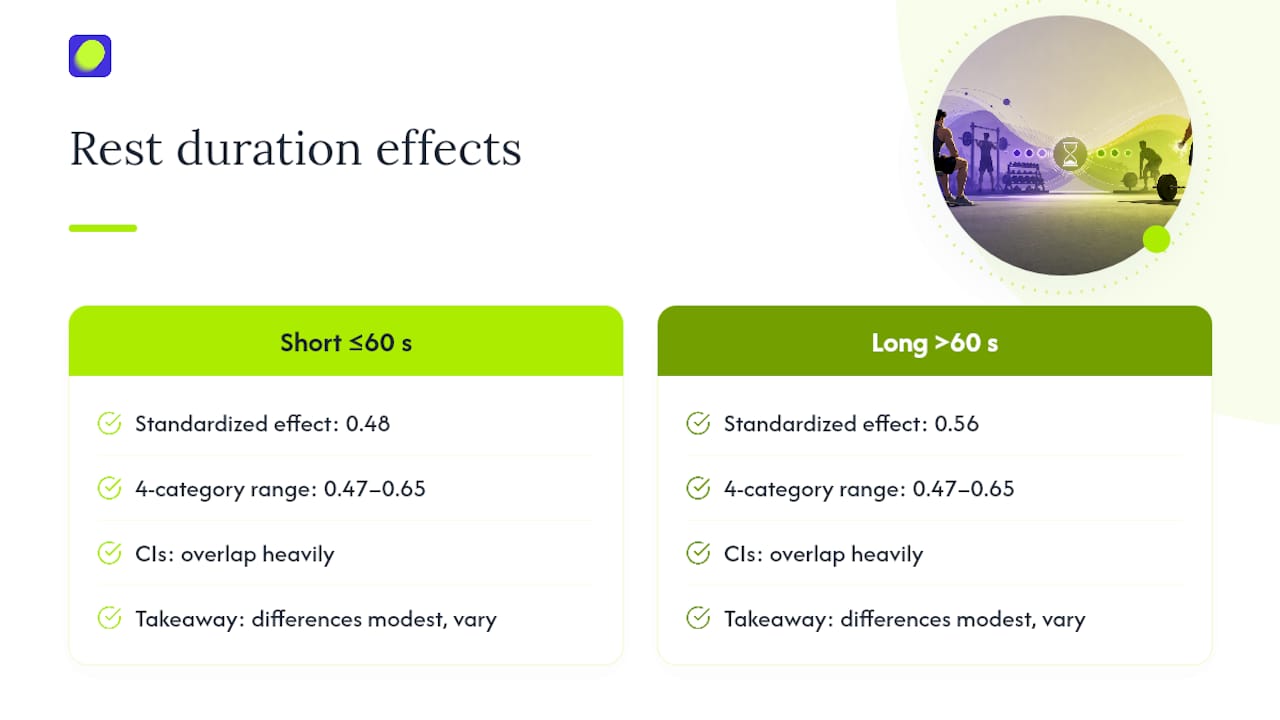
The 2024 Bayesian meta-analysis published in Frontiers pooled data across dozens of studies and found something worth sitting with: hypertrophy happens across a wide spectrum of rest durations, but rest intervals over 60 seconds showed a small statistical edge.
The numbers: short rests (60 seconds or less) produced a standardized effect of 0.48, while longer rests (over 60 seconds) came in at 0.56, with confidence intervals overlapping heavily. The four-category breakdown (short, intermediate, long, very long) ranged from 0.47 to 0.65, with substantial heterogeneity across the studies. In plain terms, the differences are real but modest, and plenty of individual variation exists.
Older research points the same direction. Brad Schoenfeld’s 2016 trial found resistance-trained men resting 3 minutes outperformed those resting 1 minute on both 1RM strength and thigh muscle thickness. A more recent comparison of 2-minute versus 5-minute rests found the longer rest preserved peak torque and produced about 15% more total exercise volume in a single session.
Why does this happen? Mechanical tension and total volume load appear to drive muscle growth more reliably than the metabolic stress or hormone spikes that short rests were once thought to trigger. When you rest longer, you can lift heavier or complete more reps at the same weight, which usually beats chasing a temporary pump.
A beginner and a lifter with three years under the bar don’t need the same rest windows, and neither does a squat versus a bicep curl.
The easiest way to know if you’ve rested enough? Check your bar speed, count how many reps you lose from set one to set two, and pay attention to how heavy the weight feels (your RPE). If set two drops more than a rep or two below set one, add 30 seconds next time.
You’ve got three real options for timing rest: your phone’s stopwatch, a fitness watch, or a built-in app timer. A phone works, but it’s also sitting right there tempting you to scroll, which quietly stretches a 90 second rest into four minutes. A dedicated rest timer that counts down and buzzes when you’re done removes that temptation entirely.
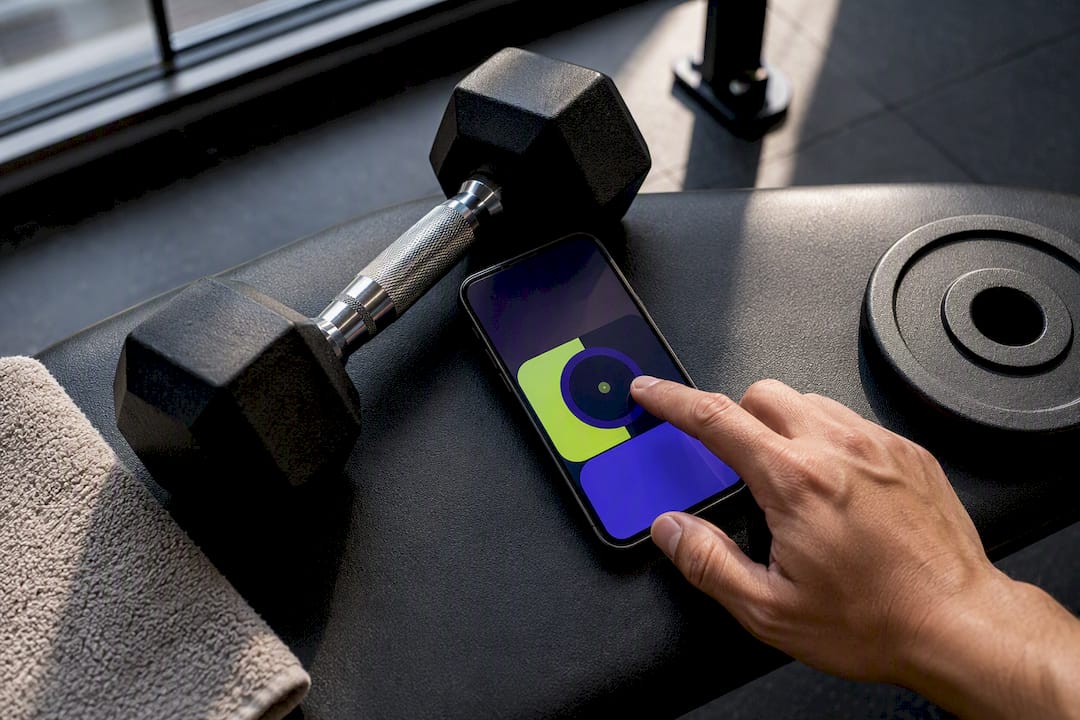
During rest, breathe deliberately, walk a few steps, or run through the setup for your next movement. Light mobility work between sets, like a hip flexor stretch during leg day, can be genuinely productive instead of dead time. What doesn’t help: sitting down and disappearing into your phone, since that habit is exactly what turns a focused session into a two-hour ordeal.
If time is truly tight and preserving every pound of load isn’t your top priority today, shortening rest slightly is a reasonable trade. You’ll sacrifice a little volume, but a shorter, finished workout beats a “perfect” one you skip entirely.
Pro Tip: Use a rest timer for two full weeks and jot down your rep count on sets two and three. If you’re consistently losing more than one or two reps, that’s your signal to add 15 to 30 seconds, not push harder.
Here’s how these rest ranges look inside an actual workout, whether you’re just starting out or you’ve been training for a while.
Shorten rest when a busy schedule forces the issue. Lengthen it when you notice your working weight creeping down set after set, since that’s the load telling you it needs more recovery. For a structured starting point, Onemor’s beginner dumbbell program builds these exact rest windows into a plan you can follow at home.
Reading the right rest range is one thing. Actually sticking to it, set after set, workout after workout, is where most people quietly drift, resting too short when they’re impatient and too long when they’re on their phone. Some guided sessions come with built-in rest timers tuned to the program, so you’re never left guessing about rest durations.
Coach-led programs may guide you through sets, reps, and rest with cues, and track your progress automatically to monitor rep trends. Whether you’re brand new to lifting or you’ve been at it for a year, the structure adjusts to you instead of asking you to build your own spreadsheet. If you want a program that handles the timing so you can focus on the lifting, Onemor’s app is built exactly for that, and you can also browse coach-led tribes to find a program that matches your goal.
There’s no single established “2-2-2 rule” backed by exercise science; if you’ve seen it referenced, it likely describes a specific program’s own shorthand rather than a universal training standard, so check that source directly rather than assuming a fixed meaning.
No, 3 minutes is well within the recommended range for strength and power work, and randomized trial data shows it can outperform shorter rests for both strength and hypertrophy in trained lifters.
Consistently cutting rest so short that you’re forced to drop weight every set kills volume load over time, and since preserved load and total training volume drive hypertrophy more reliably than a quick metabolic burn, that pattern adds up to slower results.
Yes, 2 minutes sits comfortably within or near most recommended ranges for hypertrophy and even light strength work, and it’s a reasonable default when you’re unsure which end of the range to pick.
Yes, Onemor’s guided sessions include built-in rest timers matched to your program’s goal, so you follow research-backed rest windows without tracking them yourself.