Eat 20 to 40 grams of protein and roughly 0.5 to 1 gram of carbs per pound of body weight within a couple of hours of training, and drink enough water to replace what you sweated out. The exact minute doesn’t make or break your gains. What matters is showing up consistently with a mix of protein, carbs, and fluids your body can actually use. The International Society of Sports Nutrition backs this range, and a 2025 meta-analysis confirms that timing flexibility matters less than people think.
TL;DR:
Your muscles don’t care about your Instagram feed. They care about three things after you train: protein to rebuild torn muscle fibers, carbs to refill the fuel you just emptied, and enough fat and micronutrients to keep everything else running.
Protein kicks off muscle protein synthesis, the process that repairs and builds muscle tissue after a session. Most healthy young adults do well with 20 to 40 grams post-workout, a range the Sports Medicine review backs with dosing data showing diminishing returns past that ceiling. Carbs matter just as much, especially if you trained hard. Every rep and sprint burns through glycogen, your muscles’ stored fuel, and carbs help replenish it.
Fat isn’t the enemy here. A moderate amount in your post-workout meal won’t blunt recovery in any meaningful way, so don’t stress over avocado on your toast.
Quick breakdown of what to prioritize:
Pro Tip: If you finished a sweaty HIIT class or a long run, your electrolyte needs jump. Water alone won’t cut it if you dropped more than a liter of sweat.
The old “you have 30 minutes or you lose your gains” advice doesn’t hold up. A 2025 systematic review and meta-analysis found that immediate protein and carb intake does speed recovery from post-exercise fatigue compared to delayed intake, but the effect depends on the type of exercise and the person. Translation: timing helps, but it’s not a cliff you fall off.
If you ate a solid meal an hour or two before training, your body already has amino acids and glucose circulating. You can wait a few hours after your workout to eat and still recover well. If you trained fasted, or have another session the same day, eating sooner becomes more important.
Here’s how to think about it practically:
Timing your pre- and post-workout nutrition the right way often comes down to what happened before you trained, not just after. Check out how pre-workout meal timing shifts your recovery window if you tend to train without eating first.
Numbers help more than vague advice, so here’s how to translate grams into food you’ll actually eat.
If measuring feels like a chore, eyeball it: a palm-sized portion of protein and a cupped-hand portion of carbs on your plate gets you close enough for most training goals.
You don’t need a meal-prep obsession to eat well after training. You need three or four go-to options you can throw together without thinking.
Balanced meals:
Quick snacks and shakes:
Vegetarians can swap chicken for tofu, tempeh, or lentils. Vegans can lean on pea or soy protein powder, since plant sources tend to be lower in certain amino acids per serving. For more ideas that don’t feel like diet food, check out what to eat to actually feel good during workouts and high protein snacks that don’t taste like cardboard.
Sweat isn’t just water. It carries sodium and potassium out with it, and if you only replace the water, you’re missing half the equation.
A simple way to estimate fluid loss is weighing yourself before and after a hard session. Whatever weight you dropped is mostly water. For rapid rehydration, aim to drink 125 to 150% of that lost body mass, since some fluid gets lost through normal urination before it’s absorbed back into your tissues.
Practical hydration steps:
Pro Tip: Weigh yourself before and after one hard workout to get a rough sense of how much you personally sweat. It’s the fastest way to stop guessing.
For a deeper breakdown of fluid needs by workout type, Onemor’s hydration guide walks through the numbers in more detail.
A 45-minute strength session and a 90-minute long run don’t call for the same recovery plate, and neither does a fat-loss phase versus a muscle-building block.
If your goal is body recomposition specifically, training frequency and protein distribution across the week tends to move the needle more than any single post-workout meal.
Protein and carbs get all the attention, but vitamins and minerals are doing quiet work behind the scenes. Vitamin C and vitamin E function as antioxidants that help manage the oxidative stress hard training produces. B vitamins are involved in converting the food you eat into usable energy, which matters when you’re trying to refuel quickly.
Iron deserves a special mention, especially for anyone who trains hard on a plant-forward diet. It’s a core component of hemoglobin, which carries oxygen to working muscles, and low iron status shows up as fatigue that no amount of post-workout protein will fix. Magnesium plays a role in muscle function and has been linked to recovery quality, and it’s one of the more common shortfalls in typical Western diets.
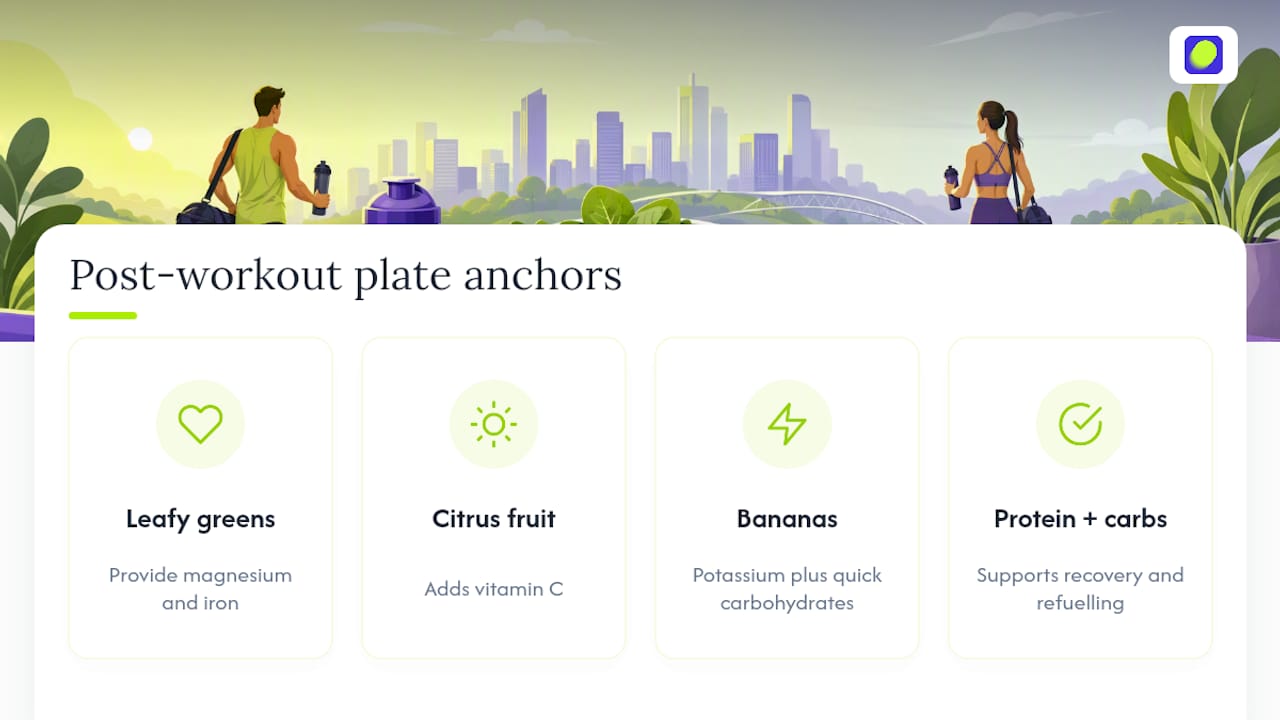
The practical takeaway isn’t to start popping a dozen supplements. It’s to build post-workout meals with some color and variety instead of just protein powder and white rice every time. A meal with leafy greens, colorful vegetables, or fruit alongside your protein and carbs covers more nutritional ground than a shake alone ever will. Citrus fruit adds vitamin C. Leafy greens add magnesium and iron. Bananas bring potassium into the mix along with their carbs. Think of your plate as covering multiple jobs at once rather than a single macro target.
Whole food should be your default, and supplements should fill specific gaps, not replace your groceries. A chicken and rice bowl gives you protein, carbs, and a spread of micronutrients your body recognizes and processes efficiently. A protein shake gives you protein and, usually, not much else.
That said, supplements earn their place in specific situations. If you’re rushing from work straight into a session and won’t eat a real meal for hours, a whey or plant protein shake is a fast, practical stopgap. If you’re vegan and struggling to hit your daily protein target through food alone, a protein powder can help close that gap without forcing you to eat six cans of lentils.
The mistake worth avoiding is treating supplements as a shortcut around consistent eating habits. No shake fixes a day where you barely ate. No pre-workout powder replaces sleep or a decent breakfast. Supplements are a convenience tool for specific gaps, not a foundation. Build your foundation from real meals, and let shakes, bars, and powders handle the moments when real food genuinely isn’t an option, like a packed schedule or travel days when a kitchen isn’t nearby.
Two people can do the identical workout and need different recovery plates, and it comes down to a handful of individual factors.
Age changes how efficiently your body builds muscle protein. Research on aging populations generally shows a blunted response to protein intake compared to younger adults, meaning older lifters often benefit from leaning toward the higher end of the protein range. Sex matters too. Differences in body composition and hormonal environment mean some women may do well prioritizing carbs a bit more around menstrual cycle phases, since energy needs can shift.
Metabolic rate is the wildcard. Someone with a naturally higher metabolism burns through glycogen faster and may feel hungrier and more depleted after the same workout as someone with a slower metabolic rate. Body size plays into this too. Gram-per-kilogram guidance exists precisely because a 130-pound person and a 200-pound person don’t need identical portions, even doing the same session.
The honest answer is that the ranges in this article are starting points, not rigid law. Pay attention to how you personally recover, how hungry you are afterward, and how you perform in your next session. Your body gives feedback if you listen to it.
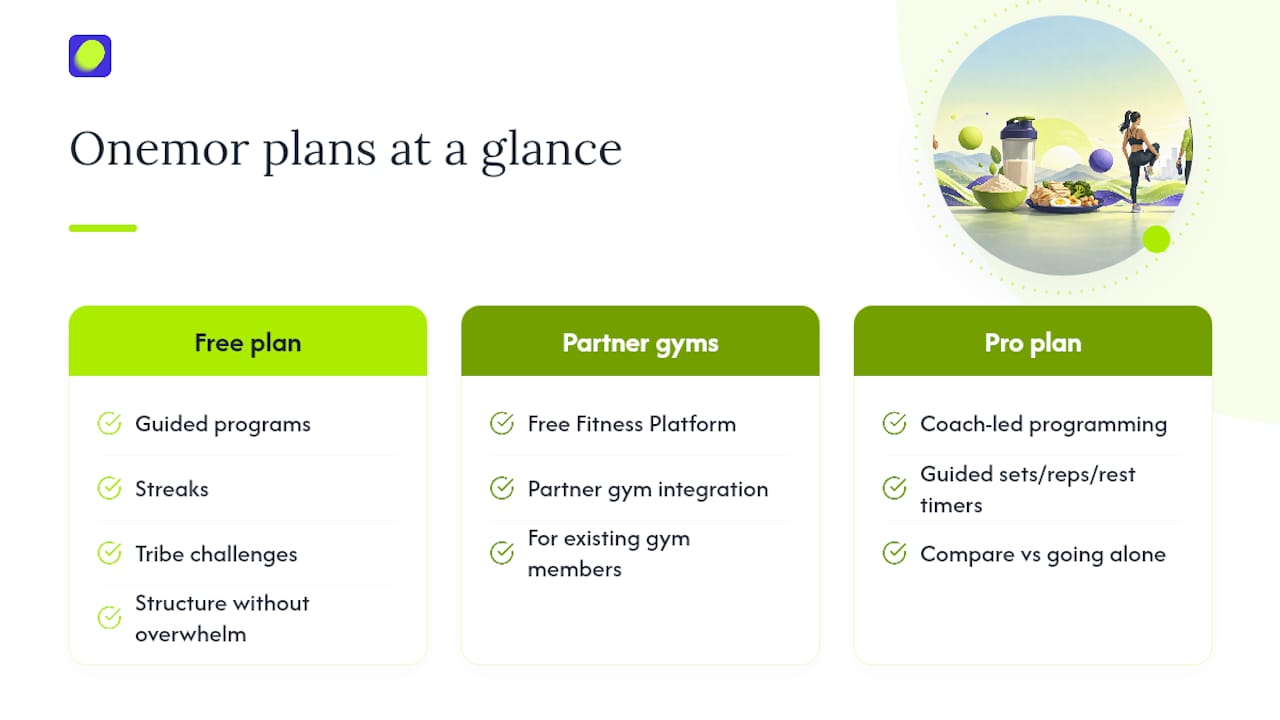
Nailing your post-workout nutrition matters, but it works best paired with a training plan that actually makes sense for your goals. Onemor was built for exactly this: real, coach-led workouts with guided sets, reps, and rest timers, so you’re not stuck piecing together your own routine on top of figuring out what to eat. If you want structure without the overwhelm, explore Onemor’s free plan and see how guided programs, streaks, and tribe challenges make consistency feel less like a chore and more like something you actually want to show up for.
If you’re already training with a partner gym, Onemor’s Free Fitness Platform is worth a look too, and if you’re comparing structured apps against your current routine, the Pro plan comparison breaks down what you get with coach-led programming versus going it alone.
While you’re planning your meals around your schedule, travel days can throw off even the best routine. If eating well while away from your kitchen is a recurring struggle, these healthy eating tips for travel pair well with the post-workout basics covered here.
This article is general information, not a substitute for advice from a qualified doctor. Consult a qualified healthcare professional about your own circumstances before acting on anything here.
This article draws on a 2025 systematic review and meta-analysis on post-exercise fatigue recovery, which examined timing effects across trial data. The Sports Medicine review supplied specific protein and carb dosing figures. EatRight and Healthline offered practical, dietitian-reviewed food guidance, while the American Heart Association contributed accessible meal examples.
There’s no single, widely recognized “3-3-3 rule” backed by sports nutrition research. If you’ve seen it referenced, it typically refers informally to workout structure (like 3 exercises, 3 sets, 3 times a week) rather than an established nutrition guideline, so treat it as anecdotal rather than science-backed.
Protein and carbohydrates matter most, since protein supports muscle repair and carbs refill depleted glycogen. Sodium, potassium, and fluids also matter, especially after a heavy-sweat session.
The 30/30/30 rule is a diet trend suggesting 30 grams of protein within 30 minutes of waking, followed by 30 minutes of low-intensity exercise. It’s a morning routine concept, not a core post-workout nutrition principle, and it’s not something backed by the sports nutrition research covered here.
Inconsistent total protein intake across the week does more damage than missing a specific post-workout timing window. Under-eating overall, skipping meals regularly, and poor sleep tend to undercut muscle gains far more than being an hour “late” with your post-workout meal.