Yes, body recomposition is realistic for most beginners and early-intermediate trainees. Lift weights three to four times a week, eat protein at levels supported by research, generally considered between about 1.6 and 2.2 grams per kilogram of body weight, and hold calories near maintenance or in a modest deficit. Expect slow, steady change measured in strength gains and tape measurements, not daily scale drops.
TL;DR:
Body recomposition means building muscle and losing fat during the same stretch of time, instead of bulking first and cutting later. For years, the fitness world treated that as physiologically impossible. The science says otherwise, at least for the right person.
Here’s the simple version of the physiology. Muscle growth runs through a pathway called mTOR, which gets switched on by resistance training and amino acids from protein. Fat burning leans on a different pathway called AMPK, triggered by an energy shortfall. These two processes used to be described as fighting each other for the body’s attention. But research on resistance-trained participants shows both a moderate deficit and a protein-matched maintenance diet let people gain fat-free mass while losing fat, as long as resistance training was in the picture. Novel training stress and enough protein appear to let both processes run at once, especially early on.
Recomposition works best for a specific type of trainee. If you’re new to lifting, coming back after months off, or carrying a higher body fat percentage, your body is primed for this kind of dual progress. Evidence reviewed across multiple trials backs this up consistently, though the size and speed of results depend heavily on training history.
Here’s how to know which path fits you right now:
Your calorie target should sit close to maintenance, or dip into a modest calorie deficit near maintenance. Go too far below maintenance and you starve the muscle-building side of the equation. A trial comparing two nutritional protocols in resistance-trained adults found a moderate deficit group dropped fat mass while still gaining fat-free mass. A second group eating at maintenance with matched high protein gained roughly 0.97 kg of fat-free mass. Both approaches worked. Neither required starvation.
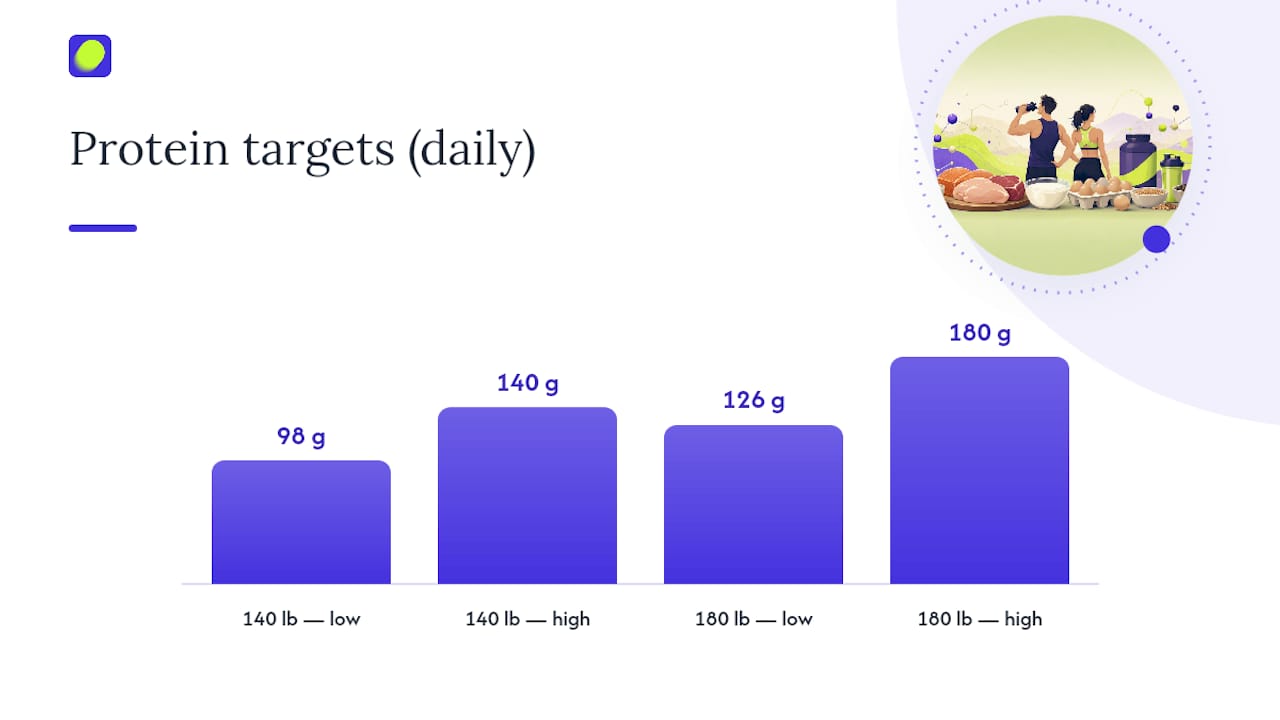
Protein intake is a critical factor in supporting recomposition. Practical targets fall between 1.6 and 2.2 grams per kilogram of body weight, or roughly 0.7 to 1.0 grams per pound. Some research pushes as high as 2.4 to 2.5 grams per kilogram with added benefit in certain trials, but that ceiling isn’t necessary for most people starting out.
Here’s what that looks like on the plate for two common body weights:
Protein target range: 1.6–2.2 g/kg (0.7–1.0 g/lb) of body weight daily, based on findings from resistance training and nutrition research covering multiple trials.
Two supplements earn their place here. Creatine monohydrate at 3 to 5 grams daily helps you maintain strength and power output even while eating fewer calories, and it’s one of the most studied, lowest-risk supplements available for anyone wondering how to take creatine monohydrate as a beginner. Protein powder isn’t magic. It’s just a convenient way to hit your daily gram target when chicken breast and Greek yogurt aren’t practical. If you’re asking whether beginners should take creatine, the honest answer is yes for most healthy adults, since the dosing is simple and the safety profile is well established.
Three to four resistance sessions a week is recommended for most people attempting a recomp. That could mean a full-body routine three times a week, or an upper/lower split spread across four days. Either structure lets you hit each major muscle group about twice weekly, which research on training frequency and muscle protein synthesis points to as a strong stimulus for growth without burying you in fatigue.
Compound lifts do the heavy lifting here, literally. Squats, presses, rows, deadlifts, and pull-ups recruit more muscle per rep than isolation work, which matters when your calories are limited. Aim for 10 to 20 hard sets per muscle group per week, adjusting based on recovery.
Progressive overload is non-negotiable, even during a deficit. That doesn’t always mean adding weight to the bar. You can add a rep, add a set, or slow the tempo down. Any of those count as progress.
A sample week might look like this:
Pro Tip: If you’re training at home without a full rack, don’t skip leg day. can still deliver the overload your legs need while you build toward heavier gym equipment.
If three days a week feels more sustainable than four, that’s a completely valid choice. Research on three-day-a-week training shows it builds real muscle and fitness gains for beginners without demanding daily gym visits.
Recovery is where recomposition quietly succeeds or fails. Sleep 7 to 9 hours a night, since that’s when most muscle repair and hormone regulation happen. Build in a lighter deload week every 3 to 6 weeks. Recovery research on periodization shows this kind of planned backoff reduces fatigue buildup and protects your muscle-building capacity during a deficit. Keep cardio moderate. A few sessions a week supports the CDC’s physical activity guidelines, but excessive cardio on top of lifting and a deficit can eat into recovery you need for the weight room.
Body weight scale changes may not fully reflect recomposition progress, or at least it tells an incomplete story. Progress photos, tape measurements around the waist and limbs, and your strength numbers in the gym tell you far more than a number that bounces with water weight and food volume. Check these every two to four weeks, not daily.
Here’s what realistic timelines look like:
Most stalled recomps trace back to one of five errors, and they’re almost always fixable without starting over.
Change one variable at a time and give it two to three weeks before judging results. If nothing has moved after 12 honest weeks, it’s a legitimate signal to shift strategy, whether that means a dedicated bulk if you’re already lean, or a tighter cut if fat loss has genuinely stalled.
This guide draws on peer-reviewed research, including Barakat et al.'s review on training-status differences in recomposition outcomes, compiled by Alb, part of the Onemor coaching team focused on translating exercise science into programs beginners can actually follow.
Onemor’s app is built around the same principles this guide covers:
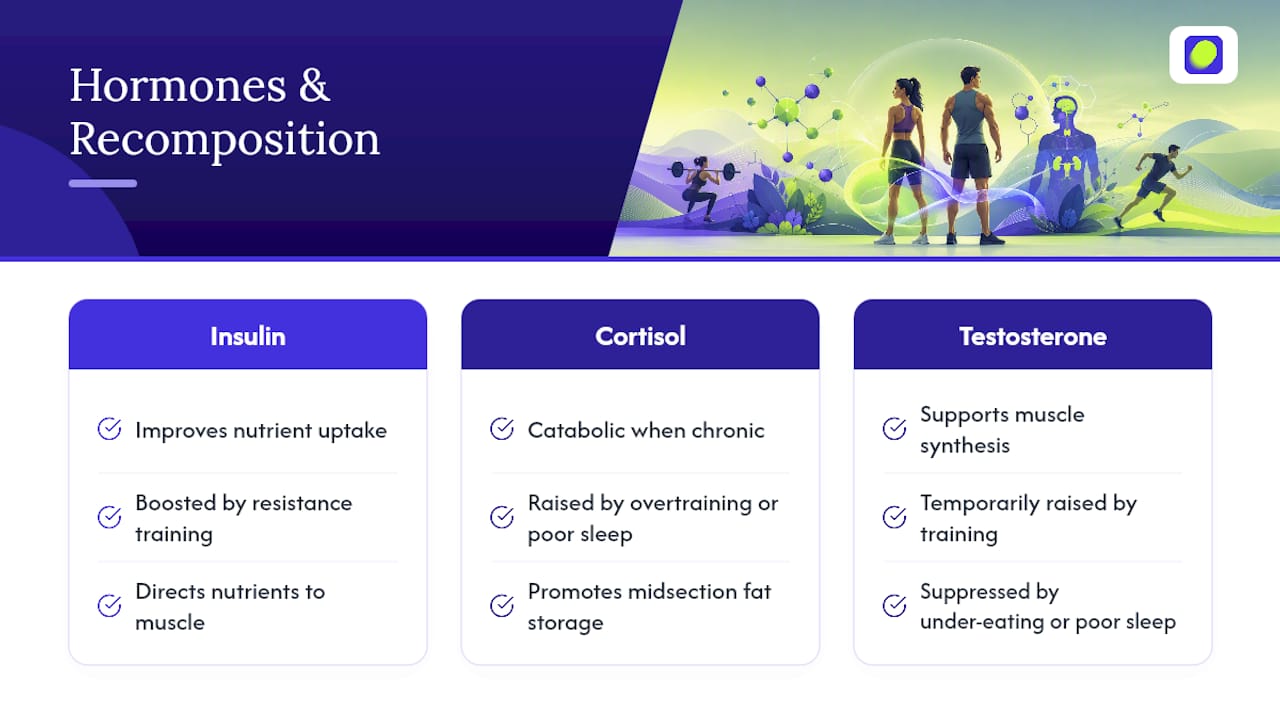
Insulin sensitivity, cortisol, and testosterone all shape how efficiently your body can build muscle while losing fat, and training plus nutrition move all three in your favor.
Resistance training improves insulin sensitivity over weeks of consistent practice, meaning your muscles pull glucose and amino acids from the bloodstream more efficiently after meals. That efficiency matters directly for recomposition, since better nutrient uptake into muscle tissue rather than fat storage is part of what makes simultaneous fat loss and muscle gain possible.
Cortisol is the stress hormone that becomes a problem when it stays chronically elevated, whether from overtraining, poor sleep, or too aggressive a calorie deficit. Sustained high cortisol pushes the body toward muscle breakdown and fat storage around the midsection, working against everything a recomp is trying to achieve. This is one more reason deloads and adequate sleep aren’t optional extras. They’re part of the hormonal environment that lets recomposition happen at all.
Testosterone, present in both men and women though at very different levels, supports muscle protein synthesis and recovery. Resistance training itself provides a mild, temporary boost. Chronic under eating or under sleeping tends to suppress it. None of this means you need to test your hormone panel before starting a recomp. It means the basics, lifting hard, eating enough protein, sleeping enough, and managing stress, are doing hormonal work in the background whether you think about it or not.
Protein gets most of the attention in recomposition advice, but carbs and fats aren’t just filler calories. They each play a distinct role in how well your training and recovery actually perform.
Carbohydrates fuel intense lifting sessions directly. Muscle glycogen, the stored form of carbs in muscle tissue, powers the reps that create the mechanical tension driving growth. Trainees who slash carbs too low alongside a calorie deficit often notice their lifts feel flat and heavy, which undercuts the exact progressive overload recomposition depends on. A practical approach places more of your daily carbs around training sessions, morning or evening depending on your schedule, so glycogen is available when you need it most.
Fats shouldn’t drop below roughly 0.3 grams per pound of body weight, since fat is a building block for testosterone and other hormones tied to muscle repair. Going too low on fat to squeeze in more carbs or protein can quietly undermine the hormonal support your recomp needs.
A workable split for most people training for recomposition looks like protein locked at your target first, then carbs weighted slightly higher than fat on training days, and the ratio flattening out on rest days. There’s no single perfect ratio here. What matters more is hitting your protein number consistently and adjusting carbs and fats around how you feel and perform in the gym week to week.
Recomposition asks for patience in a culture built around before-and-after photos taken eight weeks apart. That mismatch between expectation and reality is where most people quit, not because the plan failed, but because the timeline felt too slow to justify the effort.
The fix starts with redefining what counts as a win. A five-pound increase on your squat, a shirt that fits looser in the shoulders, an extra rep on pull-ups you couldn’t do a month ago. These are the real markers of recomposition progress, and they show up weeks before visual changes do. Trainees who track these small wins consistently tend to stick with the process longer than those waiting for a dramatic mirror moment.
Community accountability changes the math on consistency too. Training alongside others, whether that’s a gym partner, an online group, or a structured challenge with friends, adds a layer of social commitment that willpower alone often can’t match. This is part of why habit-focused features like streaks and group challenges exist inside modern training apps. They’re not gimmicks. They’re addressing the actual psychological reason people abandon good plans.
Set a check-in rhythm and stick to it, every two to four weeks, using photos, measurements, and your training log rather than daily scale checks. Between check-ins, focus entirely on showing up for the next session. The plan is already sound. Consistency is the only variable left to manage.
The work doesn’t end once you’ve hit your recomposition goals. What happens next determines whether those changes stick around for years or slide back within months.
Shift your mindset from “phase” to “baseline.” The training frequency, protein intake, and lifting habits that got you results during recomposition are the same habits that maintain them afterward. Trainees who treat recomp as a temporary sprint, then abandon structured training once they’re satisfied, typically see gradual muscle loss and fat regain within six months to a year.
That doesn’t mean the intensity has to stay identical forever. Once you’ve reached a body composition you’re happy with, many people shift toward maintenance calories with slightly more flexibility in the diet, while keeping resistance training frequency steady at two to three sessions weekly, the minimum threshold public health guidelines support for muscular strength. Strength training doesn’t disappear from your life. It just becomes less regimented.
Periodic check-ins, monthly or quarterly, catch drift before it becomes a real setback. A five-pound shift on the scale or a strength plateau noticed early is a quick correction. Ignored for six months, it’s a second recomposition project. The trainees who keep their results long-term treat training as a permanent part of how they live, not a project with a finish line.
Reading about macros and mesocycles only gets you so far. What actually moves the needle is showing up for guided sessions that handle the sets, reps, and rest timers for you, so the only decision left each day is whether you’re getting stronger than last week. That’s exactly what Onemor is built to do differently from piecing together a plan from scattered articles and spreadsheets.
Inside the app, beginner and early-intermediate programs are structured around the same 3 to 4 day training frequency and progressive overload principles covered here, led by real coaches like Coach Kayla and Coach Branden, with streaks and tribe challenges built in to keep you consistent past the two-week mark where most plans quietly fall apart. If you’re weighing recomp against a bulk or cut, coaching support that adjusts with your progress beats guessing alone every time.
Head to Onemor to find a starter program matched to your experience level, or explore available tribes to train alongside people working toward the same goal. Your first 8 to 12 weeks of consistent, guided training is the fastest way to find out what your body can actually do.