Active recovery is low-intensity movement performed after or between intense workouts that helps circulation and can reduce short-term soreness. It belongs in your routine as a cooldown and on restorative rest days. When you need maximal short-term performance, like back-to-back sprint efforts, or when you’re nursing an acute injury, passive rest is usually the smarter call.
TL;DR:
- Active recovery most effectively reduces perceived muscle soreness and stiffness within hours after exercise, but its effects are modest and short-lived.
- Passive rest may outperform active recovery following maximal efforts like sprints or just before competitions when maximum energy is needed.
- Light movement during active recovery should keep intensity below 50% of maximum effort, using tools like walking, cycling, or gentle mobility exercises.
- Foam rolling and massage can provide similar short-term relief as active recovery, but should complement movement rather than replace it.
- Avoid active recovery if experiencing sharp pain, worsening soreness, or signs of injury, and seek medical advice to prevent further harm.
Light movement after a hard session keeps blood flowing to tired muscles, which helps carry away metabolic byproducts like lactate and supports the body’s natural repair process. That extra circulation doesn’t just feel good. It appears to play a role in movement-mediated pain relief, sometimes called exercise-induced analgesia, which is part of why a short walk after leg day can genuinely ease stiffness.
The research backs this up in a specific way: active recovery most reliably helps with short-term perceived soreness, not necessarily long-term muscle repair speed. A meta-analysis of recovery techniques found that active recovery can reduce delayed-onset muscle soreness (DOMS), though the effects tend to be modest and don’t last long. That’s still useful. Here’s what realistically shows up:
One supported figure worth knowing: small trials suggest active recovery and massage can produce comparable short-term relief from muscle soreness, according to a randomized controlled trial on exercise and massage, with the biggest improvements showing up immediately after treatment and fading within about an hour.
Neither mode wins every time, and the right choice depends on what you’re recovering from and what’s coming next.
Passive recovery, meaning full rest with no structured movement, can actually outperform active recovery in specific situations: short, repeated maximal efforts like sprint intervals, or the narrow window before a competition when you need every bit of stored energy. A systematic review on active versus passive recovery during high-intensity interval training found that passive recovery sometimes produced better mechanical performance in these repeated-effort contexts.
Active recovery earns its place in almost every other scenario: cooldowns after steady-state or strength sessions, the between-set lulls in a workout, and your scheduled rest days. Use this quick checklist after any session:
You don’t need a complicated plan here, just the right intensity at the right moment. Three contexts call for slightly different approaches.
Your best intensity cue is the talk test: if you can hold a full conversation without gasping, you’re in the right zone. If soreness is significant or you’re dealing with a cranky joint, shorten the session and drop the range of motion rather than skipping movement altogether. Most people do well with two or three active recovery touches per week, whether that’s a cooldown habit, a between-set routine, or a dedicated rest-day session.
Pro Tip: Pair your cooldown with a quick dynamic warm-up flow reversed into slower, more relaxed movements. It reuses a sequence you already know, so there’s nothing new to think about when you’re tired.
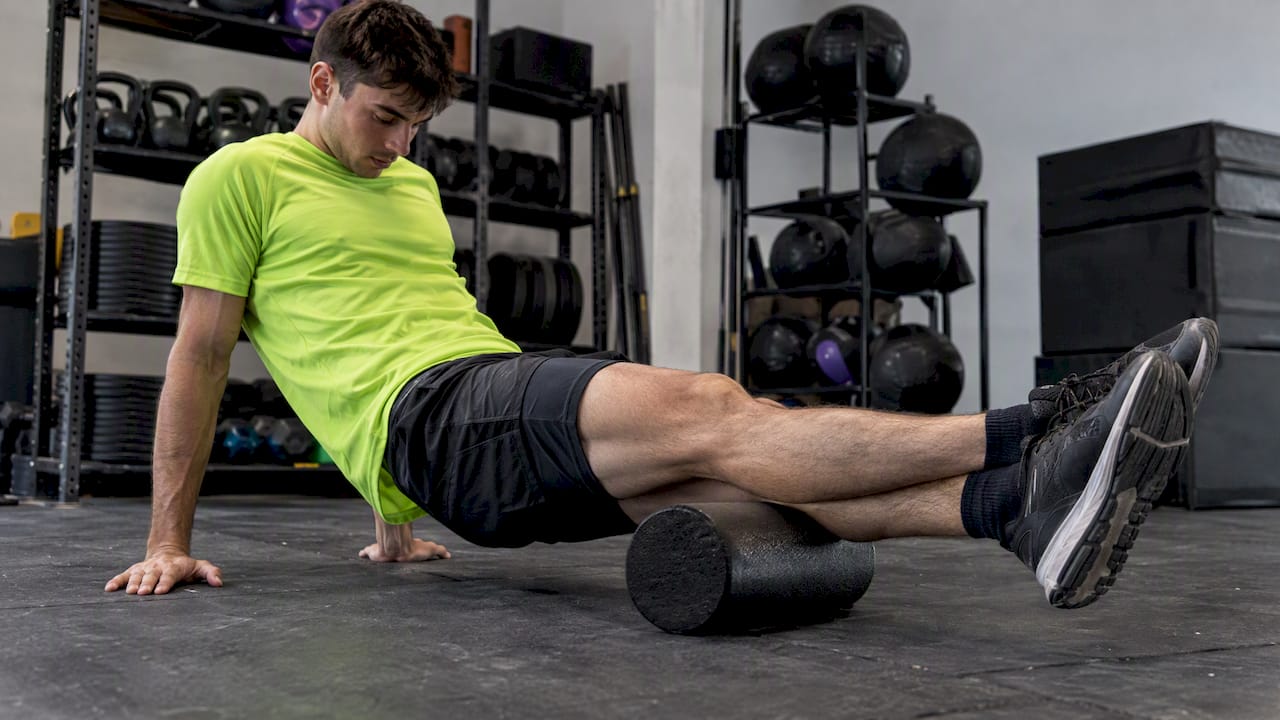
Self-myofascial release tools work well alongside active recovery, not instead of it. Foam rolling has randomized-trial support for reducing DOMS and may even help restore strength faster after a hard session, according to research on foam rolling as a recovery tool.
The practical approach is simple: Find detailed recovery strategies in this practical recovery guide that complement your workout and cooldown routines.
Massage and active exercise produced similar relief from soreness in a small randomized trial, so if you have access to both, use whichever fits your schedule. Save massage for the days leading into a competition if you want a lower-effort recovery option.
Active recovery is gentle by design, but gentle doesn’t mean risk-free. Skip it and seek medical attention if you have an acute structural injury, sharp or stabbing pain, or any symptom that feels more serious than ordinary muscle fatigue.
Watch for signs that you’re overdoing it across the board, not just on recovery days:
If any of these show up, scale back intensity and frequency before adding more rest days, and loop in a coach or clinician if symptoms don’t resolve within a week or two.
A good week balances hard training with deliberate lighter days, and the structure doesn’t need to be complicated.
A sample week might look like this: strength training Monday, active recovery walk Tuesday, HIIT Wednesday, full rest or light mobility Thursday, strength Friday, active recovery swim or yoga Saturday, and a true rest day Sunday. Staying hydrated through all of it supports the same circulation and recovery processes active recovery is meant to boost, so pair your sessions with solid hydration habits.
Pro Tip: Keep a simple note after each hard session rating soreness from one to five. If recovery days consistently bring that number down within 24 hours, your plan is working.

It’s worth being honest about what the evidence supports and what it doesn’t. Meta-analytic research shows active recovery can reduce DOMS and support lactate clearance, but the effects are often small and don’t last long, according to a meta-analysis of recovery techniques. Massage and certain immersion or compression methods sometimes produce larger reductions in perceived fatigue than active recovery alone.
Separate trial data shows short bouts of active exercise or massage can improve pain thresholds in the short term, with benefits generally peaking somewhere in the first 20 to 60 minutes post-treatment.
The practical takeaway: active recovery is a low-cost, low-risk tool that helps in everyday training contexts, easing soreness, supporting consistency, and making your next session feel more approachable. It isn’t a guaranteed performance booster for elite competition, and treating it that way sets up unrealistic expectations. Use it for what the evidence actually supports: feeling better, moving more easily, and staying consistent.
If you remember one thing, make it this: active recovery is appropriate almost anytime you’re not chasing maximal performance in the next hour, and what it realistically delivers is less soreness, steadier habits, and an easier path back into hard training.
A simple week to try:
Check whether it’s working by asking three questions each week: Is soreness easing faster? Is sleep steady? Are hard sessions feeling more doable, not less?
Our app is designed so you never have to guess what to do on a lighter day. The app features guided sessions with built-in rest timers and coach-led structure, helping active recovery fit naturally into your week instead of becoming one more thing to figure out on your own.
Ready to train with more structure? Start with our Free plan or explore Pro for advanced coaching features.
Active recovery is light, low-intensity movement done after a hard workout or on a rest day, like an easy walk or gentle cycling. It helps circulation and can ease short-term soreness without adding training stress.
A cooldown version typically runs 6 to 10 minutes, while a dedicated rest-day session usually lasts 30 to 60 minutes. The right length depends on how you feel and how hard your previous session was.
Yes, a brisk walk is one of the most accessible forms of active recovery and fits the moderate-intensity guidance from the CDC. Keep the pace conversational using the talk test as your guide.
Not always. If you’ve done repeated maximal efforts or you’re recovering from an injury, full passive rest can be the better choice, while active recovery works best for everyday training and cooldowns.
Foam rolling is a complementary recovery tool rather than active recovery itself, since it doesn’t involve movement at a trained intensity. Research on foam rolling as a recovery method shows it can reduce soreness and pairs well with a light cooldown walk.