A hybrid home gym program mixes strength, cardio and mobility in one weekly plan, and lets you do some sessions at home and others at the gym. For most beginners, the best version is three short sessions a week: two built around strength, one built around cardio, with mobility tucked into each. Below is the schedule, the numbers behind it and how to bend it when your week falls apart.
Think of fitness as a buffet. Strength, cardio and mobility are all on the table, and a hybrid program simply lets you take a sensible portion of each every week instead of piling your plate with one.
As Harvard Health’s coverage of the topic notes, hybrid training is not a brand-new idea: people have been combining types of exercise informally for a long time. What a good program adds is structure, so you know what to do on each day and how to progress.
The “home and gym” part is about flexibility. Resistance training can be done with body weight, resistance tubing, free weights or weight machines, which means a living room and a gym floor can both do real work for you.
You may have heard that cardio kills your gains. It’s called the interference effect, and it’s a fair thing to wonder about. Exercise researcher Jack McNamara explains that for the vast majority of people the effect is insignificant, and the best workout is the one you’ll keep doing.
So if you’re training 2 to 3 times a week and want to get stronger and fitter, you don’t need to choose a side. If you’re torn between conditioning and lifting, our guide on picking HIIT or strength based on what you’ll actually do can help you decide where to put your energy first.
The U.S. Department of Health and Human Services recommends adults get at least 150 minutes of moderate or 75 minutes of vigorous aerobic activity a week, plus strength training for all major muscle groups at least twice a week.
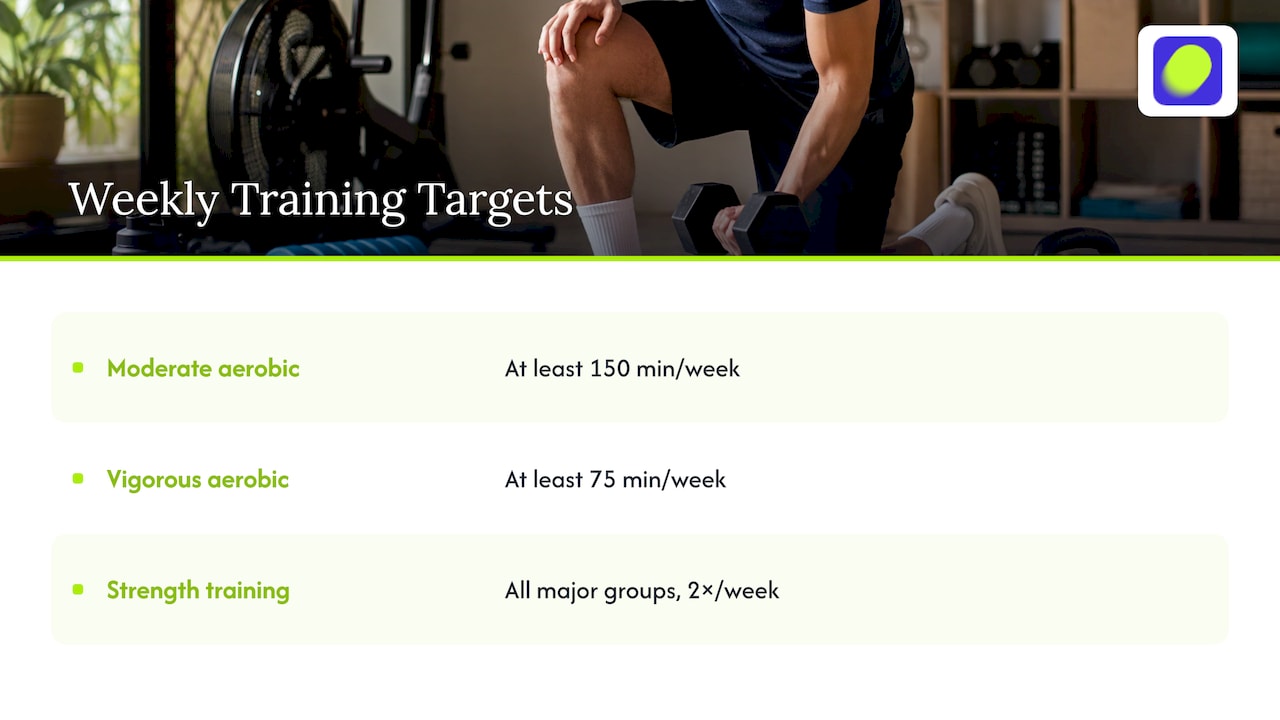
That sounds like a lot until you map it out. Two strength sessions and one cardio session, plus a few brisk walks, gets you close.
For beginners, the pace matters as much as the amount. Beginners can combine aerobic and resistance work two or three times a week, starting at low-to-moderate intensity and building a base for four to six weeks before adding a day or turning up the intensity. Exercise experts also warn against sudden, large jumps in training volume, so add new things gradually.
Here is a simple template. Keep a rest day between sessions where you can, since beginners need at least 24 to 48 hours of recovery between sessions.
That’s it. Two strength days cover the twice-a-week guideline, and the cardio day keeps your engine ticking.
You don’t have to split things perfectly. These rules of thumb keep it easy:
No gym membership yet? Start with our 2x or 3x a week dumbbell plan for absolute beginners or the resistance band starter plan. Already walking into a gym? The simple 4-week beginner gym workout shows you how to use the floor without feeling lost.
For general muscular fitness, the American Council on Exercise suggests one to four sets per exercise, eight to 15 reps per set and two to three minutes of rest between sets. The same source says beginners can safely do full-body resistance training on up to three non-consecutive days each week.
A friendly starting point:
If the numbers feel fuzzy, our explainer on sets and reps for new lifters breaks them down, and the guide to rest between sets shows how rest changes with your goal.
Progress happens between workouts. Exercise physiologist Kim Way describes recovery as a triad of training, sleep and nutrition, and notes that recurring niggles often come from lifestyle factors rather than training mistakes.
Fueling matters too. Exercise expert Ilic warns that inadequate nutrition and poor recovery can lead to hormone dysregulation and bone stress injuries, particularly in women. If you’re training more but eating or sleeping less, talk to a doctor or registered dietitian.
If a muscle in your hip or groin gets sore and doesn’t settle, take it seriously. This hip flexor strain recovery plan shows how a gradual strength progression can support getting back to training. Pain that is sharp, worsening or lingering is a reason to see a physician or physical therapist before you push on.
Life happens. Here’s how to keep the thread without guilt:
Swaps should stay gradual. Changing every exercise and adding extra sessions at once is the quickest way to feel wrecked and quit.
A plan only works if you open it. That’s where we come in. Onemor gives you coach-led workouts with guided sessions, including sets, reps and rest timers, so you don’t have to design your own routine. Streaks, XP and tribe challenges with friends help you keep coming back, whether you’re training at home or in the gym.
Onemor is available on iOS with free and premium options. You can start with the free plan, see what’s included in Pro, or begin with our guided strength workouts for beginners. If you want a gentle first step, our 2 to 3 coach-led session guide is a good place to begin.
It’s a workout plan that combines training types such as strength, cardio and mobility in one routine. A hybrid home and gym version also splits sessions between your home and a gym, so you can keep going whatever your week looks like.
Yes. Beginners can combine aerobic and resistance training two or three times a week at low-to-moderate intensity. Build that base for four to six weeks, then add a day or a little more intensity.
Two to three days is a solid start. Aim for strength work on at least two of them, with a day of rest between sessions when possible. Adding a fourth day can wait until the routine feels easy.
For most people, no. The interference effect is considered insignificant for the vast majority, so a cardio day alongside two strength days is fine for beginners.