Should you work out while sick? It depends on where your symptoms are and how bad they feel. A stuffy nose with no fever usually allows an easy, shorter session. A fever, chest symptoms or body aches mean it’s time to rest. Skipping a few days won’t erase your progress, and we’ll show you how to ease back in with a plan so you keep your momentum.
When you’re training 2 to 3 times a week, skipping a session can feel like losing your streak. So how do you decide in the moment?
Many doctors use a “neck check.” Sports medicine physician Heather Rainey, MD, says that symptoms above the neck are probably safe to exercise through, while multiple symptoms in different body parts mean rest. A peer-reviewed review describes the rule as not strictly scientific but partly useful.
Above the neck — Runny nose, sneezing, mild sore throat. Light activity is usually fine.
Below the neck — Chest tightness, a productive cough, body aches, upset stomach. Rest.

Mayo Clinic says mild to moderate activity is usually OK with a common cold and no fever, and it may even help open nasal passages. Just reduce the intensity and length: think a walk instead of a run.
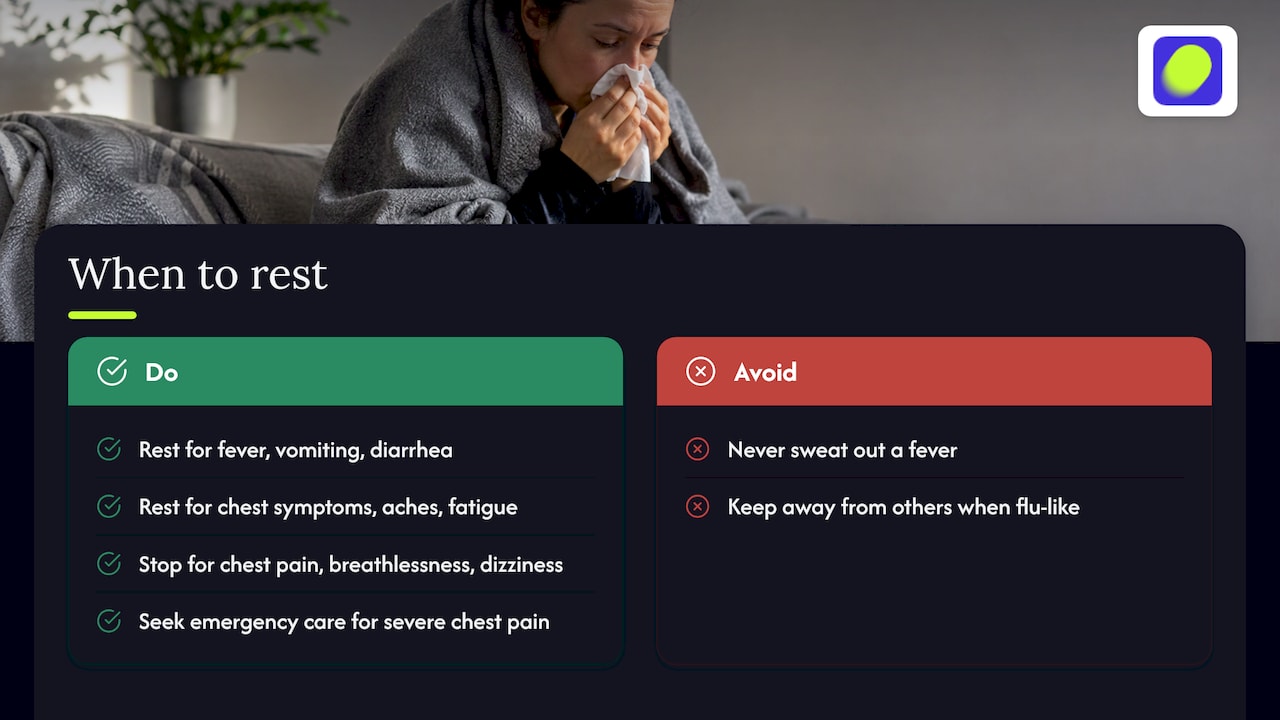
Some symptoms are a clear signal to take a rest day. UNC Health lists a fever of 100.4°F or higher, vomiting or diarrhea, and chest symptoms such as tightness, a productive cough, shortness of breath or ongoing palpitations.
Henry Ford Health adds body aches and fatigue to the list, and says you should never try to sweat out a fever because it can push your body temperature too high.
Stop right away and rest if you feel chest pain, trouble breathing, dizziness or faintness, per Cleveland Clinic. Severe chest pain or shortness of breath calls for emergency care. If you have asthma or a heart condition, talk with your doctor before training while ill.
Feeling flu-like, with chills, aches and fatigue? Stick to gentle stretching or a walk at most, and keep away from others.
If you pass the neck check, here is how to keep it easy and smart:
A warm, steamy shower afterward may also ease sinus congestion.
The CDC says to stay home and away from others when you have respiratory virus symptoms. If you’re mildly sick, train at home or outdoors for the first couple of days. If you must go to a shared gym, wipe down equipment and wash your hands.
That’s where a home session shines. With Onemor you can follow guided sessions with sets, reps and rest timers anywhere, so an easy day doesn’t need a gym at all.
Rest is part of training, not a break from it. A review of illness in athletes notes that overtraining without enough recovery leaves people more prone to illness and injury. Heavy, strenuous exercise can also have a short-term negative effect on the immune system, while regular mild-to-moderate exercise can be protective.
If you train 2 to 3 times a week, you already have built-in rest days. When you’re sick, add more. Henry Ford Health says missing a workout won’t derail your goals, and even missing a whole week won’t wipe out your progress. Mayo Clinic agrees that a few days off shouldn’t affect your performance.
Want ideas for the days in between? Try our one-week active recovery plan.
Green light: you’ve been fever-free for 24 hours without fever reducers and your symptoms are improving. The CDC says that’s when you can return to normal activities, with extra precautions for the next 5 days. Stay home again if the fever comes back or you feel worse.
Then go gradually:
A review suggests allowing 2 to 3 days of graded return for every day of training missed, increasing in about 10% steps. UNC Health gives an example: a runner doing five miles a day starts with one to two miles for the first week or so, since fatigue raises injury risk.
For a structured restart, try our 4 to 8 week beginner plan and focus on form before weight.
Onemor is built for people training 2 to 3 times a week who want structure without planning every session. Our workouts are led by expert coaches and include guided sessions, streaks, XP and tribe challenges with friends, so returning after a sick week feels motivating, not like starting over. Start with the free plan or explore Pro.
Only if your symptoms are mild and above the neck, with no fever. Keep it short and easy. With a fever, chest symptoms, body aches or stomach issues, rest.
Usually yes, lightly. A walk or gentle stretching can help you feel better, but skip hard intervals and heavy lifting until you’re feeling better.
If you train 2 to 3 times a week, your non-training days are your rest days. Add more whenever you’re sick or very tired. Light movement on off days is fine.
A few days off is unlikely to set you back. Pushing through illness can prolong your recovery, so rest now and return gradually.