You can get a real workout in an apartment without a single thud. The trick is to keep at least one foot on the floor, move with control, and pick the right time and spot in your place. Below you’ll find apartment-friendly cardio, quiet strength moves and a simple routine you can start tonight.
Noise in an apartment mostly comes from impact: feet landing hard, weights dropping, bodies hitting the floor. A quieter home workout starts at the source, for example by replacing repeated jumping with step-based alternatives.
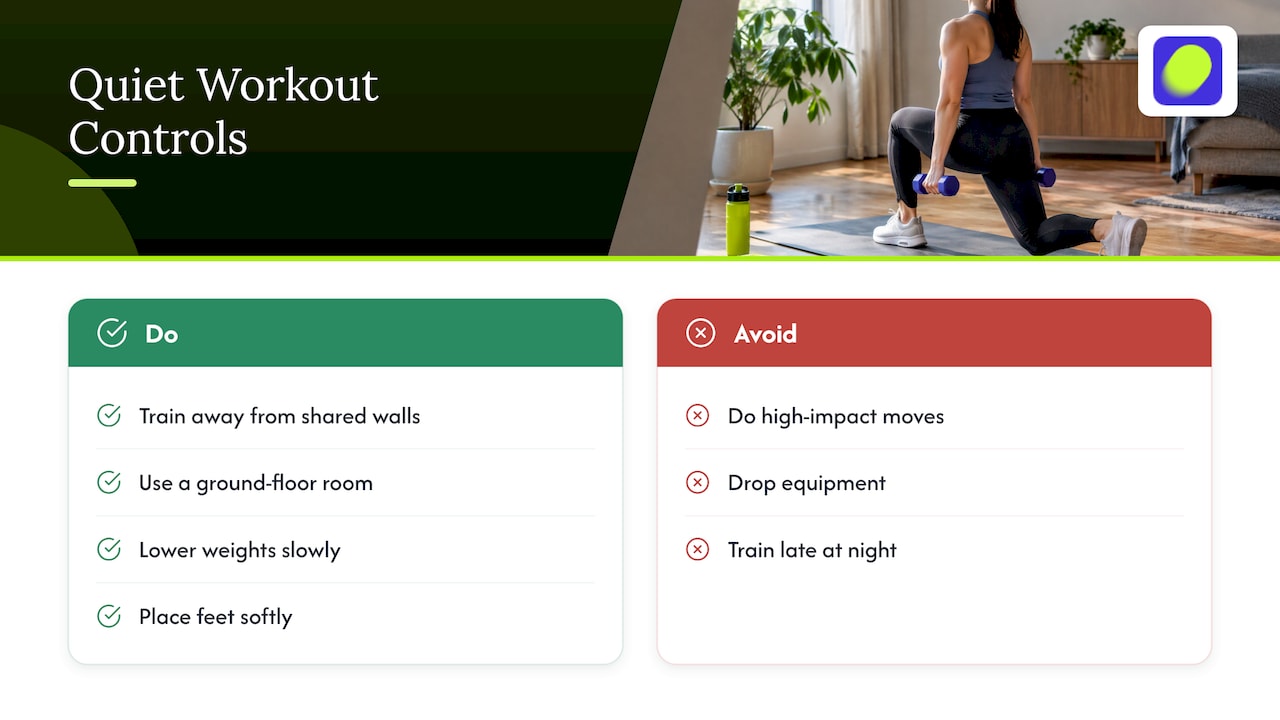
The same guide suggests a few simple physical controls: train away from shared walls, use a ground-floor room if you have one, and avoid loud high-impact moves, equipment drops and late-night sessions.
So a quiet workout is really a controlled workout. You lower the weight slowly, you place your feet softly, and you keep the floor from shaking. Sound like a tall order? It gets easy once you have a few go-to moves.
You don’t need a spare room. A clear area about the size of a yoga mat is enough. Here’s a quick setup:
Prefer to warm up first? Our 5–10 minute dynamic warm-up fits nicely before any of the sessions below, and it’s quiet too.
Good news: you can raise your heart rate without leaving the ground. Low-impact cardio options include marching in place, step touches, heel digs, alternating knee lifts, shadowboxing without jumping, and low-impact dance. In most of these, at least one foot stays in contact with the floor.
Here’s how to make them feel like a workout:
How hard should it feel? According to the American Heart Association, moderate intensity means breathing harder while still being able to talk. If you could sing the whole time, pick up the pace a little.
Want more intensity with joint-friendly moves? Our beginner HIIT guide shows how to do short, effective intervals without the pounding.
Strength work is naturally quiet when you slow it down. Slow tempo also makes each rep harder, so you don’t need speed or bounce. Try these:
Want a little resistance? Household items work: books, water bottles or cans of food weighing about one to two pounds make simple weights. Light resistance bands are another quiet option, and our resistance band starter plan walks you through it.
Here’s a simple structure. A beginner workout can use six exercises for 45 seconds each, with 15 seconds to transition, then repeat the sequence once. If you’re brand new, one six-minute round is a perfectly good start.
Try this lineup:
Rest 15 seconds between moves. Finish round one, take a breather, then do it again if you feel good. Stop any move that causes pain, and if you have a medical condition or an injury, check with your doctor before starting a new routine.
Not sure how long your sessions should be? Our guide to ideal workout duration helps you match time to your goal.
The American Heart Association recommends adults get at least 150 minutes of moderate activity or 75 minutes of vigorous activity per week, or a combination, plus muscle-strengthening at least 2 days per week. It also advises increasing the amount and intensity gradually.
Don’t let that number scare you. The CDC notes that activity can be spread across the week and broken into smaller chunks. That means a 10-minute quiet session before work counts.
A friendly weekly shape for training two to three times:
Start where you are, then add a round or a few minutes as it gets easier.
Quiet workouts work best when you actually come back to them. That’s where we come in. Onemor is an iOS fitness app with guided sessions that show sets, reps and rest timers, coach-led workouts for home or the gym, and streaks, XP and tribe challenges to keep you motivated with friends. We offer a free plan and a Pro option.
Start with the free plan and see how structured training feels. If you’d like to explore what’s included in Pro, take a look at our plan comparison. Ready to eventually hit the gym? Our beginner gym starter plan is a good next step.
Yes. Marching, step touches, heel digs, knee lifts, shadowboxing and low-impact dance all keep a foot on the floor. Speed up your arms and pace to raise your heart rate without the noise.
There’s no universal answer, but late-night sessions are the ones to avoid. Early evening or a reasonable morning hour usually works better, along with training away from shared walls.
No. Bodyweight moves are enough to start. If you want extras, a flat non-slip mat, a firm chair for balance and light household weights like water bottles or cans are all you need.
Two to three short sessions is a solid start, and the AHA recommends muscle-strengthening at least two days a week. Build up gradually as the sessions feel easier.