For most beginners and intermediate lifters, Onemor is the strongest starting point: it combines coach-led programming, guided sessions with sets, reps, and rest timers, and a community structure that keeps you consistent without requiring you to plan anything yourself. If you already have a solid program and just need a clean place to log your lifts, a dedicated gym-logging app may serve you better. Here’s how to know which fits your situation.
Not every app that calls itself a strength tool is built for real strength development. The gap between a well-designed app and a mediocre one usually comes down to six features.
AI-personalized exercise prescriptions have research backing: personalized mobile programs can increase workout intensity and user enjoyment when matched to the right training intent, according to a review published in JMIR mHealth and uHealth. That’s the case for choosing an app with genuine personalization rather than a one-size-fits-all template.
Pro Tip: Test an app’s real personalization within the first days by deliberately missing one session and checking whether the plan adjusts. If the app simply moves the missed workout to the next day without any recalibration, its “adaptive” label is mostly marketing.
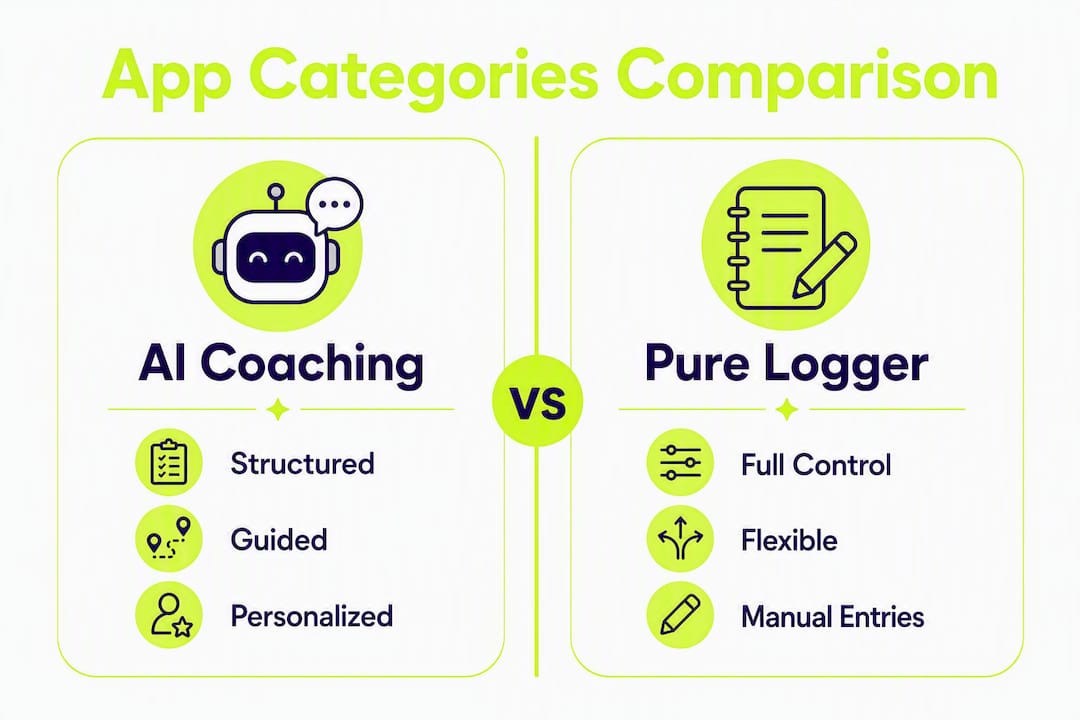
Strength-training apps fall into two main types, with a hybrid middle ground worth knowing about. Matching the category to your intent is more important than any individual feature.
AI coaching and adaptive builders
These apps generate and adjust your program based on your goals, equipment, training history, and ongoing performance data. They’re best for beginners who don’t know where to start and intermediates who want a plan that evolves with them.
Template and program libraries
These apps offer pre-built programs (think 5/3/1, GZCLP, or push/pull/legs splits) that you follow as written. You choose the program; the app tracks your progress through it.
Gym-logging and analytics apps
Pure loggers let you record any workout you design, visualize trends, and track PRs. They don’t prescribe anything.
The honest trade-off: AI coaching gives you more structure but less control. A pure logger gives you full control but zero guidance. For most people starting out or building consistency, structure wins.
A free trial is a test, not a preview. Here’s a step-by-step way to use the trial period to make a real decision.
Enjoyment of the interface predicts continued use more reliably than raw feature counts. If navigating the app feels like a chore by day three, that friction compounds over months.
Red flags to watch for:
On pricing: A 14-day trial is the minimum worth accepting; 30 days is better for strength apps because you need at least two full training weeks to judge adaptation. Monthly subscriptions in a moderate price range are standard for quality apps. If a free tier exists, check whether it covers actual programming or just a library of exercises you have to organize yourself.
Onemor is built specifically for the training stage where most people quit: the first few months, when the plan isn’t clear, the habit isn’t formed, and showing up feels optional. The app addresses that directly.
Feature breakdown:
How Onemor maps to the selection criteria:
Pros:
Cons:
Pro Tip: In your first 14 days on Onemor, complete at least four sessions before judging the programming. Strength adaptations aren’t visible in two workouts. What you’re evaluating early is whether the structure feels right and whether you’re actually showing up.
For readers comparing options across the market, this guide to Fitbod alternatives breaks down how Onemor stacks up against other popular choices on personalization and price.
An app is only as useful as the habits you build around it. These are the behaviors that separate people who get stronger from people who just log workouts.

Log RPE on every working set. After each set, record how hard it felt on a scale of 1–10. A set of 8 reps at RPE 7 means you had roughly 3 reps left in the tank. Over time, this data tells you whether your training is getting harder (good) or whether the same weight is feeling easier (time to progress).
Run 3–6 week progressive blocks, then deload. Apps that lack block-level structure produce noisy long-term trends and premature plateaus. A deload week at 50–60% of your normal volume lets your nervous system recover and sets up a stronger next block.
Treat suggested loads as starting points. If form breaks or the set feels harder than the RPE target, manually scale the load down, record your actual RPE, and let the app recalibrate over the next few sessions. Forcing a suggested increase when your body isn’t ready is how small issues become injuries.
Record movement substitutions. If you swap a barbell squat for a goblet squat due to equipment or mobility, log it. Substitutions that go unrecorded create false progress data and confuse the app’s adaptation logic.
Use safety-first design features. Structured progression, vetted coach-created plans, and visible exercise demos reduce risk, but they don’t replace accurate onboarding. The safest app experience starts with honest inputs about your history and current capacity.
Quick safety checklist:
Understanding the mental side of consistency is just as important as the physical side. Research on athlete habit formation and performance psychology shows that structured routines and accountability systems significantly improve long-term adherence, which is exactly what the best strength apps are designed to support.
The most effective strength training app for beginners and intermediates is one that provides structured, coach-led programming with adaptive features, clear exercise instruction, and consistency tools that keep you showing up week after week.
Most people choose a strength app the same way they choose a streaming service: they pick the one with the best-looking interface and the most recognizable name. Then they wonder why they’re not making progress three months later.
The honest problem isn’t the app. It’s the mismatch between what the app does and what the person actually needs. A logging tool handed to a beginner who has no program is like giving someone a blank spreadsheet and calling it a meal plan. The tool is fine. The fit is wrong.
What I find genuinely underrated in this space is the role of social structure. The research on adherence consistently points to accountability as a stronger predictor of consistency than motivation or even program quality. Onemor’s tribe-based challenges aren’t a gimmick. For a 20-year-old training alone three times a week, knowing that a group of people can see your streak is a more reliable reason to show up than any periodization model.
The other thing most app guides skip: the best app for you right now is probably not the best app for you in 18 months. Start with structure and coaching. Once you understand how your body responds to training, you can graduate to more control. Picking a power-user logging app on day one because it looks serious is a fast way to quit by week four.
If you’ve been putting off starting a strength program because you don’t know where to begin, or you’ve started and stopped because nothing felt structured enough to stick with, Onemor is worth a real trial.
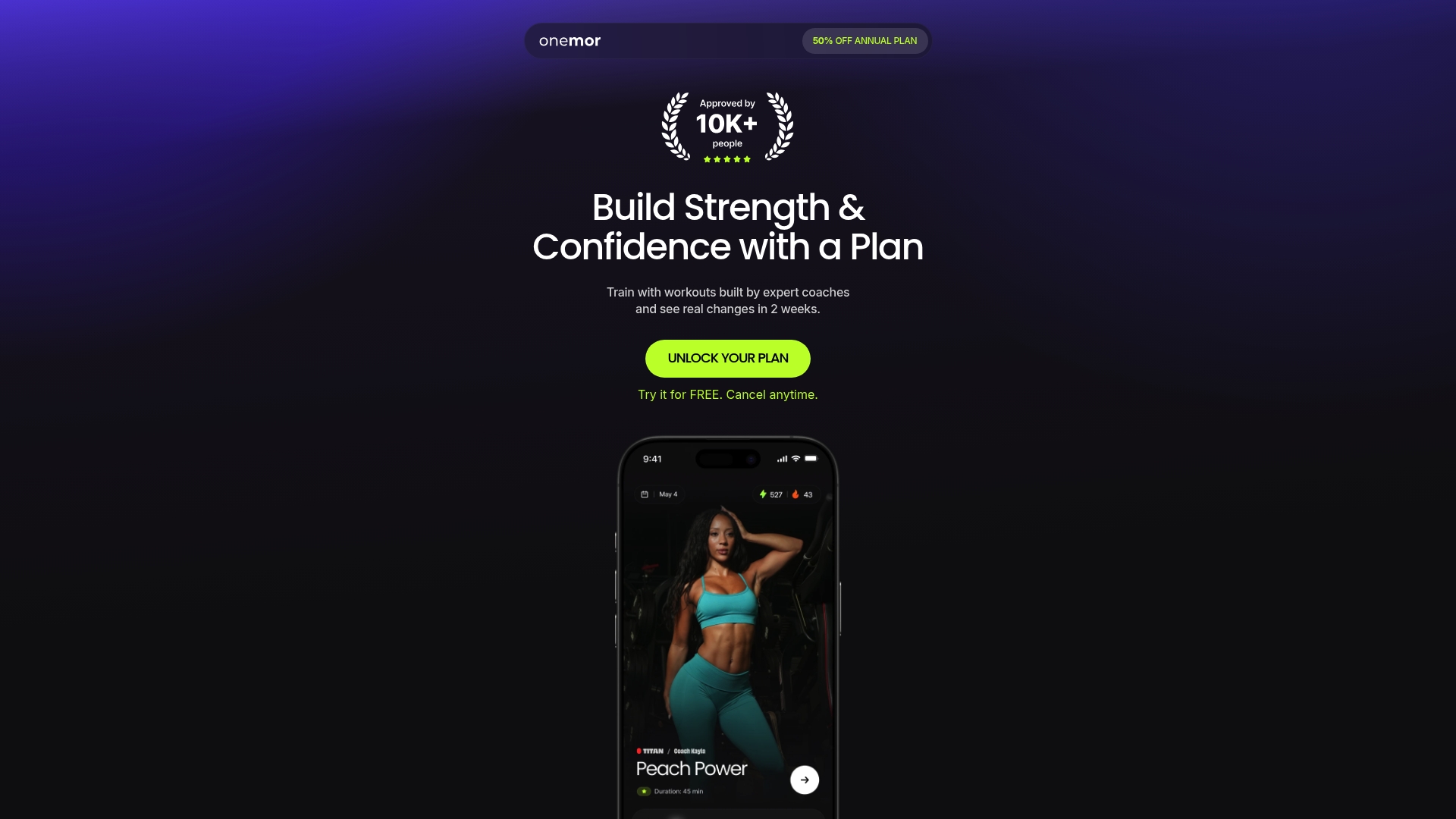
The app gives you coach-led sessions from trainers like Coach Geraldine and Coach Denis, with every set, rep, and rest timer built in. You don’t plan anything. You show up, follow the session, and track your progress automatically. The tribe challenges and streak system mean you’re not doing it alone, even when you’re training solo.
Your trial checklist for the first 14 days:
Onemor offers free and premium tiers on iOS. To get started with the full coach-led experience, join the Titan program and begin your first session today. Premium subscriptions can be managed or canceled directly through your iOS account settings at any time.
This article is general fitness information, not medical or professional training advice. Consult a qualified fitness professional or physician before starting a new exercise program, especially if you have existing injuries or health conditions.