Gym etiquette comes down to one idea: you share the space, so leave it ready for the next person. Re-rack your weights, wipe down what you used, share equipment between sets, give people room, and keep your phone and your noise in check. That’s it. Nobody expects you to know every habit of the regulars on day one, and most of the unwritten rules are simple common sense once you’ve seen them named.
If walking into the weight room makes your stomach flip, you’re in good company. We’ll walk through what to do, why it matters, and how to relax into it.
Etiquette isn’t about passing a test. It’s about safety, hygiene and making sure everyone gets their workout in. Scattered plates are a trip hazard, a sweaty bench is unpleasant, and someone camping on three machines at once means the rest of the room waits.
There’s a confidence bonus too. Fitness experts at ACE note that paying attention to gym etiquette is the best way to avoid being a nuisance, especially if you’re new to exercise. When you know you’re doing the basics right, it’s a lot easier to stop feeling watched. Spoiler: most people are focused on their own set.
Here are the habits that cover about 90% of situations. Think of this as your starter checklist.
Most newcomers think hogging is about time. It’s really about footprint. Grabbing three sets of dumbbells and spreading them around one bench while people wait is the fastest way to create friction. ACE’s guidance is to keep your workspace compact and use only what you’re currently using.
A few easy ways to do that:
The weight room has invisible traffic lanes. Experts stress respecting the through traffic around the racks: step back from the rack before you curl or do raises, so people can still reach the weights they need.
A few more space habits:
Social media has changed gym culture, but the rule hasn’t: the gym is for training, not content creation. Filming is fine when you’re not tying up equipment or capturing strangers in the frame. If the floor is busy, save the shoot for a quieter time or take your set and move on.
At Onemor, we’re built around training for results, not training for content. A good session is one you finished, not one that got views.
Also skip phone calls on the floor. Fitness experts point out that being mindful of others’ space and noise, like not talking on your phone or grunting loudly, quickly signals that you’re a respectful member, and that tends to lead to friendlier interactions with regulars.

This one surprises beginners. Many people are afraid to touch the settings on a machine, so they use it misaligned. ACE flags that as a common oversight: a poor fit reduces effectiveness and raises your injury risk, and the fix is taking about 30 seconds to adjust the seat height or range of motion before you start.
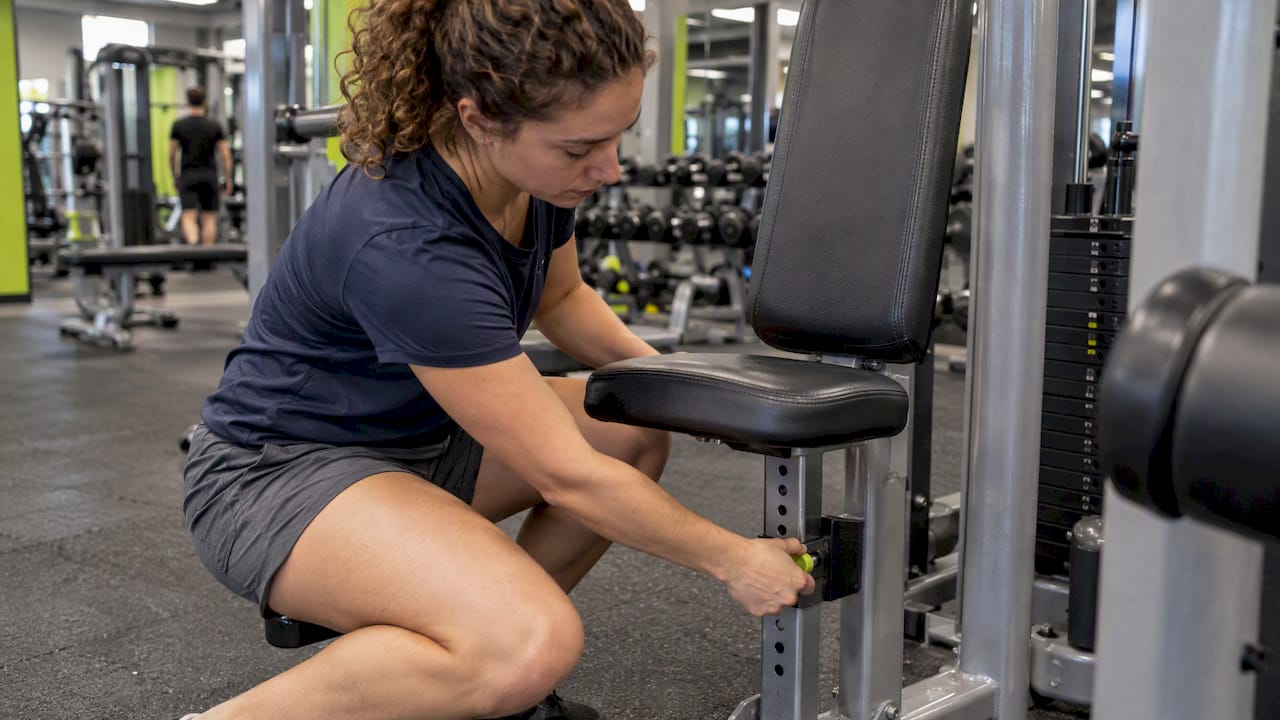
If you can’t work out the settings, ask a staff member. Staff would much rather show you a machine than watch you struggle. ACSM also notes that asking staff about proper equipment use is a smart move for newcomers, since feeling uncomfortable can lead people to quit early.
Want a head start? Our gym machines for beginners guide gives you a 30-minute plan, and our gym safety habits for beginners cover the small things that keep you injury-free.
The rules above are a safe baseline, but local culture varies. Some powerlifting-focused spaces tolerate heavy weights dropped on platforms, while many commercial gyms enforce strict no-slam policies. ACE’s advice is to observe the vibe and equipment in your gym on your first visit before deciding how intense to go.
Here’s a simple way to read a room:
If you haven’t picked a gym yet, ACSM suggests visiting several facilities before you invest and asking about trial memberships. A tour is also a free way to learn the layout, which ACSM says helps lower first-day anxiety.
You may have seen “3-3-3,” “5-3-1” or “3/2/1” pop up in searches about gym rules. These aren’t etiquette rules. They’re training terms. The best-known one, 5/3/1, is a strength program created by Jim Wendler that cycles through sets of 5, 3 and 1 reps to build strength over time. Nothing to do with how to behave on the floor.
If you want to learn what sets and reps actually mean, start with our guide on sets and reps for new lifters.
Feeling nervous doesn’t mean you’re doing anything wrong. Here’s a calm, practical way to start:
Not sure where to begin? Try our simple 4-week beginner gym workout.
Knowing the rules is half the battle. Knowing exactly what to do once you’re on the floor is the other half. Onemor is an iOS fitness app with real workouts led by top trainers, guided sessions with sets, reps and rest timers, plus streaks, XP and tribe challenges to keep you coming back. It works at the gym or at home, and there are free and premium options.
When the plan is already in your pocket, you spend less time hovering around equipment and more time training. Start with the free plan or download the app and walk into your next session ready.
Re-rack your weights, wipe down equipment after you use it, and share machines by letting others work in between your sets. Give people space and keep noise and phone use low. These habits cover most situations in any gym.
Yes. Asking if you can work in between their sets is standard and expected, and most people say yes. Keep it short and friendly, and swap back when they’re ready.
Usually, yes, as long as you aren’t tying up equipment, blocking walkways or catching other members on camera. Check your gym’s policy, and save longer shoots for quiet hours.
Not at all. Staff are there to help, and ACSM encourages newcomers to ask about proper equipment use. It’s a lot better than guessing and risking an injury.
No. They’re workout programming terms, not behavior rules. 5/3/1, for example, is a strength program built around rep cycles.