Follow a handful of habits every session and your injury risk drops fast, according to guidance from the American College of Sports Medicine: warm up with movement you’ll actually use, prioritize clean form over heavy weight, wipe down shared surfaces, sip water consistently, and stop the moment something feels wrong. Before your next visit, do three things: check your shoes are activity-appropriate, pack a towel and water bottle, and give yourself five minutes for a dynamic warm-up.
TL;DR:
- Proper preparation includes checking footwear, packing essentials, doing a five-minute warm-up, and planning a cool-down longer than the warm-up.
- Ensure equipment safety by checking collars, safety pins, machine adjustments, and inspecting for damage before lifting.
- Practice proper technique with light resistance or unloaded reps and increase weight gradually to reduce injury risk, stopping if pain or unusual soreness occurs.
- Wipe shared equipment thoroughly after use, cover cuts, avoid sharing personal items, and use towels as barriers to prevent infections.
- Follow heat safety by hydrating with small sips every 15 to 20 minutes, and recognize signs of heat exhaustion and heat stroke for immediate action.
The safest workout starts before you walk through the door. If you have a history of chest pain, heart issues, or a chronic condition that isn’t well controlled, a conversation with your healthcare provider before you ramp up intensity is a smart move, not an overreaction. MedlinePlus is clear that new or unusual chest pain, dizziness, or shortness of breath during exercise should never be pushed through.
Footwear matters more than most beginners realize. The American Academy of Orthopaedic Surgeons recommends shoes built for your specific activity and replacing them once they’re worn down, since tired cushioning and poor tie-down both raise injury risk.
Here’s a simple pre-gym checklist:
A little prep removes most of the guesswork, and it takes less time than scrolling through your phone between sets.
Most equipment injuries come from skipped steps, not bad luck. A few quick habits close that gap.
These checks take seconds and they’re the difference between a controlled rep and a surprise.
Good form beats heavy weight every time, especially early on. Practice new movement patterns unloaded or with light resistance until they feel automatic, then add weight in small increments.
Progression works best in small steps, as explained in this beginner’s complete guide to progressive strength training. Adding one or two new exercises per session keeps your body and your attention manageable, and showing up consistently matters more than chasing a personal record every week. Research on resistance training backs this up: structured, repeatable routines reduce injury risk compared with copying advanced routines you see online.
Soreness is normal. Sharp pain, pinpoint bone pain, or discomfort that worsens with everyday activities is not, and AAOS guidance on soft-tissue injuries recommends stopping and getting it evaluated rather than training through it. If a lift looks unfamiliar, ask a staff member or a certified trainer to walk you through it instead of guessing your way into bad habits. Beginners who try to master technique and load increases at the same time usually end up rushing one of the two.
Pro Tip: Film yourself on a new lift with your phone. Comparing your form to a trainer demo catches errors you can’t feel in the moment.
Shared equipment means shared germs, and a little hygiene discipline protects you and everyone training around you.
A personal hygiene kit with a towel, hand sanitizer, shower sandals, and a few bandages makes all of this effortless.
Dehydration sneaks up on you mid-workout, long before you feel thirsty. For moderate activity under two hours, frequent small sips work better than chugging water once you’re parched. **CDC/NIOSH heat-stress guidance suggests drinking small amounts of water frequently, about a cup every 15 to 20 minutes, during activity in warm conditions, which gives you a steady rhythm to follow instead of guessing.
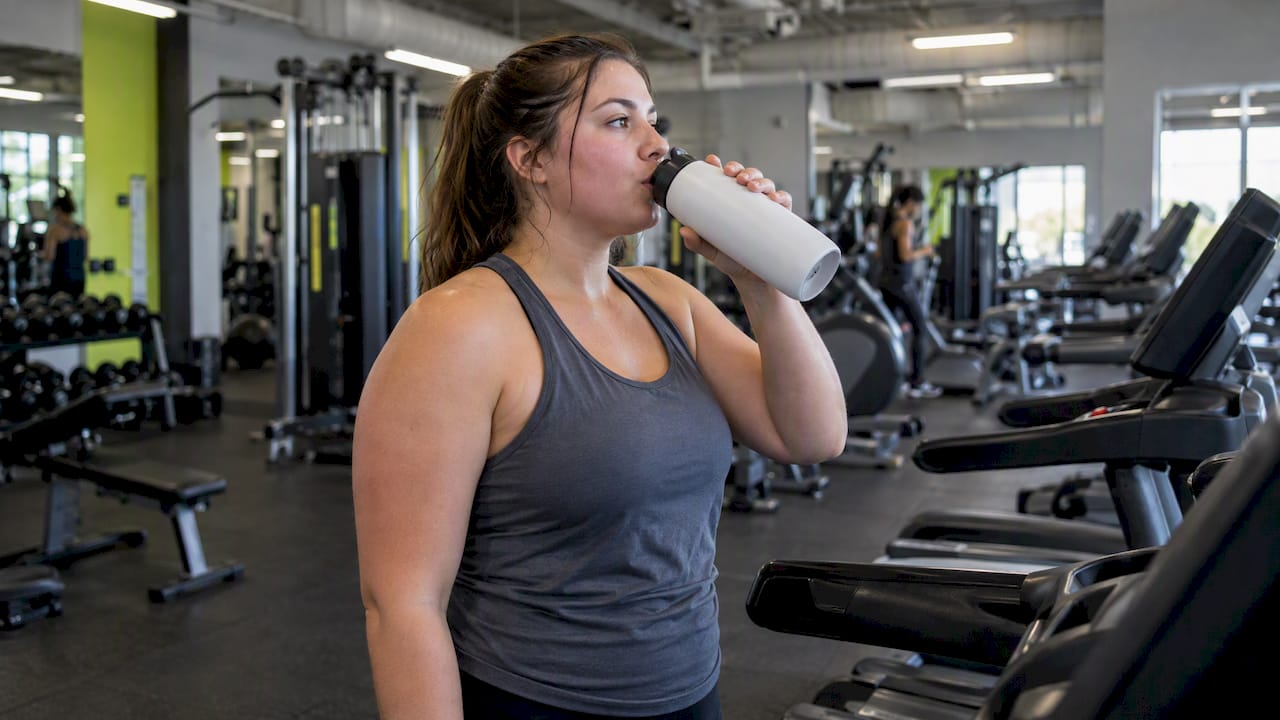
Early cramping is often your body’s first warning sign of heat strain. Stop, move somewhere cooler, and rehydrate right away. If you notice confusion, nausea, or someone stops sweating despite feeling hot, that’s heat exhaustion tipping toward heat stroke, and it needs urgent attention, not a water break. Training during cooler hours or in a well-ventilated space helps you avoid the problem altogether, especially in warmer climates or packed indoor studios.
Knowing where emergency equipment lives before you need it saves critical minutes. Ask staff to point out the exits, the first-aid kit, a phone, and the automated external defibrillator the first time you visit a new gym.
Being the person who knows where the AED is can matter more than you’d think.
Good etiquette isn’t just polite, it’s a safety habit in disguise. Cluttered walkways and unreturned weights cause more falls and collisions than most people assume.
Small courtesies like these keep the whole floor moving smoothly and safely.
Structured coaching takes a lot of the guesswork out of staying safe. When sets, reps, and rest timers are already mapped out for you, you’re less likely to overload a lift before your form catches up or skip the recovery window your body actually needs. The app is built around this idea: guided sessions with built-in pacing and coach cues that reinforce controlled, repeatable progress instead of improvised workouts.
If you’re starting from zero, a beginner gym workout with a simple four-week structure gives your body time to adapt before complexity increases. For machine-based training, a Smith machine safety guide walks through setup and common mistakes so you’re not troubleshooting alone. We’re training for results, not training for content, which is exactly why structure beats guesswork on the gym floor.
Knowing your gym’s layout is an easy win most beginners skip. Spend your first few visits noting where the free-weight area sits relative to the cardio machines, where the walkways narrow, and which stations tend to get crowded during peak hours.
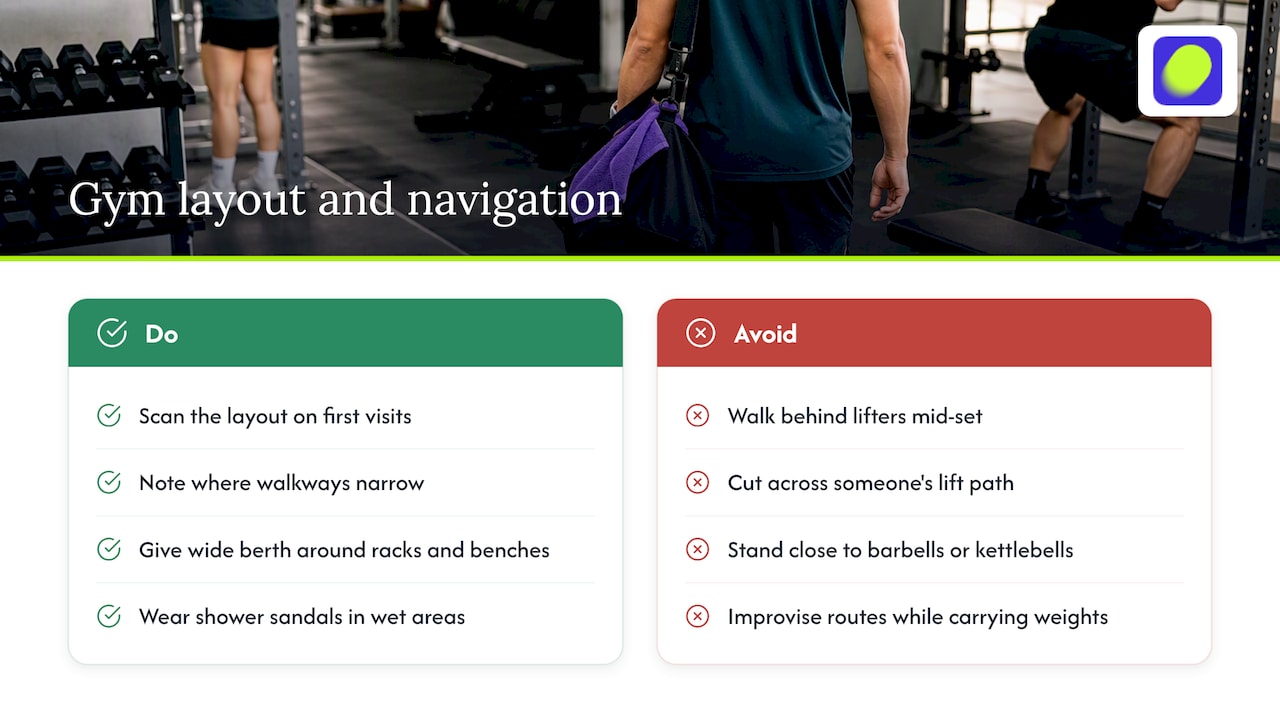
Walking paths behind squat racks and benches deserve extra attention since lifters stepping back mid-set often can’t see behind them. Giving a wide berth to anyone mid-rep, especially around barbells and kettlebells, avoids collisions that happen in a split second.
Locker rooms and shower areas carry their own hazards: wet tile is slippery, and a pair of shower sandals reduces your risk of a slip or a fungal infection picked up from the floor. If you’re new to a space, a quick lap before you start your session helps you mentally map exits, water fountains, and open floor space so you’re not improvising your route while carrying weight.
Crowded gyms during evening rush hours call for extra spatial awareness. Keep your workout zone tight, avoid walking through someone’s lift path, and give slightly more space around Olympic lifting platforms or anywhere barbells get dropped. A few minutes of orientation at the start of your membership pays off every session after.
Training with a chronic condition doesn’t mean sitting out, but it does mean adjusting your approach. If you manage asthma, diabetes, high blood pressure, or a joint condition, loop your healthcare provider into your exercise plans, especially when you’re increasing intensity or trying something new.
Simple accommodations go a long way. Someone managing asthma might keep a rescue inhaler nearby and build in a longer warm-up to ease breathing into harder effort. Someone managing blood sugar might time workouts around meals and keep a fast-acting snack within reach. Joint conditions often respond better to machines or supported movements that control range of motion rather than free-weight versions that demand more stabilization.
The through-line across all of these is communication: tell a trainer or staff member about relevant conditions before a session, not after something goes wrong. MedlinePlus guidance is direct about this, too: new or worsening symptoms during exercise, whether that’s chest tightness, unusual fatigue, or dizziness, are a signal to stop and seek care rather than push through out of habit. Managing a condition well often means training a little more conservatively than someone without it, and that’s a reasonable trade for staying consistent long term.
Stretching has a time and a place, and mixing up static and dynamic work protects you better than defaulting to one or the other. Before your workout, dynamic stretches like leg swings and walking lunges prepare your muscles for the specific movements ahead. Static stretches, where you hold a position, fit better after your session when your muscles are warm and you’re not asking them to immediately produce force.
Avoid bouncing into a stretch or forcing a range of motion that feels sharp or pinching. A stretch should feel like mild tension, easing within 20 to 30 seconds, not pain that makes you want to pull back immediately. If a joint feels unstable or a stretch consistently causes sharp discomfort, that’s worth mentioning to a trainer rather than pushing deeper.
Flexibility work pairs naturally with your cool-down, giving your heart rate time to come down while you also work on mobility. Consistency beats intensity here: a few minutes after every session builds more lasting flexibility than an occasional long stretching routine.
Progress happens between workouts, not just during them. Muscles need time to repair and adapt, and skipping that recovery window is one of the most common ways beginners end up injured or burned out within the first few months.
Build rest days into your week rather than treating them as optional. Training the same muscle groups on consecutive days without recovery raises your risk of overuse injuries like tendinitis or stress reactions, and it also blunts the strength gains you’re working for. Sleep matters just as much as rest days, since most muscle repair happens while you’re asleep.
Watch for warning signs of overtraining: persistent fatigue, declining performance despite consistent effort, irritability, or nagging soreness that doesn’t ease up after a day or two off. Any of these are a cue to scale back volume or intensity for a week rather than pushing through. A sustainable pace, training a few times a week with real recovery in between, beats an aggressive schedule that burns you out by week three.
Staying safe at the gym gets a lot easier when you’re not improvising every session. The app provides beginners a structured path: coach-led workouts, guided sessions with built-in sets, reps, and rest timers, and beginner-friendly programs that take the planning off your plate. Instead of guessing your next move, you follow a plan designed to build you up gradually, with the pacing and progression baked in from day one.
If you want a starting point that takes the guesswork out of your first few months, our free plan gives you access to guided beginner programming built for exactly this stage of your training.
This article is general information, not a substitute for advice from a qualified doctor. Consult a qualified healthcare professional about your own circumstances before acting on anything here.
A practical set includes warming up before lifting, using correct form over heavy weight, securing collars and safety pins, wiping down shared equipment, staying hydrated, knowing where emergency equipment is located, and stopping immediately for pain or concerning symptoms. These habits, drawn from CDC and AAOS guidance, cover most common gym injury causes.
There’s no standardized “2 2 2 rule” recognized by major fitness or medical authorities, and definitions vary widely depending on where you encounter the term. If you’ve seen it referenced for a specific training method, it’s worth checking the original source rather than assuming a universal meaning.
Sharp, pinpoint, or worsening pain, especially pain that affects daily movement, is different from normal muscle soreness and is a signal to stop and get it evaluated. AAOS guidance and MedlinePlus both recommend treating unusual or escalating pain as a reason to pause rather than push through.
Wipe down shared equipment after every single use, not just when it looks visibly dirty. CDC guidance notes that cleaning and disinfecting are different steps, and giving disinfectant its full contact time matters more than a quick wipe.
A trainer isn’t required, but guidance from a certified professional or structured coach-led programming reduces the chance of technique errors while you’re still learning new lifts. Guided plans with built-in pacing and form cues serve a similar purpose when one-on-one coaching isn’t available.