Bulking means eating a little more than you burn while you lift, to build muscle. Cutting means eating a little less, to lose fat while you keep the muscle you have. If you’re new to lifting and training two or three times a week, you probably don’t need to pick either yet. Build a steady routine first, and let structured, coach-led workouts in Onemor do the planning while you do the showing up.
Think of them as two modes. In one you give your body extra fuel to build with. In the other you pull back so it burns stored fat.
Bulking is eating in a calorie surplus alongside strength training. Cleveland Clinic describes a common surplus as 200 to 500 extra calories a day, with lifting that gets progressively harder. Some fat gain can come along with the muscle.
Cutting is a calorie deficit, commonly 250 to 500 calories a day according to the same guide. The point is gradual fat loss with muscle retention, not a crash diet. You keep lifting and adjust if fatigue builds.
Here is the quick comparison:
It depends on your goal, your current fitness and your overall health. If size and strength are the priority, a modest bulk fits. If losing fat is the priority, a cut fits. Cleveland Clinic’s guide adds that beginners can spend their first few months building a regular exercise and healthy-eating routine, with maintenance as a perfectly good option.
That’s the honest answer for most people training two or three days a week. A routine you can repeat for months is worth more than a perfectly timed phase you quit in week three.
A few questions to ask yourself:
Here’s the good news. New lifters respond fast to training. A review on body recomposition found that gaining muscle while losing fat is possible in adults with progressive resistance training, enough protein and an appropriate energy intake. Results tend to be greater in untrained people, though individual outcomes vary.
So instead of a bulk followed by a cut, you can eat sensibly, lift consistently and let your body change gradually. Cleveland Clinic’s recomposition guide also describes this as a possible alternative to separate phases, and says there is no one-size-fits-all plan.
Want the details? We break down evidence-backed body recomposition for new lifters and a simple 2-3 day beginner recomposition plan.
Protein is the one number worth knowing. A meta-analysis by Morton and colleagues found that gains from lifting leveled off at roughly 1.6 g of protein per kg of body weight per day. The recomposition review above cites a range of about 1.6 to 2.4 g/kg/day.
A worked example: a 150 lb (68 kg) person aiming for 1.6 g/kg is looking at about 109 g of protein a day. Spread across three or four meals, that’s roughly 27 to 36 g each.
Some limits matter:
If you want to understand protein’s role in staying strong over time, protein and bone density is a helpful companion read.
You don’t need six days in the gym. Two or three full-body sessions can work well for beginners, though no guide gives one exact weekly program that fits everyone.
During a bulk, the aim is progressive overload: slowly adding sets, reps or resistance. Our 6-week progressive overload plan shows how to do that without guessing. During a cut, keep lifting. If you feel wiped out, reduce sets or reps a little and give yourself longer to recover.
Not sure whether you want size, strength or both? See our hypertrophy vs strength starter templates. Training at home? Compare bodyweight and gym workouts to see what fits your week, whether that’s a Florida gym or your living room.
Most setbacks are about pace, not effort:
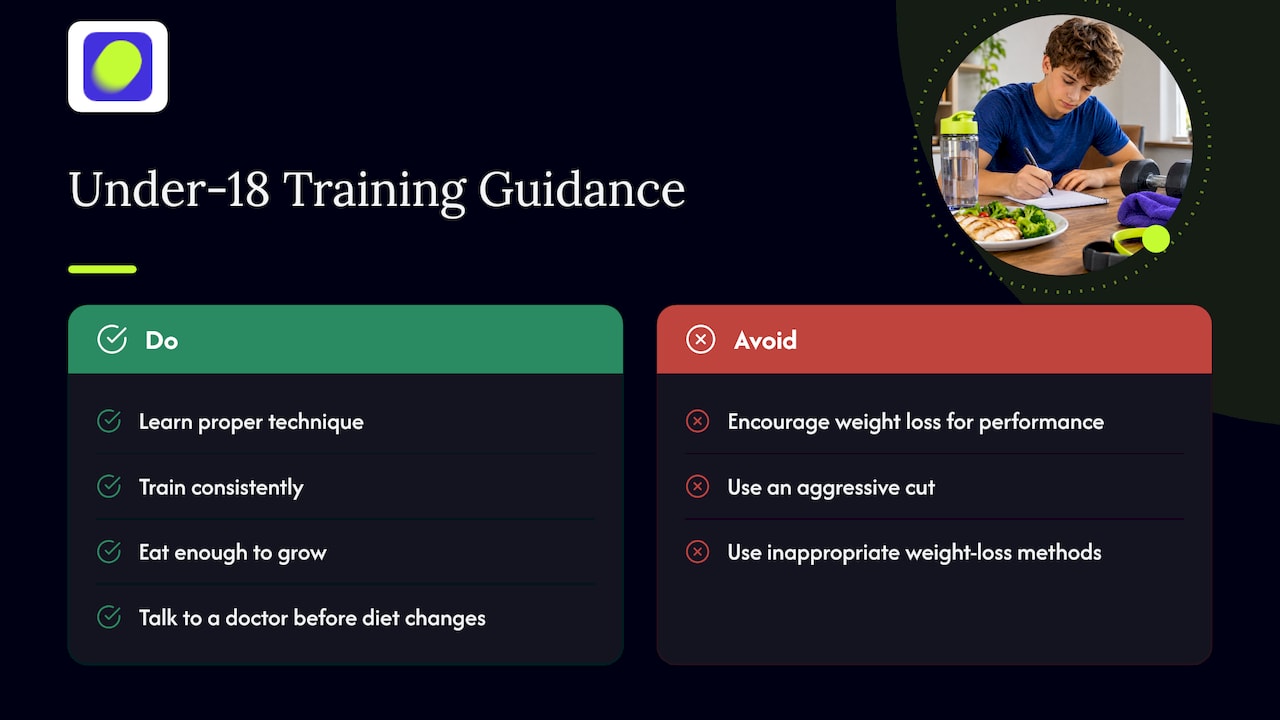
If you’re 16 or 17, your body is still growing, so the approach changes. The American Academy of Pediatrics says young athletes who are still growing should not be encouraged to lose weight to improve performance, and that body-composition changes should be gradual and allow for growth. It also warns that inappropriate weight-loss methods can harm physical and mental health, mood, immune function and performance.
So skip the aggressive cut. Focus on learning technique, training consistently and eating enough to grow. Talk to your pediatrician or doctor before changing how you eat. Our teen weightlifting safety guide covers safe training, and this overview of physical therapy for athletes explains how recovery supports performance.
The hardest part of bulk vs cut isn’t the math. It’s showing up for weeks without overthinking it. Onemor gives you workouts led by top trainers, guided sessions with sets, reps and rest timers, and streaks, XP and tribe challenges with friends to keep you coming back. It covers strength training, HIIT, bodyweight and beginner-friendly programs for the gym or home, and it’s available on iOS.
Start with the Onemor free plan, or see what Pro adds.
Most beginners do well starting with a few months of regular lifting and healthy eating. After that, choose a modest bulk if size and strength are the priority, or a cut if fat loss is. Recomposition is another option.
Yes, especially as a beginner. Progressive resistance training, enough protein and an appropriate calorie intake support it, though results vary from person to person.
Research points to about 1.6 g per kg of body weight per day as the level where extra gains level off. Some reviews use a range up to 2.4 g/kg. If you have a medical condition, check with your doctor.
It depends on what you burn. A bulk is a surplus over your own maintenance, commonly 200 to 500 calories, so 3,000 could be a bulk for one person and maintenance or even a deficit for another.