Walking into a gym for the first time can feel like showing up to a party where everyone already knows each other. The good news is that you only need a short list to feel ready: a packed bag, a simple plan, a proper warm-up and a few habits that keep you safe and coming back. Here is that list, in the order you will use it.
You don’t need to buy a whole new wardrobe. You need a few things that make the session comfortable, so nothing gives you an excuse to turn around at the door.
That’s it. Gym bags tend to get heavier the longer you stay in the habit, so start simple.
Before starting a new routine, it’s worth a quick check on yourself. If you have ongoing health concerns or you’ve been mostly sedentary, the federal guidance on physical activity recommends talking with a healthcare provider before you begin. That’s a good habit, not a barrier.
It also helps to know what effort feels like. The same guidance suggests a talk test: if you can talk but not sing during an activity, you’re at moderate intensity. If you can only say a few words, that’s vigorous. Most of your beginner cardio should sit in the first zone.
The Physical Activity Guidelines for Americans say adults should aim for 150 to 300 minutes of moderate aerobic activity a week, plus muscle-strengthening work for all major muscle groups on at least 2 days a week.
Does that sound like a lot? Here’s the encouraging part. Beginners can start with much less, and even a few minutes of movement counts. The American College of Sports Medicine also notes that the biggest jump in results comes when you go from no resistance training to any structured resistance training, and that the best program is the one you will actually keep doing.
So if you can train 2 to 3 times a week, you’re already in the right place.
Skipping the warm-up is the easiest habit to fix. Fitness experts recommend dynamic movements that mimic your planned workout, which raise blood flow and get your joints ready. Think leg swings, bodyweight squats, arm circles and light hip hinges for 5 to 10 minutes.

We’ve put together a 5 to 10 minute dynamic warm-up coaches use for busy lifters, so you can copy it as is. If you like a slower, mobility-first style, these yoga warm up exercises are a gentle way to loosen tight hips and shoulders.
After your session, finish with a few minutes of static stretching. That helps your body shift out of work mode and supports recovery.
A first-day plan should be short. Think 30 to 40 minutes, built around a handful of basic moves. Our first-day gym plan for young adults walks through it step by step. Here’s the simple shape:
Do 1 to 3 sets of each. Rest as long as you need between sets. You’re not trying to wreck yourself on day one. You’re trying to want a day two.
If machines feel less intimidating than free weights, start there. Our guide to gym machines for beginners gives you a 30-minute plan. If you’d like a week-by-week path, try the simple 4-week starter plan. Leg day makes a lot of people nervous, so we also wrote a safe starting routine for your first leg day.
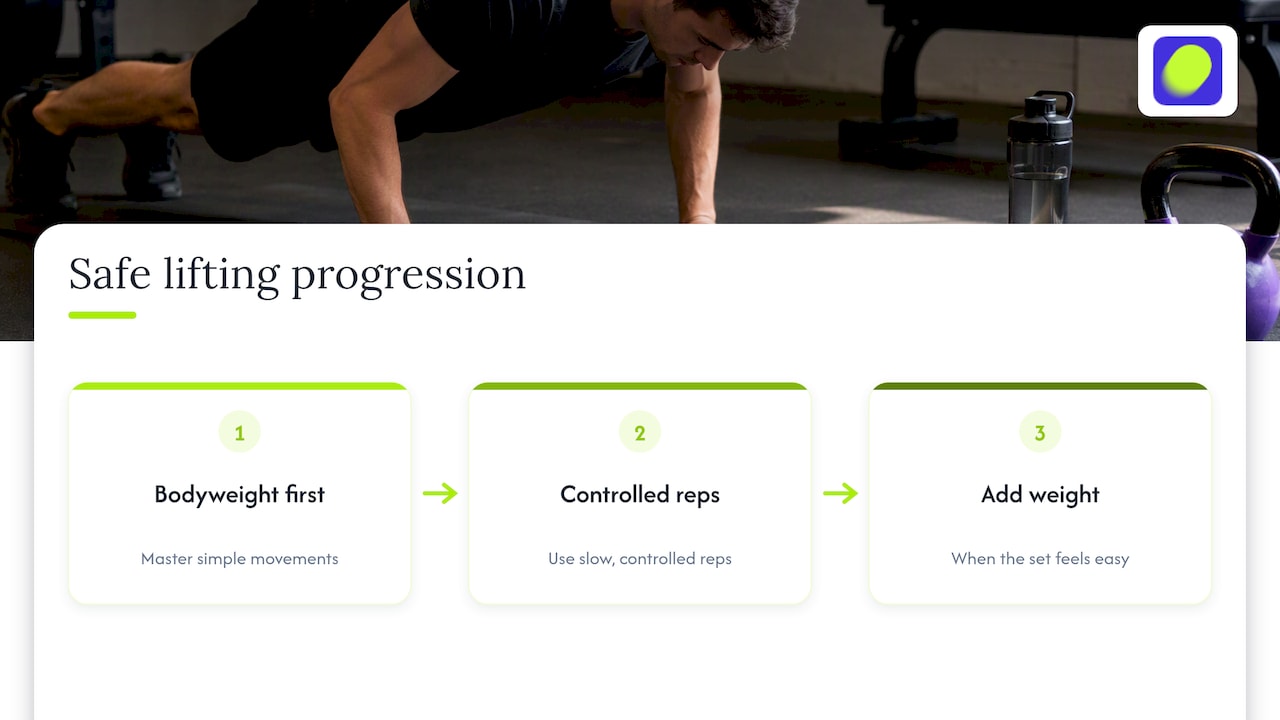
The main risk for beginners usually isn’t the weight itself. According to ACSM guidance, it’s poor technique and not knowing how to use the equipment properly. The advice is to master simple movements with your body weight before you move to heavier or more complex lifts.
A simple tempo helps. Lift for about one to two seconds, then lower for two to three seconds. Slow, controlled reps build the control you need and make it easier to spot when your form slips.
And once a weight feels easy for the whole set, you can raise it a little. Our 6 week progressive overload plan for beginners shows how to do that without guessing.
A few habits make the gym safer and calmer:
Want more? Here are 7 small gym safety habits you can start today.
One of the biggest reasons beginners quit is looking around the room. Someone nearby is lifting more, moving faster or looking more confident. It’s easy to feel behind.
Expert advice is to treat your first months as self-discovery rather than a competition. Track your own form, your own reps and your own streak. Nobody else is watching nearly as closely as you imagine, because they’re busy with their own set.
A checklist gets you through the door. Structure keeps you coming back. Onemor is a fitness app built for Gen-Z, with workouts led by real coaches, guided sessions with sets, reps and rest timers, and streaks, XP and tribe challenges to keep you consistent with friends. It covers strength, HIIT and bodyweight programs for the gym or home, and it’s available on iOS with free and premium options.
You don’t have to plan every session yourself. Start with the free plan and take your checklist into the gym with a workout already waiting on your phone. If you’d like to see how the plans differ, you can compare Free and Pro.
Start with a dynamic warm-up of 5 to 10 minutes. Then move to your first planned exercise with a light weight to practice the movement. Having the workout written down or in an app keeps you from wandering.
Two to three times a week works well. Federal guidelines call for muscle-strengthening on at least 2 days a week. Rest days between sessions are part of the plan.
About 30 to 40 minutes is plenty. That’s enough for a warm-up, four to six basic moves and a short cool-down. You can build up gradually.
Not necessarily. A clear plan and attention to form will carry you far. A coach-led program, like the ones inside Onemor, can give you that guidance without planning on your own.