Pick 5x5 if you want to get stronger on big lifts, and 3x10 if you want a friendly way to build muscle and practice good form. Both work, and for a beginner training 2-3 times a week the best one is the one you will keep showing up for. Here is how they differ, how heavy to go, and how to choose.
The first number is sets, the second is reps per set. So 3x10 is three sets of ten reps and 5x5 is five sets of five. You lift, rest, and repeat until all sets are done.
The real difference is the weight on the bar:
Total work is close: 25 reps for 5x5 and 30 for 3x10. What changes is how each rep feels and what your body adapts to.
5x5 usually wins here. A large meta-analysis of low- versus high-load training found strength gains were greater with heavier loads. The ACSM 2026 Position Stand points the same way: strength improved when people lifted at 80% of their max or more, for 2-3 sets, at the start of sessions, at least twice a week.
That is why heavy fives feel so good when you want your squat or bench number to climb. Strength is specific: practice heavy, and you get better at heavy.
Yes, and it is a great place to start. The same ACSM review found muscle growth was helped by higher weekly volume, around 10 or more sets per muscle. Tens make that volume easy to collect without grinding on heavy weight.
Another review found that muscle growth can be similar across loads from roughly 30% of your max and up, so there is no magic hypertrophy zone. The authors also note that moderate loads are an efficient route to size. The catch: sets need real effort. If you stop at ten reps with plenty left, you are leaving progress on the table.
Men’s Health describes 3x10 as the classic starter rule that works well early on, before you tailor sets and reps to a specific goal. Want the full picture on volume? Our guide on research-backed rep ranges for hypertrophy goes deeper.
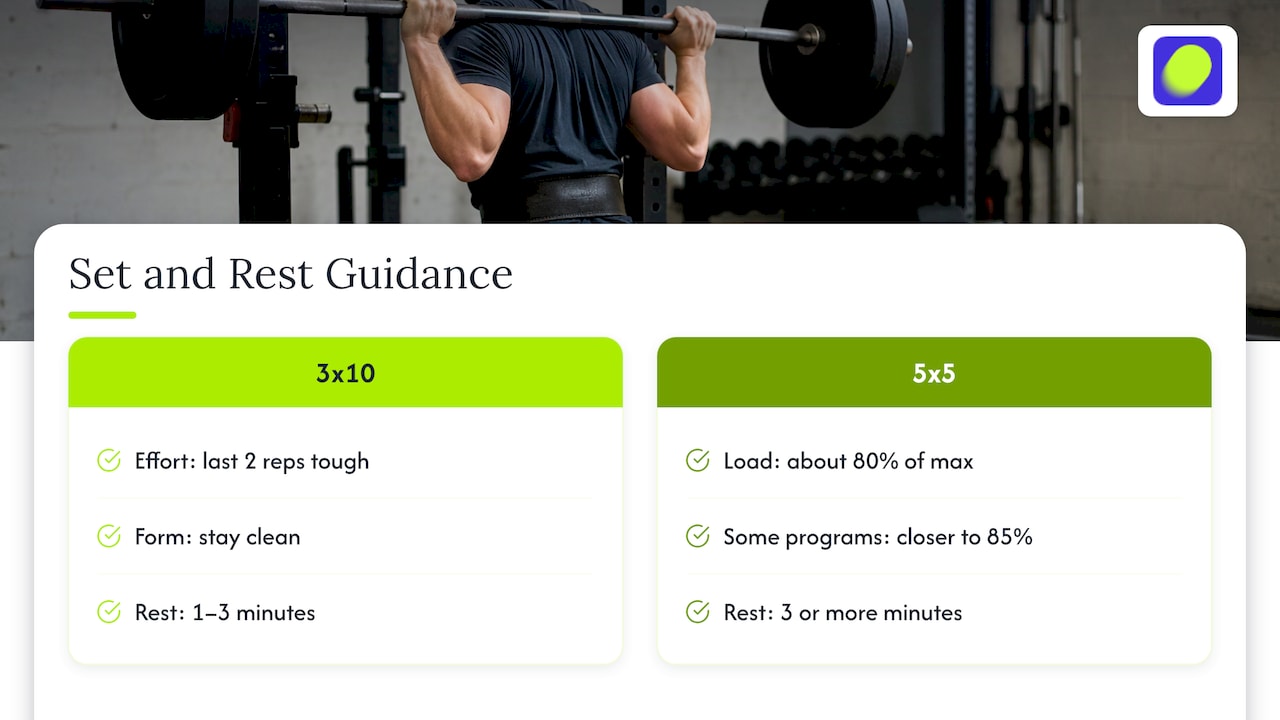
A good target is a weight you could lift for about seven or eight reps, roughly 80% of your max. Some programs push closer to 85% of your max for fives. Beginners do not need to test a max. Start lighter than you think, nail your form, and let the weight build.
For 3x10, pick a load where the last two reps are tough but your form stays clean. Rest 1-3 minutes between sets. For 5x5, take longer, often 3 minutes or more, so each set stays heavy.
Ask yourself what you want most right now:
Still torn between size and force? Our hypertrophy vs strength starter templates lay out three simple options.
Good news: you do not need five days in the gym. Guidelines call for muscle-strengthening on two or more days a week, hitting all major muscle groups. Full-body sessions make that easy.
Here is a simple 3-day week:
Only two days? Run Day 1 and Day 2 and keep the effort honest. Weekly sets matter as much as the scheme, and this 3-day strength plan shows how frequency and sets add up. For more structure, see our sets per muscle per week breakdown.
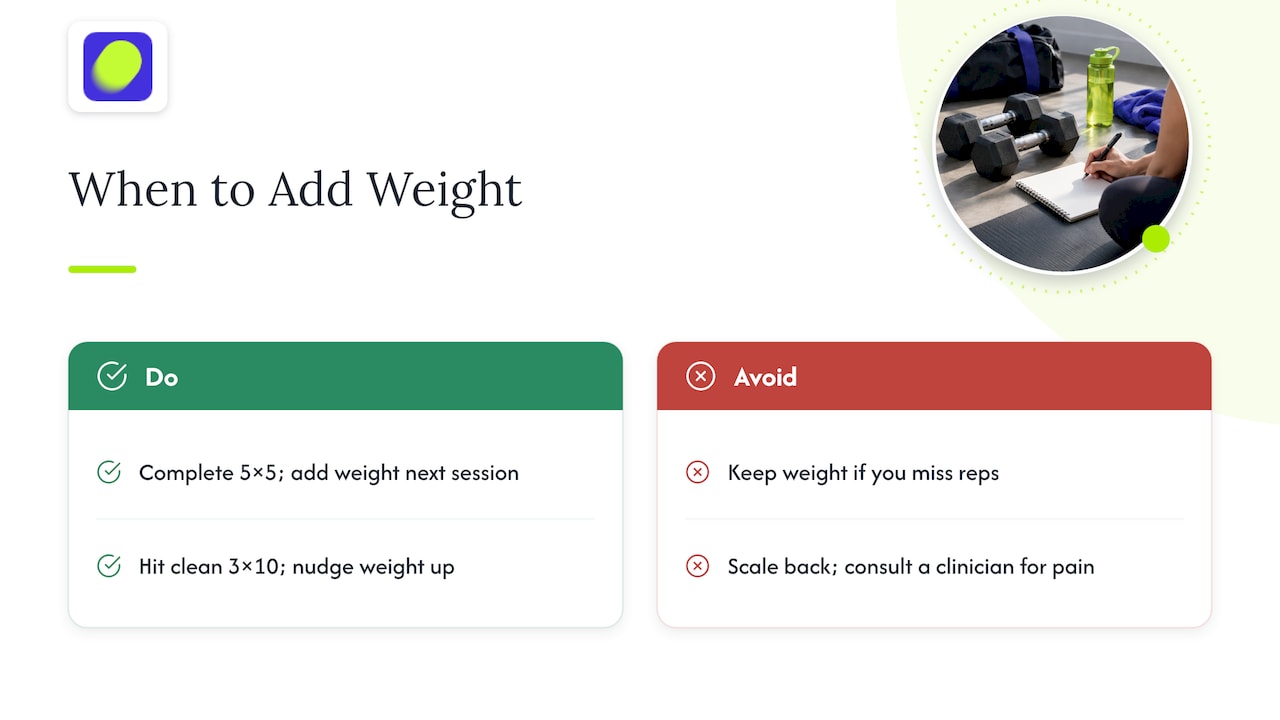
Progress comes from small, steady jumps. A common beginner rule for 5x5: if you complete all five sets of five, add weight next session. If you miss reps, keep the weight the same until you get them.
Cleveland Clinic suggests adding about 5 pounds when you feel you could do at least five more reps on your last set. The same page says that if you are struggling to finish a set or feel pain, the weight is probably too heavy. Change one thing at a time, and if pain shows up, scale back and check in with a doctor or physical therapist.
For 3x10, use the same idea: when you hit ten reps on all three sets with good form, nudge the weight up a little.
The best rep scheme is useless if you stop after two weeks. That is where we come in. Onemor gives you guided sessions with sets, reps, and rest timers, so you never have to wonder what comes next. Streaks, XP, and tribe challenges with friends help you keep coming back, and our workouts are led by real coaches.
Ready to try it? Start with the Free plan or compare it with Pro. New to all this? Our 2-3 coach-led sessions for young adults are a friendly first step.
Yes. Three sets of ten at a challenging weight is a solid way to build muscle, especially early on. Just make sure the last reps are hard and you are collecting enough weekly sets across your plan.
Aim for a weight you could lift for roughly seven or eight reps, around 80% of your max. Beginners should start lighter and focus on form. Add weight only after you complete every rep.
It can be. It uses heavy compound lifts three times a week and adds weight gradually, which suits many new lifters. Keep your form clean, eat enough, and recover between sessions.
Both are heavy and both build strength. Research favors heavier loads in general, and fives let you do more total work at that weight than triples. Many beginners find five reps easier to learn on.
Yes. Do 5x5 on your first big lift, then 3x10 on accessory exercises. That way you train for strength and size without adding extra days.