The best workout for travel is a short bodyweight circuit you can do in a hotel room, a rental, or your childhood bedroom: 20 minutes, no equipment, a few basic moves done hard. You don’t need a gym, and you don’t need to train every day. You just need a plan that’s easy enough to actually start. If you’re used to 2-3 sessions a week at home, this keeps the habit alive. And if you want the structure of a guided session on the road, Onemor’s Free plan is a good place to start.
Travel throws off everything: your schedule, your sleep, your food, your space. A complicated program is the first thing to go. A bodyweight workout survives because it asks for nothing.
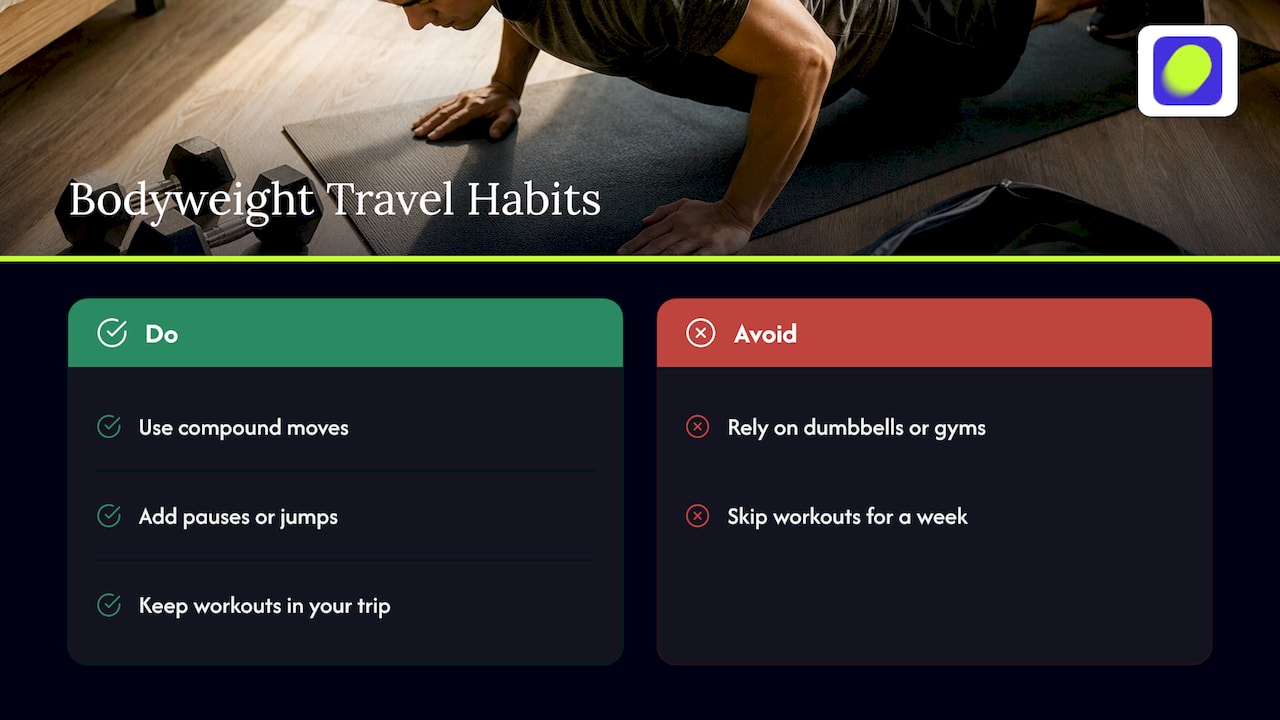
According to The New York Times, you don’t need dumbbells or a local gym. Compound moves like squats, lunges and push-ups train several muscles and joints at once, and you can make them harder by slowing the lowering phase, adding a pause, or using jumps. Trainer Ani Oksayan puts it simply in that piece: your best piece of equipment is yourself.
There’s a second benefit that matters just as much: the habit. Keeping a workout in your trip makes it easier to jump back into your normal routine when you get home. Skipping everything for a week makes restarting feel like a big deal.
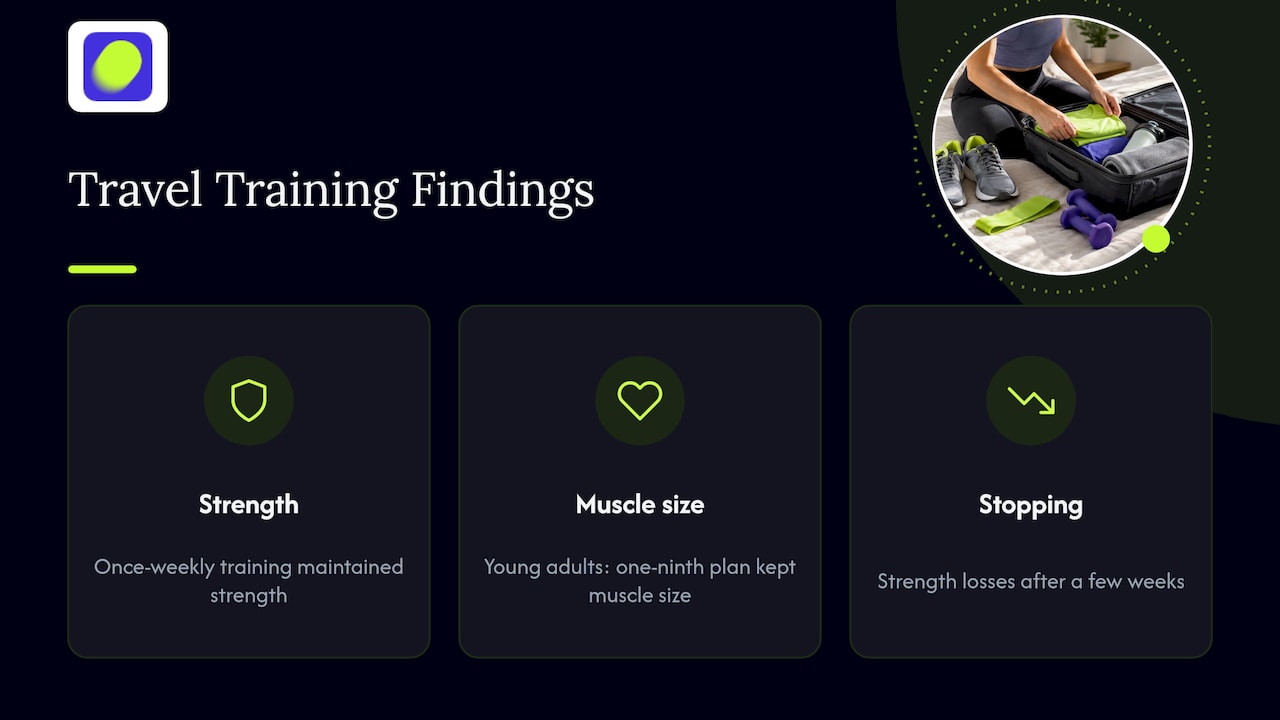
Short answer: much less than you fear. A University of Alabama at Birmingham study, reported by UAB News, found that working out once a week was enough to maintain strength. Younger adults who cut their training to one-ninth of the original program still kept their muscle size. Researcher Marcas Bamman noted that stopping completely leads to real strength losses after a few weeks, while a reduced program works well during temporary stretches like extended travel.
Penn State’s Brad DeWeese told The New York Times that if you’ve trained consistently for a few months, taking time away from weights won’t hinder your progress.
So a long weekend in Miami or a week visiting family doesn’t undo your work. Aim for a few short sessions, not perfection.
Match the plan to the length of the trip:
Listen to your body. Oksayan says you can repeat the routine as often as you like, but you should take rest days when you need them. Long flights, new beds and late nights all count as stress.
This plan uses a simple structure from Fit&Well, where a trainer uses four moves: unweighted squats, reverse lunges, push-ups and standing ab curls. Work for 45 seconds, rest for 15 seconds, and do three rounds with one-minute breaks between them. Finish with a 45 to 60 second wall sit if you have energy left.
New to this? Start with two rounds. You’ll still get a real workout, and you can add the third round next time.
Bored by the same circuit? These formats come from trusted sources and all need no equipment:
Atkins also keeps travel moves basic on purpose, because people have done them a thousand times and need no coaching. That’s a smart rule: when you’re tired, simple wins.
A hotel gym is a bonus, not a requirement. If yours has a few dumbbells and a bench, use them for the same patterns you already know: squats, lunges, presses and rows. Keep the weight light enough that you can finish your sets with good form, and stick to your normal 2-3 day rhythm.
No gym? Make bodyweight harder in small ways:
Thinking about the neighbors downstairs? Our quiet apartment workouts work just as well in a hotel room with thin floors. Want a full routine for later? Try our bodyweight strength program.
Travel is easier when you don’t have to plan the workout yourself. Onemor is an iOS fitness app with guided sessions that include sets, reps and rest timers, workouts led by coaches, plus streaks, XP and tribe challenges with friends, so your trip doesn’t have to break your momentum. It covers bodyweight training, HIIT and strength for home or the gym. Start with the Free plan, or look at Pro if you want more. Traveling with a friend? Check out our ideas for working out with friends.
Yes. Strength doesn’t vanish in a few days, and the UAB research found that even one session a week helped younger adults hold on to their strength. Rest can even help you feel fresher when you get back to training.
Do a couple of short sessions with moves that load your muscles well, like squats, lunges and push-ups. Slow the lowering phase or pause at the bottom, as Penn State’s DeWeese suggests, to keep your muscles working longer.
Twenty minutes is a great target for most beginners. If your day is packed, a few minutes of squats, lunges or mountain climbers still counts, since some exercise beats none.
Start with two rounds instead of three, use incline push-ups with your hands on a bed or counter, and rest as needed. Our guide to starting strength training walks you through your first sessions.