November 9, 2026
7 min read

Workout With Friends Ideas: 12 Ways to Train Together

Add Onemor as a preferred
source on Google

The best way to work out with friends is to pick one simple plan, put it on the calendar, and let everyone move at their own level. Think a 15-minute partner circuit, a weekly challenge, or a shared gym session. You don’t need fancy gear or the same fitness level. You just need a time and a person who’s counting on you.

Below you’ll find ideas for the gym, your living room and the park. You’ll also find a full-body routine, challenge formats, safety basics and what to look for in an app that keeps your crew connected.

Onemor
onemor.com
Make Group Workouts Easier to Stick With
Onemor pairs guided workouts with tribe-based challenges, streaks, and XP to help you and your friends keep training together.
Visit Onemor

TL;DR

  • Training with a friend can make you show up more often. In one field experiment, gym members rewarded for visiting with a friend visited about 35% more often than those with an individual reward.
  • Aim for about 5 to 7 partner exercises, 3 sets of 12, or use timed intervals so nobody waits on anybody.
  • Keep challenges small and friendly so they motivate rather than pressure.
  • Warm up for 5 to 10 minutes, focus on form and increase effort slowly.
  • Pick an app with shared challenges, streaks and structured sessions so the plan runs itself.

Why Working Out With Friends Works

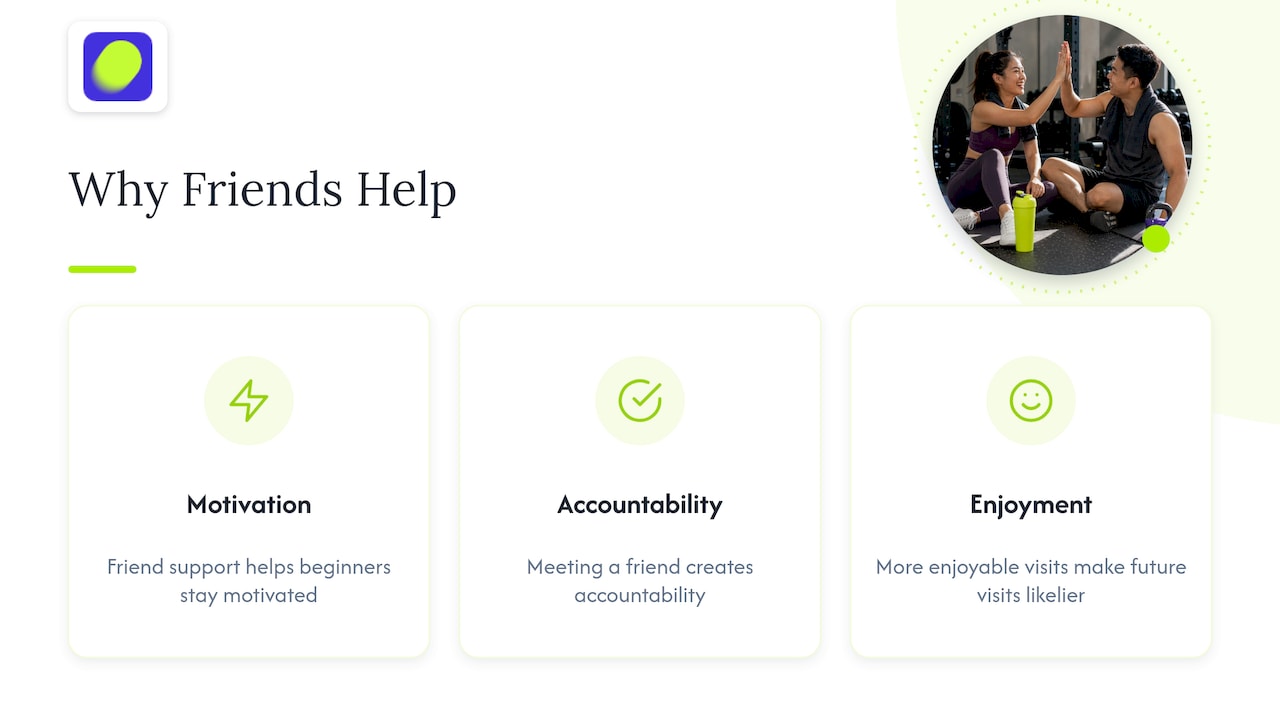
We’ve all bailed on a solo workout. It’s much harder to bail on someone who’s waiting for you. A Cleveland Clinic physician says a friend can provide motivation and accountability, especially when you’re just getting started.

The research agrees. Rachel Gershon, lead author of the buddy-system study, explains that people enjoy social visits more, which makes future visits more likely. They also feel accountable to the friend they’re meeting. The CDC also lists social support such as buddy systems as a key strategy, as PhillyVoice reports.

So the secret isn’t willpower. It’s making the plan social.
Why Working Out With Friends Works

Partner Workout Ideas You Can Do Anywhere

These need little or no equipment. Mix and match based on your group.

  1. Plank walk-outs with high-fives. Face each other in a plank and tap hands.
  2. Push-ups with partner hand presses. One person pushes up while the other adds light, steady pressure to the shoulders or hands.
  3. Squats with a ball pass. Squat, pass a ball or a backpack, stand, repeat.
  4. Wall sits with tricep dips. One holds a wall sit while the other works a dip, then swap.
  5. Side plank crunches with foot taps. Great for a laugh and for your core.
  6. Pendulum lunges. Step back and forward in a controlled swing, side by side.

A few of these come from a 15-minute bodyweight partner routine that uses 40 seconds of work and 20 seconds of rest per move, with no equipment at all.

New to this? Healthline suggests starting with a resistance band or medicine ball and building a workout from at least 5 exercises, with about 7 as the sweet spot, at 3 sets of 12 reps.

A Simple Full-Body Circuit for Two (or Four)

Want one plan you can copy and paste into your group chat? Try this.

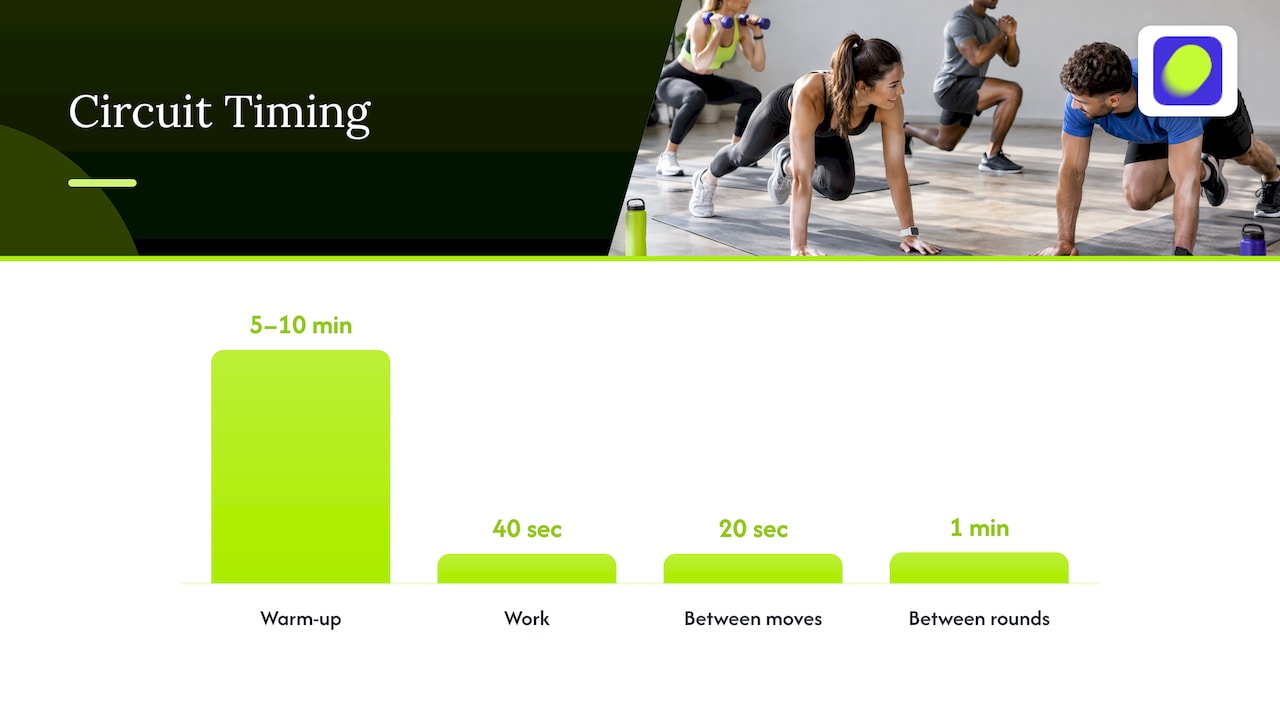
  • Warm-up — 5 to 10 minutes of walking in place, arm circles and bodyweight squats.
  • Work — 40 seconds per exercise, then 20 seconds rest.
  • Moves — squat with ball pass, plank hand taps, reverse lunges, push-ups (full or incline), glute bridges, wall sit.
  • Rounds — 3 rounds, with a minute of rest between rounds.
  • Cool-down — easy walking and gentle stretching.

The timed format is the secret to mixing levels. Both of you work for the same 40 seconds, and each does the version that fits. One person does full push-ups, the other does incline. Nobody waits, and nobody feels behind. If one of you wants more challenge, slow the tempo or add a pause at the bottom instead of adding speed.

Prefer dumbbells? Each person can pick their own weight on moves like rows or Romanian deadlifts, so you don’t need matching strength.
A Simple Full-Body Circuit for Two (or Four)

Challenge Ideas That Keep Your Crew Consistent

Challenges turn “I should work out” into “we’re doing this.” Here are formats that work well for busy people training 2 to 3 times a week:

  • The three-day streak — Everyone commits to three sessions a week for a month and checks in after each one.
  • Personal best week — Each person picks one lift or bodyweight move and tries to beat their own number.
  • Rotating host — Each week, a different friend chooses the workout and the location.
  • Step-up challenge — Add a walk or a stair climb on your off days and compare totals.
  • Skill of the month — Work toward a first pull-up, a 60-second plank or a handstand hold.

One tip: keep it friendly and low-pressure. A 2015 CHI study on public commitments found that very public accountability can reduce how many commitments people make. A small group chat usually beats a big public announcement.

Want more on building a group? Our guide to starting or joining a workout accountability group walks through it. If you’re in the Sunshine State, see our rundown of workout accountability in Florida.

Make It Safe and Fun for Everyone

Great sessions are the ones everyone wants to repeat. A few basics help:

  • Check in with your doctor first — Cleveland Clinic advises getting a go-ahead before starting a new routine, and that’s especially smart if you have a health condition.
  • Warm up properly — The University of Pittsburgh’s activity resource center suggests 5 to 10 minutes of general warm-up before resistance training. Our dynamic warm-up takes about the same time.
  • Practice without weight first — Learn each move with good form and no momentum, then add load. Stop if you feel pain.
  • Pair up by ability when you can — Sutter Health’s sports podiatrist notes that a buddy of similar ability can lower injury risk.
  • Go slow on volume — Don’t do too much too soon. If you’re new, work toward the 150 minutes of moderate activity a week that Mayo Clinic describes, and ease into it gradually.

On any move where one person resists or assists, agree on a stop word, keep the floor clear and talk through every rep.

What to Look for in a Social Fitness App

Can’t meet up every time? An app can keep the group going. Whether you search for a workout buddy app, a group fitness app or an online fitness community, look for these:

  • Shared challenges — Everyone sees the same goal, so you cheer each other on.
  • Streaks and points — Small wins that make showing up feel good.
  • Guided sessions — Sets, reps and rest timers, so nobody plans on the fly.
  • Programs for your level — Beginner-friendly plans that grow with you.
  • Works at home or the gym — Your crew won’t always be in the same place.

That’s the idea behind Onemor. Our workouts are led by real coaches, with guided sessions, streaks, XP and tribe-based challenges you can do with friends. Our goal is training for results, not for content.

Start Your Next Session With Onemor

Ready to turn these ideas into a habit? Onemor is available on iOS with free and premium options. Start with the free plan, invite your friends into a challenge and follow a guided session together. When you want more structure and coach-led programs, see what Pro includes.

FAQ

What are good beginner workouts to do with friends?

Start with bodyweight moves like squats, incline push-ups, lunges, glute bridges and planks in a timed circuit. Use 40 seconds of work and 20 seconds of rest, and let everyone choose the version that fits them. Three rounds is plenty for a first session.

Do friends need the same fitness level?

No. Time-based intervals let everyone do as much as they can in the same window. You can also use different move variations, different weights or a slower tempo for the stronger partner.

How often should we train together?

Two or three times a week is a realistic rhythm for most people. Choose fixed days and put them on everyone’s calendar. If your schedules clash, a shared challenge in an app lets you train separately but stay connected.

Can we work out together if we live far apart?

Yes. Pick the same guided workout, do it at your own gym or at home, and compare streaks or check in by text afterward. Shared challenges and streaks keep you accountable even when you’re in different cities.

Sources

Make Fitness a Lifestyle
You’ll always know exactly what to do, when to do it, and you’ll have friends and coaches pushing you along the way.
Designed and built by Onemor Inc.
Copyright © 2026
Onemor green/yellow icon
Designed and built by Onemor Inc.
Copyright © xxxx