An upper/lower split trains your upper body one day and your lower body the next, cycling through both twice a week. Run as a 4-day plan, it hits every major muscle group about twice weekly, which balances enough training frequency with enough recovery to grow stronger and bigger. For most beginners graduating past their first few months and most intermediates juggling a real schedule, this is the most practical structure you’ll find. Start with the sample plan below.
TL;DR:
Picture your training week split into two lanes: one for everything above your waist, one for everything below it. You run each lane twice, which is where the “4-day” comes from. A common layout looks like this:
That Wednesday gap isn’t filler. It gives your nervous system and connective tissue a breather between the two heaviest days of the week, which matters more than people give it credit for when you’re pushing real weight on bench press and squats back to back.
The A/B split inside upper/lower is what separates a good program from a generic one. Your A session (Monday and Tuesday) lean into heavier compound lifts, lower rep ranges (think 4 to 6 reps), and longer rest periods of 2 to 3 minutes because you’re chasing strength and need to recover between sets. Your B sessions (Thursday and Friday) shift the emphasis toward moderate weights, higher reps (8 to 15), shorter rests, and more isolation work like curls, lateral raises, and leg extensions to accumulate muscle-building volume without wrecking your joints.
Session length tends to differ by day, too. Lower days often wrap up in 45 to 60 minutes because you’re working fewer, bigger muscle groups. Upper days can creep toward 75 minutes if you’re not careful, since there are simply more muscles to hit: chest, back, shoulders, biceps, triceps. We’ll cover how to keep that in check later.
The frequency behind this structure isn’t arbitrary. A well-cited meta-analysis by Schoenfeld, Ogborn, and Krieger found that training a muscle twice a week produces measurably better hypertrophy than training it once a week, as long as total weekly volume stays the same. The 4-day upper/lower format is basically built around exploiting that finding without asking you to live in the gym.
The honest answer: it depends on where you are, not what’s trendy. Full-body training and upper/lower splits aren’t rivals fighting for supremacy. They’re tools suited to different stages of your training life.
Run through this quick check before switching:
Here’s what surprises a lot of people: a 12-week randomized trial comparing full-body training twice a week against a split routine four times a week found no meaningful difference in muscle growth or strength in untrained women, once weekly volume per muscle was matched. Other trials comparing split versus full-body training in novice lifters report similar results. The takeaway isn’t that splits are overrated. It’s that volume, not the specific schedule, drives most of the early progress.
Practically, that means a true beginner doing a full-body workout plan for 6 to 12 weeks isn’t behind. You’re building the base. The upper/lower split becomes worth adopting once your sessions run long, your recovery between full-body days feels solid, or you simply want more training days to work with.
Here’s the full plan. Adjust the loads to your own strength level, but keep the structure intact for at least 6 to 8 weeks before judging results.
Before you touch the barbell, spend 5 minutes on band pull-aparts and shoulder circles. It sounds minor, but priming your shoulder stabilizers before heavy pressing cuts down on nagging shoulder pain over time.
Lower A leans hinge-heavy through the Romanian deadlift while the squat covers your knee-dominant work. If your gym is packed and the squat rack is taken, a goblet squat or leg press works as a direct substitute without breaking the session’s intent.
That superset at the end isn’t a shortcut for its own sake. It’s how you keep an upper day, which naturally has more exercises, from stretching past the hour mark.
Progression rule: double progression. Pick a rep range for each exercise (say, 8 to 10 for the leg press). Add reps each session until you hit the top of the range for every set, then increase the weight and drop back to the bottom of the range. This single rule removes the guesswork of “should I add weight today?” almost entirely.
Every 5 to 8 weeks, or whenever your top sets start missing reps two sessions in a row, take a deload week: cut volume by roughly 40% (fewer sets, same or slightly lighter weight) for 5 to 7 days. It feels like giving something up. It’s actually how you keep progressing without your joints filing a complaint.
Pro Tip: If you don’t have access to a squat rack or heavy dumbbells at home, equipment-light home workout structures can substitute goblet squats, resistance band rows, and single-leg work for nearly every movement in this plan without losing the upper/lower logic.
Limited equipment doesn’t mean abandoning the plan. Swap the barbell bench press for dumbbell floor press, the lat pulldown for banded rows, and the leg press for a heavy goblet squat or single-leg step-up. The muscle groups trained and the A/B rep logic stay identical. Only the tools change.
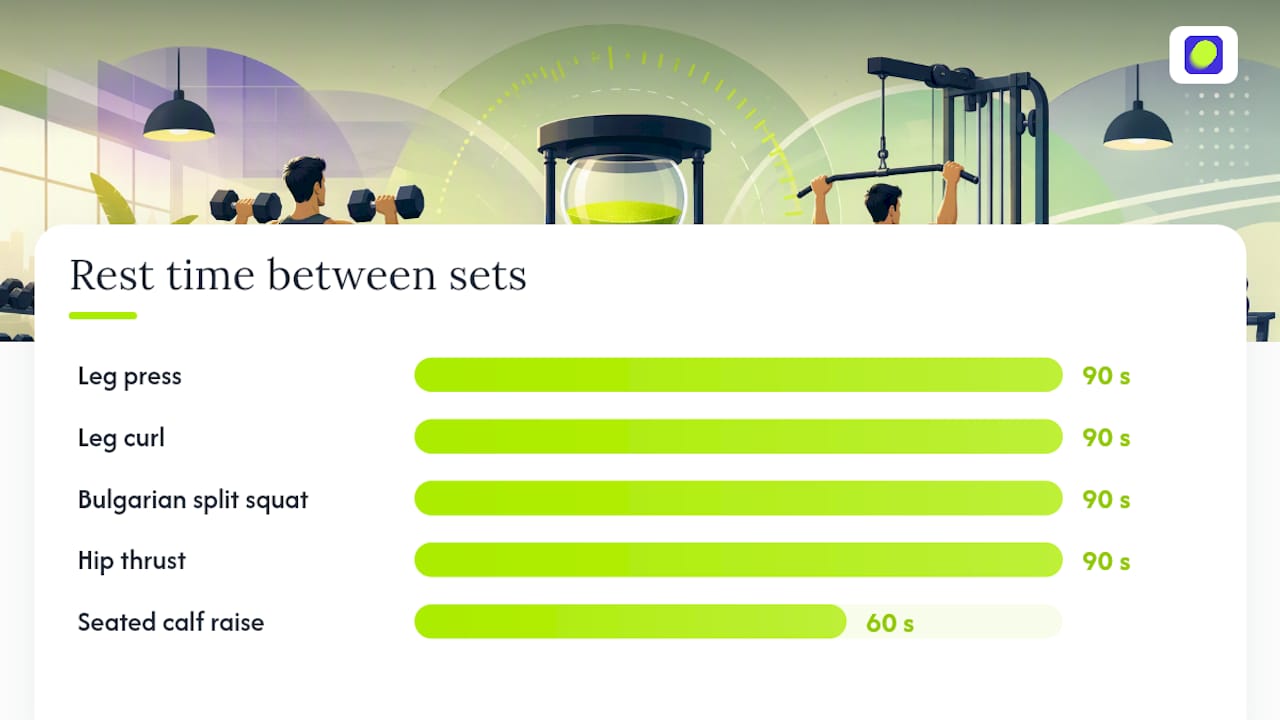
The 4-day format is the sweet spot for most people, but it isn’t the only valid schedule. What matters is preserving weekly volume and frequency per muscle, regardless of how many days you split it across.
Whichever format you choose, the constant should be total weekly sets per muscle group and hitting each muscle at least twice. Cramming your entire upper/lower volume into 2 marathon sessions works fine if recovery allows it. Spreading it across 5 shorter days works too, provided you’re not quietly adding extra junk volume just because you have more days to fill.
Most people obsess over exercise selection and barely think about the numbers that drive results: weekly volume, frequency, and how you progress load over time.
Start with a baseline of roughly 10 to 12 sets per muscle group per week, split across your two weekly sessions for that muscle. An umbrella review of resistance training variables backs this figure as a reasonable floor for hypertrophy, noting that volume shows a dose-response relationship with muscle growth up to a point. Beginners can grow on the lower end of that range. Intermediates chasing continued gains often need to push toward the higher end or accept slower progress.
Frequency matters, but perhaps less than people assume once volume is accounted for. The same Schoenfeld meta-analysis cited earlier found twice-weekly training beats once weekly for hypertrophy when volume is matched. However, a separate meta-analysis on training frequency and strength found that once you equate weekly volume, bumping frequency higher doesn’t reliably add extra strength gains. Frequency is a delivery mechanism for volume, not a magic variable on its own.
Rep ranges should differ by session type:
Progression should follow a clear order of priority rather than changing five variables at once. The research on upper/lower program design lays out a sensible hierarchy: first, try to add load once you hit your rep target. If load progression stalls, add an extra work set instead. Only as a third option should you increase training density by trimming rest periods. Chasing all three at once is how programs fall apart within a month.
A quick number worth remembering: roughly 10 sets per muscle per week is the floor most research points to for meaningful hypertrophy, not a ceiling. Going well beyond it without more recovery capacity tends to produce diminishing returns rather than faster growth.
The split itself rarely fails. Poor execution does. The most common mistake is letting upper day exercise count creep upward until a session that should take 60 minutes stretches to 90.
Pro Tip: Pre-plan your sets and loads before you walk into the gym. Deciding weights on the fly wastes time between sets and is one of the sneakiest ways an upper day balloons past an hour.
Knowing the right sets, reps, and rest periods is one thing. Actually logging them, remembering where you left off, and staying consistent week over week is where most people quietly fall off. Onemor builds guided sessions specifically to close that gap.
Inside the app, an upper/lower plan like the one above translates directly into guided workouts with:
A typical week might look like this: log Upper A on Monday with the app tracking your bench press reps against last week’s numbers, hit Lower A Tuesday with the same tracking on your squat, then repeat with the B sessions Thursday and Friday. Every 6 to 8 weeks, the app can flag a deload week based on your logged performance trends, so you’re not guessing when to back off.
The structure itself is safe, but two patterns cause most of the injuries people report on this format. The first is treating both A days as maximal-effort days without respecting the built-in recovery gap. Hammering heavy squats Tuesday and then trying to hit a new bench max Thursday, on top of an already-fatigued upper body from Monday, is how shoulders and lower backs start complaining.
The second, more common issue is skipping a proper warm-up on strength days. Jumping straight into heavy squats or bench press cold is a fast way to strain a tendon that had no chance to prepare. Spend 5 to 8 minutes on dynamic movement and a couple of light warm-up sets before your first working set, every single session, not just when you remember.

Watch your rest-day spacing too. If life forces you to run Upper A and Lower A on consecutive days with no gap, that’s fine occasionally, but doing it every week removes the recovery buffer the schedule is built around. Similarly, resist the urge to add a fifth heavy day “just because you feel good.” Feeling good on Wednesday is often just your body not having caught up with Monday’s fatigue yet.
Finally, watch load jumps.
Cardio and lifting don’t have to compete for the same energy if you place them thoughtfully. The easiest approach is stacking short cardio sessions on your off days (Wednesday, Saturday, Sunday) rather than tacking a long run onto the end of a heavy lower day, where fatigue compounds and form on both starts to slip.
If you’d rather combine them, low-intensity steady cardio, 20 to 30 minutes on a bike or incline walk, works fine after an upper day since it barely taxes the same muscles you just trained. Save higher-intensity cardio or sprint work for a day fully separate from Lower A or Lower B, since your legs need the recovery window more than your heart does.
Mobility work deserves a permanent home rather than an afterthought. Five to ten minutes of hip and shoulder mobility before each session, focused on the joints you’re about to load, tends to pay off more than a long static stretch routine done once a week. Save deeper static stretching for rest days or right after training when muscles are warm, and prioritize the hips, ankles, and thoracic spine, since restrictions there are what usually limit squat depth and overhead pressing range.
A true beginner running this 4-day plan should simplify before adding complexity. Cut the accessory exercises in each session by one or two, focus entirely on the primary compound lifts, and don’t worry about RIR precision yet. Just aim to leave a couple of reps in the tank on every set and let strength build naturally over the first several months.
Advanced trainees have earned the right to push variables further. That might mean tightening RIR targets closer to failure on hypertrophy days, adding a sixth accessory movement to target a genuinely lagging muscle, or experimenting with tempo work (slower eccentrics) on B-day isolation exercises. Advanced lifters also tend to need deloads more often, every 4 to 6 weeks rather than 6 to 8, simply because they’re training closer to their genuine ceiling more consistently.
The exercises can stay identical between a beginner and an advanced lifter running this exact template. What changes is proximity to failure, the number of accessories layered on top, and how precisely progression gets tracked. Trying to run an advanced level of RIR precision as a total beginner just adds confusion without adding results.
The 4-day template above is written for balanced strength and hypertrophy, but small dial adjustments shift it toward a specific goal.
For fat loss, keep the exercise selection and rep ranges largely intact, since preserving muscle matters more than changing training style when you’re in a calorie deficit. The main adjustment is trimming rest periods slightly on B days (down to 45 to 60 seconds) to nudge up calorie burn, and considering adding one short cardio session on an off day rather than piling extra sets onto lifting days.
For pure strength, shift more of your weekly volume toward the A-day rep ranges (4 to 6 reps) across both upper and lower days, even on what were originally B days, and reduce isolation accessory work in favor of more sets on your primary compounds. Fewer exercises, more sets each, is the strength-focused version of this template.
For muscle gain, the original 4-day split as written is already well suited, but advanced lifters chasing more size can push weekly sets per muscle from the 10 to 12 baseline toward 14 to 16, provided recovery and sleep support the added workload. Adding a single extra isolation exercise to a lagging muscle group on its B day is usually the safest way to do that without overhauling the whole plan.
Reading a program is one thing. Actually running it, week after week, without losing track of your progression or letting motivation quietly fade, is the harder half of the equation. Onemor is built around exactly that gap: real coach-led programs delivered as guided sessions, so every set, rep, and rest period from a plan like the one above shows up on your screen instead of living in a notes app you stop opening after two weeks.
The app’s tribe challenges connect you with other members running similar programs, and features like streaks and XP turn showing up on your Upper A day into something you actually want to keep doing, not another item on a to-do list. If you’d rather have a coach shape the specifics around your schedule and goals, coaches like Coach Branden and Coach Kayla build structured programs inside the app that follow the same evidence-based principles covered here.
Onemor is free to start, with premium coaching and programming available if you want more structure behind your training. If a 4-day upper/lower split sounds like the right next step, find your program inside the app and start logging your first Upper A session this week.