A beginner push day is one workout built around pressing movements: chest, shoulders and triceps, done in a smart order with sets and rest you can actually handle. Below is a five-move session, how many sets and reps to use, and where it fits in a 2 to 3 day week. We built Onemor so you never have to piece a routine like this together alone, but you can start with this one today.
Push exercises are any moves where you press a load away from your body. That means your chest, triceps and shoulders do the work, while your abs and glutes help keep you stable during overhead presses.
That overlap matters for how you plan. A chest press also works your shoulders, and every press hits your triceps. So you don’t need ten exercises. A handful of well-chosen moves covers everything.
Push day is usually one third of a push, pull, legs split. If you want the full picture of how the three days fit together, our guide to push pull legs for beginners walks through it.
This plan is based on a trainer-led push-day routine from Women’s Health that takes about 45 minutes. Each move below gets three sets, but if you’re brand new, start with two and add the third once it feels manageable.
That’s five moves, which is plenty. The Women’s Health plan uses 30 to 45 seconds of rest between sets, and you can take a bit longer while you’re learning.
Finish with a short cool-down stretch for your chest and shoulders.
The order isn’t random. Larger muscle groups need more energy and effort, so training them first lets you lift your best and lowers your injury risk. That’s why chest comes before shoulders, and shoulders before arms.
If your triceps are tired from the start, your chest press suffers. Putting them last means they’re already warm from pressing but not holding anything back.
So what should you do first on push day? A short warm-up, then a chest press or push-up variation. Always the big pressing move first.
Numbers help when you’re guessing. The University of Washington’s wellness program, citing the American College of Sports Medicine, recommends that beginners do 1 to 3 sets of 8 to 12 reps per exercise. Here’s how that looks in practice:
Is four exercises enough for a push day? Yes. Because pressing moves overlap so much, four or five exercises cover your chest, shoulders and triceps well. Quality reps beat a long list.
Form is the whole game early on. The same university guidance tells beginners to focus on form rather than weight. If your form breaks, stop the set. Nobody gets extra credit for a sloppy rep.
A simple way to progress:
Can 100 push-ups a day get you ripped? Chasing a huge number isn’t the goal. Doing push-ups well, at a level you can progress, will take you further than grinding through bad reps.
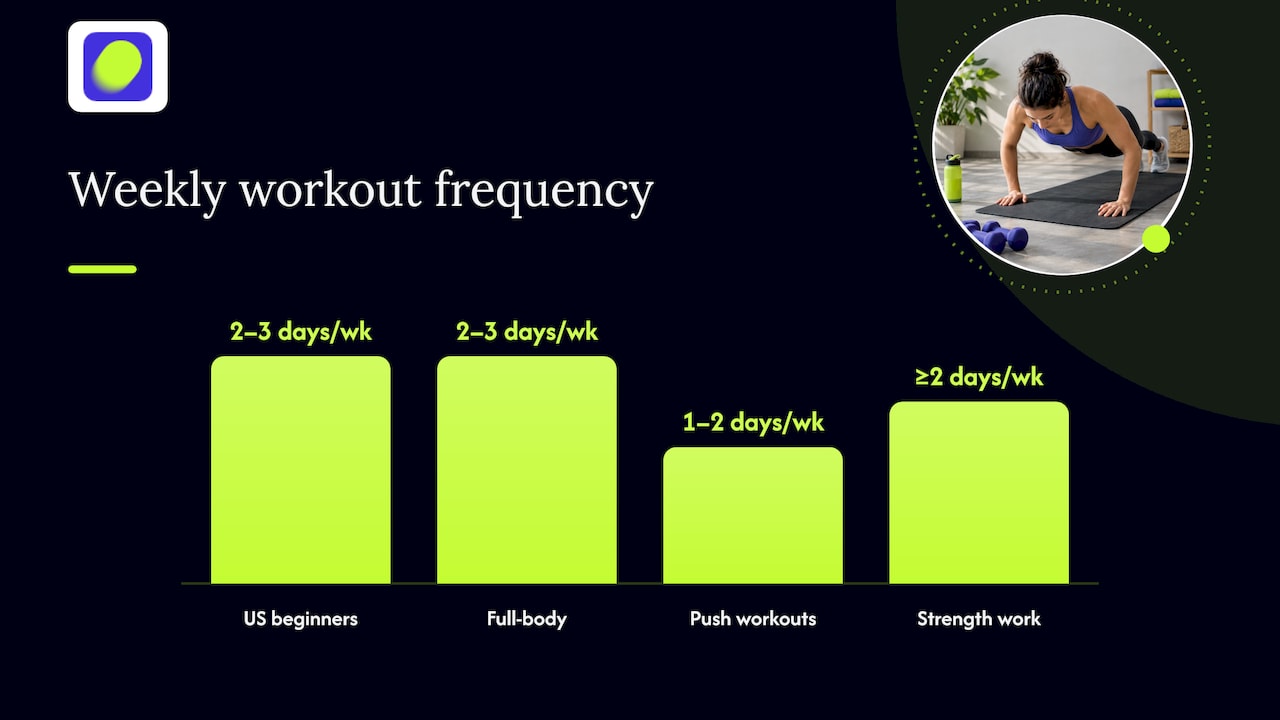
Most beginners in the US train two or three days a week, and that’s a great place to be. The Women’s Health trainer notes that beginners may do better with full-body workouts two to three times a week, while one to two push workouts a week is effective for most people.
Here are two easy ways to set it up:
Recovery is part of the plan. A certified strength coach writing for Men’s Health recommends at least 24 hours between intense workouts and ideally 48 hours between sessions that hit the same body parts. If you want to dig into how long muscles need, this breakdown of recovery times between workouts is a good next read.
The American physical activity guidelines also call for muscle-strengthening work on at least 2 days a week covering all major muscle groups. If you’re also planning gym days, our 4-week beginner gym plan shows how to build the whole week.
Knowing the workout is one thing. Showing up for it is another. In Onemor, you follow real workouts led by top trainers, with guided sessions that give you the sets, reps and rest timers, so you’re not counting in your head between presses. Streaks, XP and tribe challenges with friends give you a reason to come back for the next session.
Onemor has strength training, bodyweight and beginner-friendly programs for the gym or home, and it’s available on iOS with free and premium options. You can start on the free plan or see what Pro adds. If you’d like a place to begin, our guide to starting strength training with 2 to 3 coach-led sessions is built for exactly your schedule.
Start with a 5 to 10 minute dynamic warm-up, then do your biggest pressing move first, like a dumbbell chest press or push-up. Your chest is the largest push muscle, so it gets your freshest effort.
One or two push-focused sessions a week works well for most people. If you only train two or three days, a full-body week that includes pressing moves is a great option too.
About 45 minutes, including the warm-up. With five exercises, short rests and a quick cool-down, you’ll fit it into a lunch break or after class.
Yes. Push-ups, incline push-ups on a counter or bench, and a pair of dumbbells cover chest, shoulders and triceps. Make push-ups easier by raising your hands, and harder by lowering them toward the floor.