A rest-pause set lets you squeeze more quality reps out of one weight. You take a set close to failure, rest about 15 to 20 seconds, then keep going with the same weight. Repeat that once or twice and you’ve done a long set in one short block. It’s a real time-saver. It’s also an advanced tool, so the smart move is to learn when it belongs in your week and when it doesn’t.
We’ll walk through how to do it, how it differs from a drop set, what the research says, and a simple way to try it without wrecking your recovery.
Think of it as one extended set with built-in breathers. You pick a weight you could lift for roughly 8 to 12 reps, and you work like this:
That’s it. The first chunk is usually the biggest, and the later mini-sets drop to a few reps each. The short breaks let you recover just enough to keep the muscle working hard, which is why you can stack up more total reps than you would non-stop.
Not every version looks the same. Some research protocols use a 4-second unloaded rest between repetitions, while the gym version most people use is the 15 to 20 second pause above. The shorter the rest, the more your muscular endurance does the work instead of pure heavy lifting.
They look similar because both push you past the point where a normal set would end. The difference is what you change to keep going.
Which one fits you? Rest-pause suits barbell and dumbbell moves where changing plates is a hassle. Drop sets suit machines and cables, where you can move a pin in a second.
Here’s the honest picture. In an 8-week study of resistance-trained men, rest-pause and drop-set training produced similar strength and muscle gains compared with traditional sets. So it isn’t a shortcut to bigger muscles by itself.
Where it shines is time. A review on time-efficient training points to lack of time as one of the most common barriers to lifting. In a study it discusses, a rest-pause group finished workouts in 35 minutes compared with 57 minutes for the traditional group. Same results, shorter session.
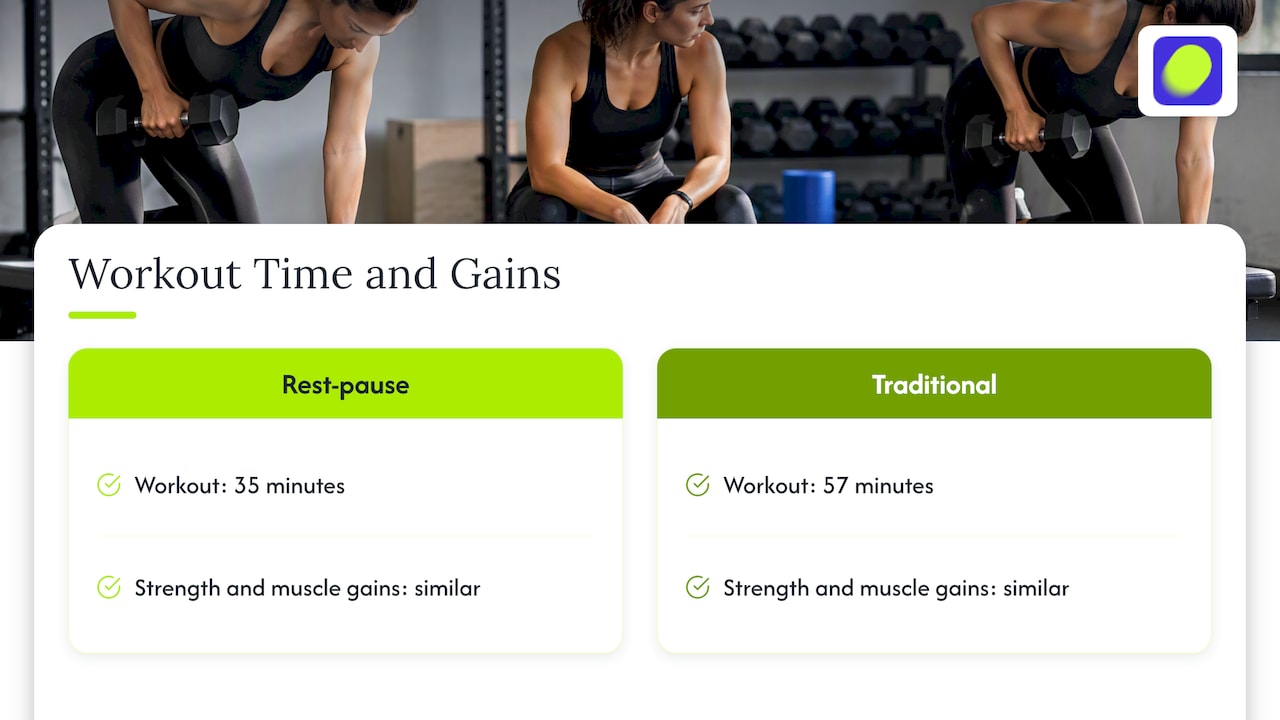
A 6-week trial in trained participants also found rest-pause was a solid option for strength and muscle size next to traditional multiple sets. In short: it works, it’s efficient, and total volume and effort still run the show.
Rest-pause feels hard, and that’s tempting. But feeling the burn isn’t the same as building muscle better. Here’s the catch for newer lifters:
If you’re still learning your lifts, straight sets with controlled rest are the better teacher. Our guides on how long to rest between sets and sets and reps for new lifters are a good place to build that base. Not sure how close to failure to go? Check out reps in reserve.
You don’t need to rebuild your plan. You need one smart swap.
Want to see where this fits in the bigger picture? Our guide to weekly sets and rep ranges for muscle growth covers how many hard sets you need, and the ideal workout duration piece shows how long a session should really be.
Say you’re hitting the gym after class or work and have half an hour. After a short dynamic warm-up, you might do:
You finish tired, but you didn’t turn every move into a survival test. That’s the balance we love: efficient, challenging, and repeatable.
Because rest-pause pushes fatigue hard, watch for warning signs: your lifts getting worse for more than a week, nagging joint pain, or dreading your next session. When that happens, drop rest-pause for a couple of weeks and go back to straight sets. Sleep, food and rest days do most of the recovery work.
You may come across supplements and therapies pitched for recovery. If you’re curious, this overview of peptides for recovery is one read, but talk with a doctor or licensed clinician before trying anything new, especially if you have a medical condition or take medication.
The hardest part isn’t knowing what a rest-pause set is. It’s knowing when to use it, and when to just do your sets and go home happy. That’s where structure helps.
Onemor is built for exactly this. You get workouts led by real coaches, guided sessions with sets, reps and rest timers, plus streaks, XP and tribe challenges to keep you coming back. Start with the free plan and see how a coach-led week feels, or explore the tribes to train alongside friends. Curious about the extra features? Take a look at Pro.
Not by itself. Research in trained men found similar strength and muscle growth compared with traditional sets. Its advantage is finishing the same work in less time.
Most lifters use about 15 to 20 seconds. Some research protocols go as short as 4 seconds between reps. Start at 20 seconds, which gives you a little more to work with.
It’s best to wait until you’ve spent a few months learning your lifts with straight sets. If you try it earlier, use machines, stay a rep or two short of failure, and do it on just one exercise.
One or two exercises per workout is plenty, usually at the end. Doing it on every set can pile up fatigue and hurt your next session.