A minimal home gym needs five things: a pair of adjustable dumbbells, a set of resistance bands, a nonslip mat, a sturdy chair or bench, and a doorway pull-up bar. That is enough for full-body strength training two or three times a week, in a dorm room, a studio apartment or the corner of a bedroom. Pair that gear with a simple plan, like the coach-led sessions in the Onemor app, and you have a routine you will actually repeat.
Walk into any big-box fitness aisle and it feels like a buffet. Racks, benches, machines, gadgets. But a home gym only works if you use it, and a crowded one makes starting harder.
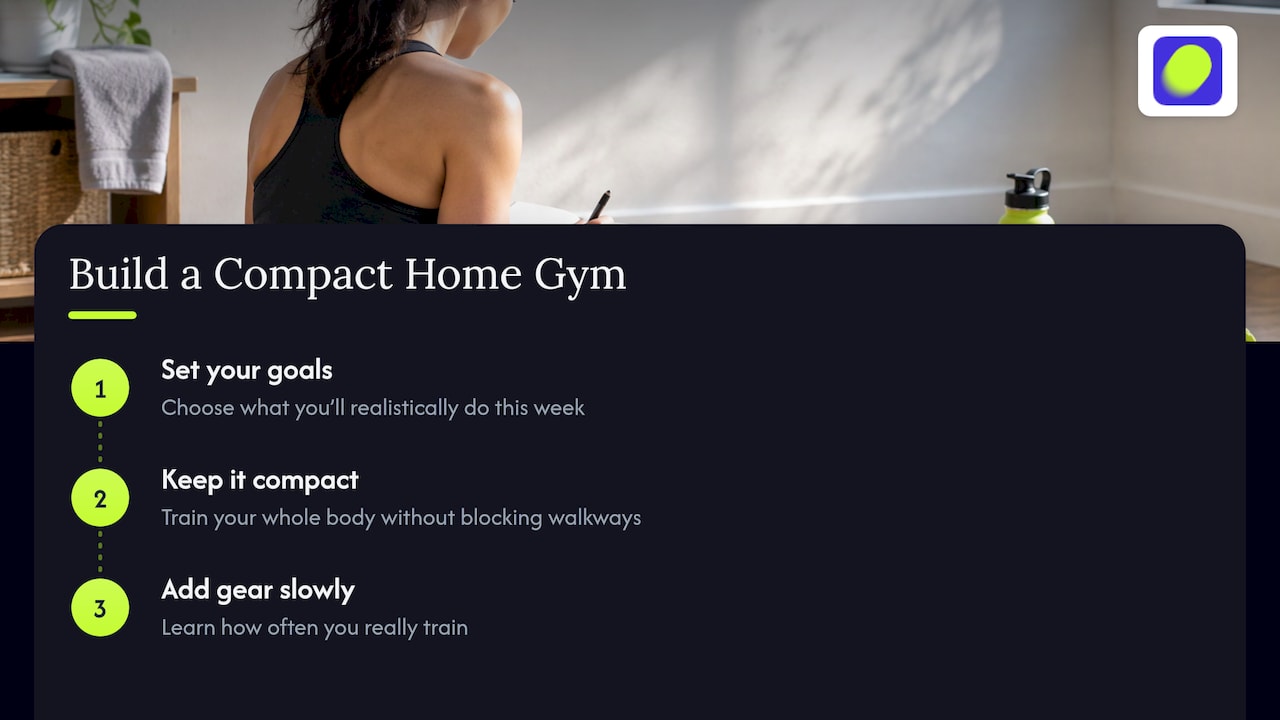
Cleveland Clinic’s fall 2024 home gym guide advises building your equipment slowly, starting with your goals and adding pieces as you learn how often you really train. One of its experts adds that dumbbells and kettlebells are not just for arms: they can be part of a total-body workout.
A CUNY home fitness textbook makes the same point from the space side. The best compact setup is not the one with the most equipment. It is the one that lets you train your whole body regularly without blocking walkways, making too much noise, or adding gear you can’t store safely.
So ask yourself one question before you buy anything: what will I realistically do twice this week?
Here is the short list, in the order we’d buy it.
That is your whole shopping list. Everything else is optional.
Not ready to buy yet? Healthline says water bottles, sandbags or canned goods can stand in for dumbbells early on. Bodyweight moves like squats, lunges, planks and push-ups are a good first phase before you add weights or bands.

Once those feel easy, buy the dumbbells and bands. Our beginner dumbbell plan shows how to use them for 2-3 sessions a week without a gym.
Whether you’re in a Miami apartment or sharing a room near campus in Gainesville, you can do this with a few square feet. The CUNY guide describes a basic strength area as clear floor space, a stable chair, one band system and one adjustable weight. That’s it.
A few storage habits keep it tidy:
You don’t need a barbell for solid strength. Healthline recommends 30 to 45 minutes of strength training two to three times a week, starting with bodyweight moves before adding weights or bands.
Here is a simple full-body template to run 2-3 days a week, with a rest day between sessions:
Want it laid out week by week? Our hybrid home gym program gives you a simple three-day structure, and the resistance band starter plan is a good place to begin if bands are your first purchase.
MD Anderson suggests starting with a lighter weight for three sets of 12. If the second set feels the same as the first, the weight is too light. It also says to avoid weights that are too heavy, because that can lead to injury, and to expect muscle fatigue rather than pain.
A few more habits help:
For more, read our small gym safety habits for beginners.
Equipment is the easy part. Showing up three times a week is the hard part, and so is knowing what to do when you get there.
Onemor is an iOS fitness app with workouts led by top trainers. Each guided session has sets, reps and rest timers, so you can press play and train. Streaks, XP and tribe-based challenges with friends keep you coming back. The app covers strength, HIIT and bodyweight programs for home or the gym, and it has both free and premium options.
You can start with the free plan and match your new dumbbells and bands to a structured routine, or see what Pro adds.
Adjustable dumbbells. They replace a full rack in one compact unit and cover squats, lunges, presses, rows and core work, which is why AIHP ranks them as the best starting piece. Add a band set next for pulling and warm-ups.
Less than you think. A basic strength area can be clear floor space, a stable chair, one band system and one adjustable weight. If you can lie on the floor with your arms stretched out, you can train.
Yes. Dumbbells, bands and bodyweight moves work your whole body, and you can raise the challenge by adding reps, sets or resistance over time. Start light, keep your form clean and progress gradually.
Two to three full-body sessions a week of 30 to 45 minutes is a solid start, per Healthline. Rest days between sessions give your body time to adapt.