Fasted cardio means doing cardio on an empty stomach, usually first thing in the morning. It does burn a bit more fat during the session. Over weeks and months, though, it doesn’t seem to change how much body fat you lose compared with cardio after a snack. If you like training before breakfast, it’s a fine option. If it leaves you shaky, you aren’t missing out by eating first.
We’ll walk you through what the research says, who should skip it, and how to try it without feeling awful.
Fasted cardio is aerobic exercise done without eating beforehand, typically at least 8 to 12 hours after your last meal. That’s why it’s tied to mornings: you’ve already fasted while sleeping, so a walk, jog, bike ride or easy session before breakfast qualifies.
Some people also do it while following intermittent fasting, where the eating window starts later in the day. The idea is the same. Your body has used up much of its readily available fuel, so it leans more on stored fat.
That last part is where the hype comes from. Let’s see what it actually means for your results.
Here’s the honest, slightly surprising answer: it depends on what you measure.
During the workout. A systematic review and meta-analysis in the British Journal of Nutrition found that exercising fasted increases fat oxidation compared with exercising fed. So yes, more of the fuel you burn in that hour comes from fat.
Over weeks. A review of overnight fasted exercise found no significant difference in body mass or body fat changes between fasted and fed training. A Proceedings of the Nutrition Society paper adds that in studies lasting 4 to 6 weeks, body mass, fat mass and fat-free mass didn’t differ between the two approaches when energy balance was matched.
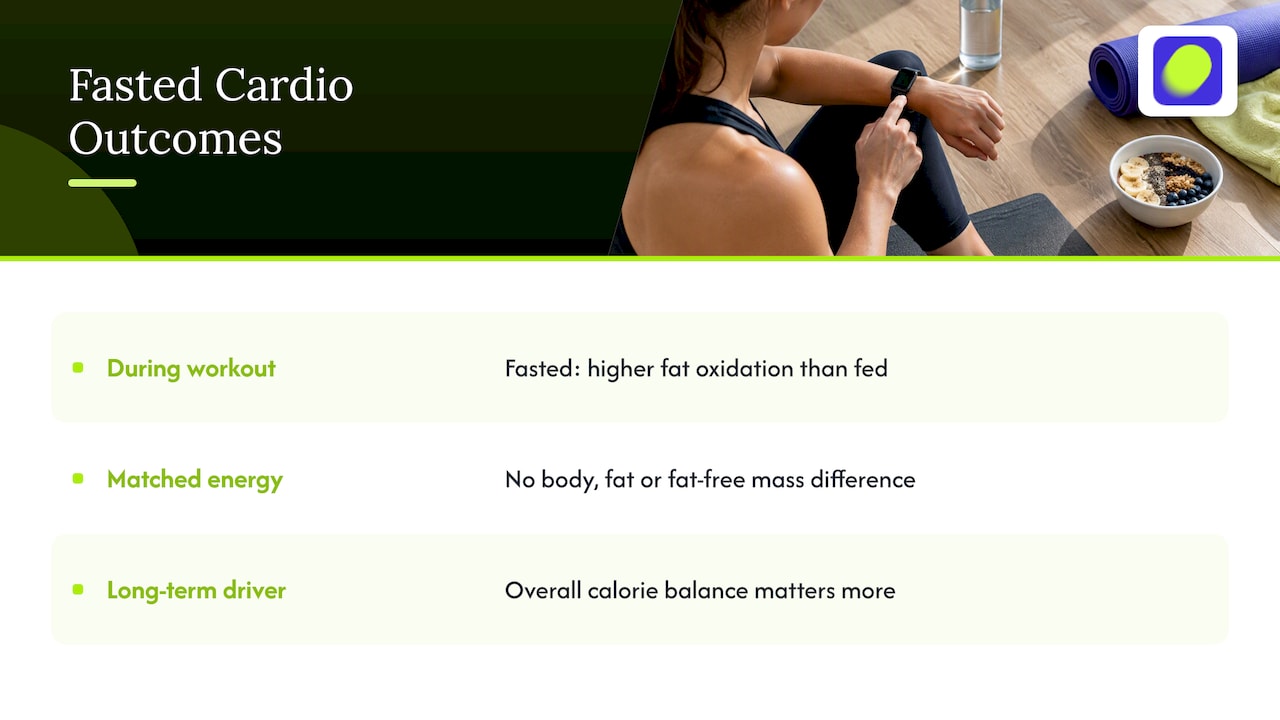
Why the gap? Because your body also adjusts the rest of the day. Long-term body composition seems to follow your overall calorie balance far more than the timing of food around a workout.
So think of fasted cardio as a preference, not a shortcut. If it makes your mornings simpler, great. If it doesn’t, you lose nothing by skipping it.
Fasting may change how your body adapts, but it may not help how you feel or perform. A 2018 review in the Scandinavian Journal of Medicine & Science in Sports concluded that eating before exercise may be better for performance in prolonged aerobic sessions, while fasted conditions may bring distinct metabolic adaptations in peripheral tissues.
In plain terms:
Fasted cardio can cause lightheadedness, dizziness or even fainting, especially in longer sessions when your glucose runs low. People with diabetes or reactive hypoglycemia should get medical guidance before trying it.
More broadly, the American Heart Association says people with high blood pressure, diabetes, heart conditions or moderate-to-severe bone or organ issues should check with their physician before starting an exercise routine.
If you take medication that affects blood sugar or appetite, ask your prescriber how it interacts with training on an empty stomach. Reading about intermittent fasting on GLP-1 medications can give you good questions to bring to that appointment.
Stop and sit down if you feel faint, nauseated or unusually weak. That’s your cue to eat, drink and try again another day with a snack beforehand.

If you’re curious, here’s a low-pressure way to test it.
The ACSM suggests a balanced aerobic routine for health includes 150 minutes of moderate-intensity or 75 minutes of vigorous-intensity activity per week. If you train 2 to 3 times a week, that can be a few 30 to 45 minute sessions mixed with strength work.
Notice what’s missing: any rule about eating. Hitting your weekly minutes consistently beats perfecting your breakfast timing. If you’re also thinking about how cardio fits with muscle, this look at 150 minutes of cardio and muscle preservation shows why pairing it with resistance training makes sense.
Want more variety than walking or jogging? Short, joint-friendly intervals can do a lot in a little time. Try our HIIT for beginners guide, and eat something light beforehand since high-intensity work usually feels better fueled.
Most people don’t fail because of meal timing. They fail because they run out of structure by week three. That’s the gap we built Onemor to close.
Inside the app you get coach-led workouts with sets, reps and rest timers, plus streaks, XP and tribe challenges that keep you showing up with friends. Whether you train before breakfast or after lunch, the plan is already there. New to the gym? Our first day at the gym plan is a good warm-up.
Start free on Onemor, or see what’s included in Pro. You can also explore all tribes and find your people.
Still unsure? Ask yourself three questions:
There’s no wrong answer here. The goal is a routine you enjoy enough to come back to.
It can be fine for healthy people doing light to moderate sessions. You burn proportionally more fat during the workout, but studies don’t show better long-term fat loss. If you feel dizzy or weak, eat first.
For a beginner, 30 minutes at an easy to moderate pace is a good session. Over a week, aim to build toward the ACSM’s 150 minutes of moderate activity, spread across your training days. Increase time gradually rather than jumping straight to long sessions.
You can’t choose where fat comes off. Research on overnight fasted exercise found no significant difference in body fat changes compared with fed exercise, so a steady calorie deficit and consistent training matter more.
People with diabetes or reactive hypoglycemia should get medical guidance first, as should anyone with high blood pressure, heart conditions or significant bone or organ issues. If you’re on medication that affects blood sugar, ask your prescriber before training on an empty stomach.