The best high protein snacks for students are the ones you will actually grab between classes: jerky, Greek yogurt, string cheese, hard-boiled eggs, roasted chickpeas, nuts and a decent protein bar. Most give you 7 to 15 grams of protein for very little money and effort. Below, we sort them by what a dorm room can really store, what fits in a backpack, and how to build one bigger snack when you need about 30 grams.
If you train two or three times a week, snacks are an easy place to make your workouts count. No meal-prep Sunday required.
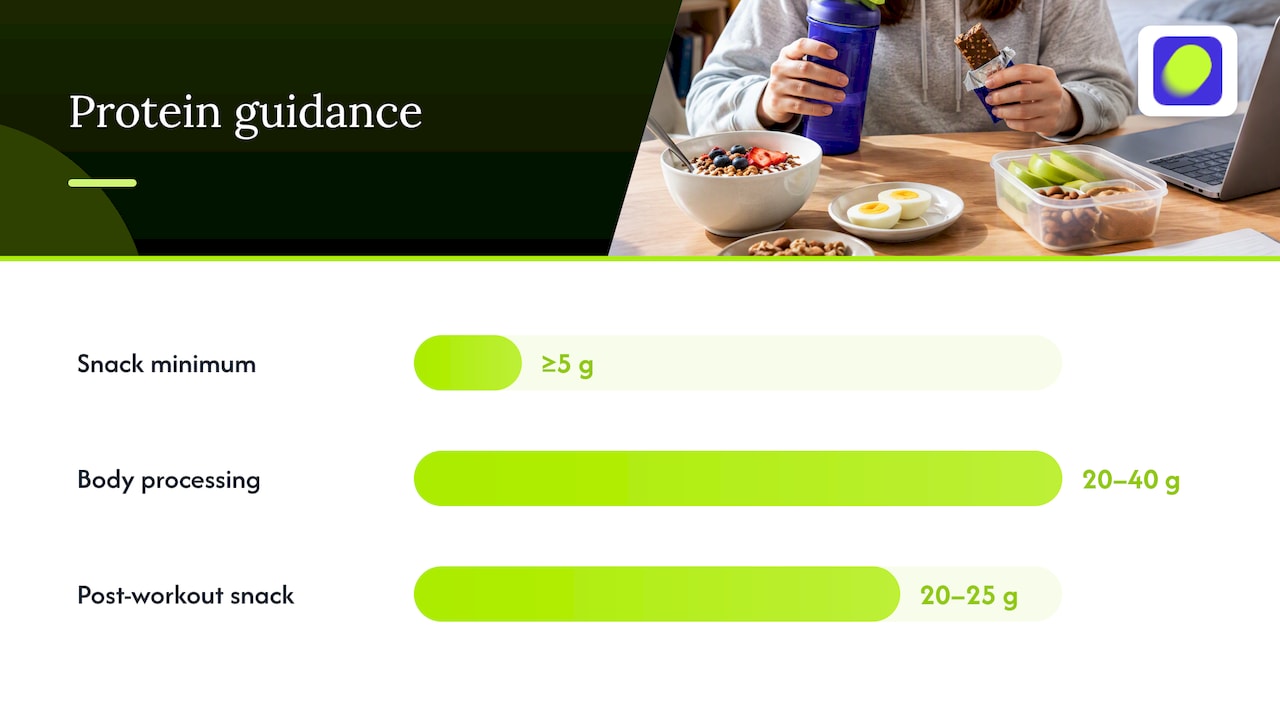
A snack is a bridge between meals, not a second dinner. Harvard Health suggests choosing snacks with at least 5 g of protein and spreading protein through the day, since research suggests the body can process roughly 20 to 40 g at a time. So a few smaller protein hits beat saving it all for dinner.
For size, the Academy of Nutrition and Dietetics says 200 calories or less is a reasonable snack goal for most people, while more active adults and teens may aim for 200 to 300. If you are lifting or running between classes, you are probably in that second group.
After training, the target goes up. A sports dietitian quoted by Food Network recommends 20 to 25 g of protein in a post-workout snack to support muscle repair and refueling. Our own guide to post-workout nutrition for busy young adults goes deeper on timing.
These survive a backpack, a bus ride and a three-hour gap between lectures. No fridge needed.
For drinks, Johns Hopkins University lists ready-to-drink plant-based protein shakes with natural ingredients and no artificial sweeteners as an on-the-go option. A shake is handy right after a gym session when there is no time to sit down.
Dorm life usually means a mini fridge (maybe shared) and a microwave at best. Split your stash in two.
Keep in a bin or drawer:
Keep in the mini fridge:
If you are carrying perishables to class, the Academy advises keeping perishable foods refrigerated or in a cooler bag with ice packs to lower the risk of food poisoning. A small insulated lunch bag is one of the cheapest upgrades you can make.
One more tip: look at your meal plan and schedule before you shop. If the dining hall has yogurt and fruit at breakfast, you may only need a few backups for late nights.
Here are approximate amounts from Johns Hopkins Medicine. They are averages, and brands vary slightly.
Notice that most single items land between 6 and 15 g. That is a solid snack. To reach the 20 to 25 g range after training, combine two things, like yogurt plus a handful of nuts, or an egg, cheese and crackers.
The FDA explains that Nutrition Facts labels list protein in grams per serving, and protein %DV is generally not shown, so grams are your guide. Also remember that serving size is the amount customarily eaten, not a recommended amount. A bag that says 10 g of protein per serving might hold two or three servings. Check both numbers before you compare products.
Sometimes you need more than a stick of jerky: a long afternoon lab, a late workout, a day when the dining hall let you down. Two easy builds get you there.
The yogurt bowl. Whisk half a cup of Greek yogurt with one scoop of protein powder, then add fruit, granola or nuts. Depending on your powder, this lands around 30 g. It takes about five minutes and needs only a spoon and a bowl.
The snack box. Fill a divided container with two hard-boiled eggs, an ounce of cheddar, an ounce of almonds, a few whole-grain crackers, a couple of tablespoons of hummus, and cucumber and grapes. Using the numbers above, the eggs, cheese and hummus alone cover a big share of 30 g, and the almonds finish the job. It is your own grown-up lunchable.

Both combine protein with carbs and fiber, which helps you stay full and focused longer than protein alone.
Protein does not have to be expensive. A USU Dietetics guide notes that buying frequently eaten foods in bulk can stretch a student grocery budget. The same guide says frozen and canned produce often lasts longer and costs less than fresh while keeping comparable nutrition.
A few practical moves:
Want more ideas that make high protein eating fun? Our post on why high protein doesn’t have to be boring is a good next stop, and pre workout meal timing will help you decide what to eat before you train.
Good snacks work best when your training is just as simple. That is where we come in. Onemor is an iOS fitness app with coach-led workouts, guided sessions with sets, reps and rest timers, and streaks, XP and tribe challenges with friends to keep you coming back. It is built for 2 to 3 sessions a week at the gym or at home, so you spend your time training instead of planning.
You can start on the Free plan and see how it feels. If you are fitting workouts around class, our workout schedules for students give you three weeks to copy with no planning at all.
Hard-boiled eggs, Greek yogurt tubs, peanut butter with crackers, canned tuna or chickpeas, and bulk nuts give you the most protein per dollar. Buying in bulk and portioning at home keeps costs down.
Jerky, meat sticks, protein bars, nut packets, tuna pouches, roasted chickpeas, dry-roasted edamame and peanut butter with crackers all store at room temperature. Keep them in a bin away from heat.
Aim for at least 5 g, and more if you are active. After a workout, a sports dietitian recommends 20 to 25 g. Because individual needs differ, ask a registered dietitian if you have a medical condition or a specific goal.
They can be, as long as the label shows a solid number of protein grams per serving and you check the serving size. Use bars as a backup and rely on whole foods most days.