If raw strength is your goal, barbells win because they let you load more weight and track progress more simply. If you’re fixing muscle imbalances, training at home, or working without a spotter, dumbbells are your better partner. Either way, consistency and progressive overload matter more than which tool sits in your hands, according to ACSM’s 2026 resistance training guidelines.
TL;DR:
- Dumbbells are effective for correcting muscle imbalances and solo training due to their independent arm work and safety advantages.
- Barbells support heavier loads and are preferable for powerlifting, with a usual progression of 5 to 15 pounds weekly on main lifts.
- Both tools can be used to estimate maximum strength and track progress, with a strong correlation in performance between them.
- Training frequency of two to three sessions per week with effort-based intensity ensures measurable strength and muscle gains.
- Investment in a space- and budget-friendly setup involves prioritizing adjustable dumbbells and focusing on consistent effort over equipment complexity.
Both tools build muscle. The differences show up in load, stability, and how your body compensates for asymmetry.
A shoulder-press comparison found that standing dumbbell presses produced higher deltoid activity but about 7% lower one-rep max strength than standing barbell presses. That gap captures the whole trade-off: dumbbells ask more of your stabilizers, barbells let you move more total weight.
Bench press tells a similar story. Barbell bench press activates the pectoralis major and triceps more than dumbbell flyes, while flyes bring the biceps in more. Neither tool is the clear winner here, they’re just built for different jobs.
You don’t need both tools for every lift. Here’s how to convert the big ones without losing training quality.
Dumbbell and barbell repetition performance correlate strongly enough that either one can be used to estimate your one-rep max and track strength over time, so switching tools temporarily won’t derail your progress tracking.
Your program structure matters more than your equipment list. ACSM’s 2026 guidance recommends training major muscle groups at least twice a week, with hypertrophy work landing around 10 weekly sets per muscle group.
Pro Tip: Track effort with RPE or reps in reserve instead of just the number on the dumbbell. That way your intensity stays consistent even when the tool changes.
Training three days a week with this kind of structure is enough to build real strength and fitness when the sessions are consistent and the effort is real.
Heavy barbell work calls for more caution than dumbbell training because a failed rep under a loaded bar is harder to bail out of safely.
If you’re building a home setup gradually, spending your first $200 to $500 on equipment that lasts will get you further than buying everything at once. Kettlebells are another flexible option worth considering when barbell loading isn’t practical for your space.
Here’s how to decide, then two short programs to get moving right away.
Pick your tool using this checklist:
Micro-program A, dumbbell-first (3 sessions a week): goblet squats, dumbbell bench press, single-arm rows, and dumbbell shoulder press. Add a set every two weeks, then slow your tempo once you’ve maxed out comfortable dumbbell weight. A structured beginner dumbbell plan can guide this without a gym membership.
Micro-program B, barbell-focused (3 sessions a week): squat, bench press, deadlift, overhead press. Add 5 to 10 pounds weekly on upper body lifts and 5 to 15 on lower body lifts while rest stays long enough to keep reps crisp.
Pro Tip: Guided sessions with built-in rest timers make it much easier to stay consistent with either plan, especially in the first six weeks when habits are still forming.
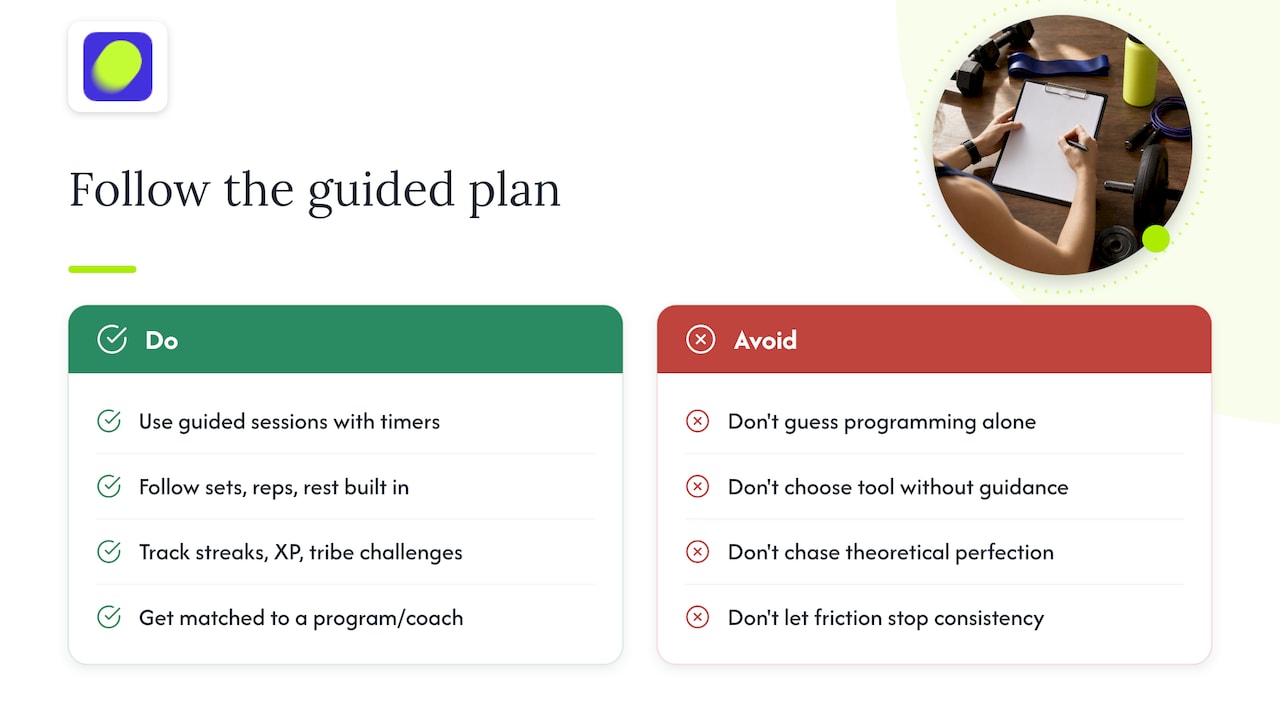
You don’t have to choose your tool alone or guess your way through programming. The plans above can be turned into guided sessions with sets, reps, and rest timers built in, so users are never wondering what comes next. Features like streaks, XP, and tribe-based challenges help maintain motivation, which matters more than finding the theoretically perfect lift.
Consistency beats a perfect program every time, and a guided structure removes the friction that usually gets in the way. If you want to start either the dumbbell-first or barbell-focused plan with real coaching behind it, find your program on Onemor and get matched with a structure that fits your goals and your schedule.
These are the primary sources this article draws from, so you can dig deeper if you want the full picture.
For most healthy adults, dumbbells and barbells both build real strength and muscle when training is consistent and progressively overloaded. ACSM’s 2026 position stand found no strong evidence that barbells are inherently superior for muscle or strength gains.
Yes, dumbbells alone can build significant muscle when you progressively add sets, reps, or load over time. They’re especially effective for addressing side-to-side imbalances since each arm has to work independently.
It depends entirely on the exercise and your training experience. A dumbbell might feel light for a goblet squat but genuinely challenging for a strict shoulder press, since smaller stabilizer muscles fatigue faster than larger ones.
Dumbbell and barbell bench press performance correlate closely enough that reps at a given dumbbell weight can estimate your barbell one-rep max, though the exact comparable barbell weight varies by individual and technique, according to research in college football players. Working with a coach or app that tracks both modalities gives you a far more accurate comparison than a flat conversion number.