Time under tension is a useful training lever when your sets get close to fatigue and your weekly volume stays on track. It’s not a shortcut that replaces progressive overload. Slower eccentrics and controlled tempos can boost specific hypertrophy signals, but the research is clear that total volume still calls the shots. Start with a simple tempo like a 2 to 4 second eccentric paired with a fast, intentional concentric, land somewhere in the 8 to 15 rep range, and let consistency do the rest.
TL;DR:
Time under tension, often shortened to TUT, measures how many seconds your muscle stays under load during a set. It’s simple math: seconds per rep multiplied by your rep count equals total seconds under tension for that set. If a rep takes 4 seconds and you do 10 reps, you just accumulated 40 seconds of tension. That number matters because it’s one of several dials you can turn to change how a workout feels and what it targets, alongside load, volume, and how close you push to failure.
You’ll see tempo written as a string of numbers, something like 3-0-X-0. This is standard shorthand used in practical tempo training guides, and once you know how to read it, every workout program suddenly makes a lot more sense.
Here’s how to decode it:
So a 3-0-X-0 tempo on a squat means: lower for 3 seconds, no pause at the bottom, drive up explosively, no pause at the top. Do the math for an 8-rep set and you’re looking at roughly 24 to 32 seconds of pure tension, depending on how fast your concentric actually is.
Try a 3-1-2-0 tempo instead, and a single rep might take several seconds. Ten reps at that pace stretches a set out to a full minute of continuous tension, which changes how the set feels even though the reps and load stayed identical. That’s the entire point of learning tempo notation: it lets you manipulate the workout experience deliberately instead of just grinding through reps at whatever speed feels natural.
The clearest finding in the research is this: when total volume and effort are matched, different rep speeds tend to produce similar strength and size gains. Tempo is a variable you can adjust for feel, fatigue management, and specific goals, but it doesn’t override the bigger levers of volume, load, and proximity to failure.
A controlled study on untrained men makes this point well. Researchers matched two groups for total time under tension per set (36 seconds) but used different rep schemes, one doing 12 reps at 3 seconds each and the other doing 6 reps at 6 seconds each. The result: nearly identical gains in one-rep max strength and muscle cross-sectional area between the two groups. The tempo shifted, but the outcome didn’t, because the total tension load stayed constant.
That said, tempo isn’t purely cosmetic. A landmark study led by Burd and colleagues found that slower repetitions taken to fatigue (6 seconds up, 6 seconds down) produced a measurably delayed increase in myofibrillar protein synthesis 24 to 30 hours after the workout, compared to faster reps. The slow-tempo group accumulated substantially longer total tension versus the control group. That’s a mechanistic nuance worth knowing: longer tension exposure, especially when a set is pushed toward fatigue, seems to trigger a different, delayed wave of muscle-building signaling. It doesn’t mean slow always wins. It means slow reps to fatigue create a distinct physiological response worth using strategically, not constantly.
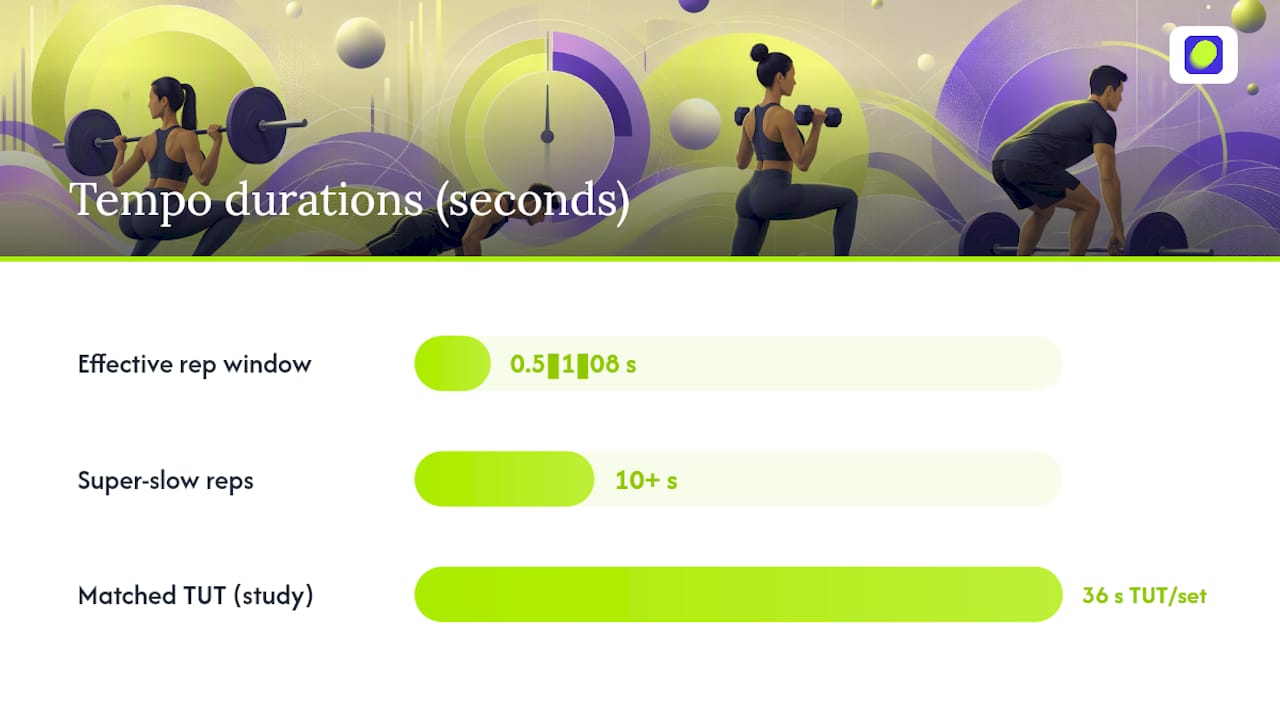
A pooled analysis of multiple studies found that repetition durations anywhere from about half a second to 8 seconds produce comparable hypertrophy, as long as the set is taken close to failure. Once you push past that window into truly slow durations of 10 seconds or more, results tend to flatten out or decline. That’s a fairly wide runway. It means the panic some lifters feel about hitting the “perfect” tempo is largely unnecessary.
A few practical implications fall out of this evidence:
The practical takeaway is refreshingly simple: use tempo to adjust how a set feels and to add a specific eccentric or metabolic stimulus. Don’t use it as a replacement for progressive overload. If you’re not slowly increasing load, reps, or total volume over time, no tempo trick will make up the difference.
Your training goal should decide your tempo, not the other way around. Here’s how tension windows typically map to common outcomes:
Notice the pattern: as the goal shifts from raw strength toward hypertrophy and endurance, tension per set generally climbs. Power sits at the opposite end, where speed and force output matter more than time spent under load.
When should you lengthen the eccentric on purpose? Rehab and tendon health are the clearest cases. Connective tissue adapts well to slow, controlled loading, which is one reason eccentric-focused training shows up so often in return-to-play and injury-prevention programs. Outside of that context, most lifters benefit more from keeping the concentric phase fast and forceful, since maximal concentric intent helps recruit more motor units and keeps the lift feeling athletic rather than labored.
Pro Tip: If you’re not sure where to start, default to a 3-0-X-0 tempo on your main lifts. It’s simple to count, easy to remember mid-set, and backed by enough research that you won’t be second-guessing yourself every rep.
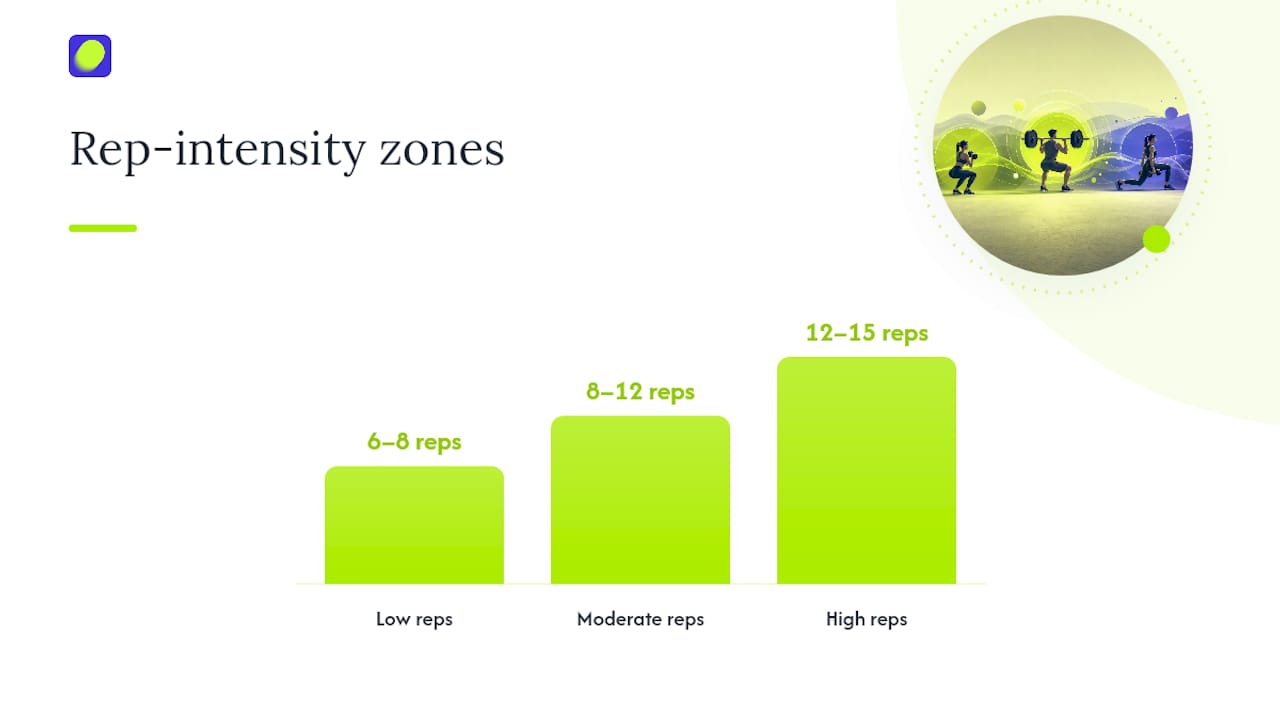
Tempo only matters inside a plan that also respects weekly volume. Research syntheses generally point toward ten or more effective sets per muscle group per week for hypertrophy, and tempo choice should adjust your rep selection within that framework, not override it. A slower tempo naturally lowers how many reps you can complete at a given load, so you might drop from 12 reps to 8 reps at the same weight simply by adding a 3-second eccentric. That’s expected, not a sign something’s wrong.
Knowing when to stop a set matters as much as the tempo itself. A few practical rules:
Here are two sample 3-day beginner programs you can run for a 4 to 8 week cycle, whether you’re on machines and barbells or working from a living room floor.
Gym-based plan:
No-gym plan:
Every one to two weeks, add a rep, a small amount of load, or an extra set once the prescribed tempo starts feeling manageable. A closer look at research-backed rep ranges for hypertrophy can help you fine-tune volume once tempo starts feeling automatic, and a plan built around training three days a week fits neatly with both templates above.
Control the eccentric, but never sacrifice concentric intent to do it. The moment your lowering phase turns into a shaky, uncontrolled drop, or your lifting phase turns into a grind with no explosiveness left, the set has stopped teaching your nervous system anything useful. Keep the “X” in your tempo notation honest. Fast, intentional concentric effort keeps motor unit recruitment high even when the load feels light relative to your max.
Full range of motion matters more than tempo precision. A slow rep through a half range does far less than a brisk rep through the joint’s full available motion. If slowing down forces you to cut range short, that’s a sign to lighten the load rather than protect the tempo.
Not every exercise handles extreme slow tempos well. Skip super-slow eccentrics on:
Watch for a few red flags that signal you’ve pushed tempo too far: joint pain that wasn’t there before, a set that leaves you shaking uncontrollably rather than simply fatigued, or a consistent drop in the number of reps you can complete week over week despite training the same load. Any of those calls for a lighter load, a shorter eccentric, or an extra rest day. Recovery basics still apply here. Sleep quality has a direct line to how well your muscles rebuild after tension-heavy sessions, and dialing in your recovery routine pays off just as much as any tempo tweak.
Pro Tip: If a slower tempo is making a lift feel unstable rather than just harder, that’s your body telling you to drop the weight, not grit through it.
Slower isn’t automatically better, and treating tempo like the main event is one of the most common mistakes beginners make with this training method. Slow tempos help most when a set is pushed close to fatigue and load and volume are still adequate. Strip those two things away, and a slow rep is just a slow rep, not a growth accelerant.
The relationship between TUT, load, and volume works like this: tempo is a modifier, not a primary driver. Load determines how much force your muscles need to produce. Volume determines the total training stimulus across a week. Tempo shifts how that stimulus is delivered, stretching or compressing the time your muscles spend under strain during each rep. Chase tempo perfection while neglecting to add weight or reps over time, and progress stalls regardless of how carefully you count your seconds.
A quick note on simple heuristics like “3 seconds down, 3 seconds up, 3 second pause” style templates: they’re catchy, but rigid formulas like this can mislead beginners into thinking one tempo fits every exercise and every goal. A heavy squat and a light bicep curl don’t need the same prescription. Templates are a starting point for learning tempo notation, not a rule to follow forever.
A few myths worth retiring for good:
Knowing tempo notation is one thing. Actually hitting a 3-0-X-0 pace consistently across a whole workout, set after set, is another challenge entirely, and it’s exactly where most people lose the thread. Some fitness apps build guided workouts with built-in rest timers and coach-led cues so you’re not stuck mentally counting seconds while also trying to remember your next exercise. You just follow the session, and the structure does the counting for you.
Coaches within some fitness apps can guide you through sets, reps, and pacing, so tempo work doesn’t feel like a science experiment you’re running solo. Gamification features like streaks, XP, and tribe-based challenges can help keep you motivated, which matters more than any single tempo choice, since consistency over weeks is what actually turns tension work into visible results.
Here are two templates you can drop straight into a guided session:
Template A: Beginner hypertrophy micro-session
Template B: Eccentric-focused, low-load session
If you want a guided path through tempo training instead of piecing it together on your own, Onemor’s free workouts give you structured sessions with tempo cues built right in, plus access to tribe challenges that keep training feeling like something you actually want to show up for.
A simple notebook or notes app beats no tracking at all. Log your tempo per rep, total reps, load used, and a quick RPE (rate of perceived effort) score after each set. That’s enough data to spot real trends over a few weeks.
Progress looks like this: same tempo, but load creeps up. Same tempo, but reps climb. Same load and reps, but the tempo gets easier to hold steady through the whole set. Any one of those is a genuine sign that your training is working.
Bar-speed sensors and rep-timer apps exist and can add precision if you’re chasing very specific power or velocity targets, but they’re optional for most lifters. They add value once you’re training at an advanced level and need to detect small drops in bar speed that signal fatigue. For everyone else, your own logged numbers tell the story just fine.
Change your tempo when a lift has felt stale for a few weeks, or when you want to specifically target metabolic stress or eccentric control. Prioritize more volume or heavier loads instead when your main numbers, load and reps, have stopped climbing altogether. Tempo is a variation, not a rescue plan for stalled progress.