Cycle syncing workouts means adjusting how hard and how much you train to match the four phases of your menstrual cycle. Think gentler movement during your period and harder sessions when your energy peaks. The research says the phase itself doesn’t change performance much for most people. Your own energy, mood and symptoms are what matter, so the smartest way to cycle sync is to track how you feel and adjust from there. Below is a simple way to do it if you train two or three times a week.
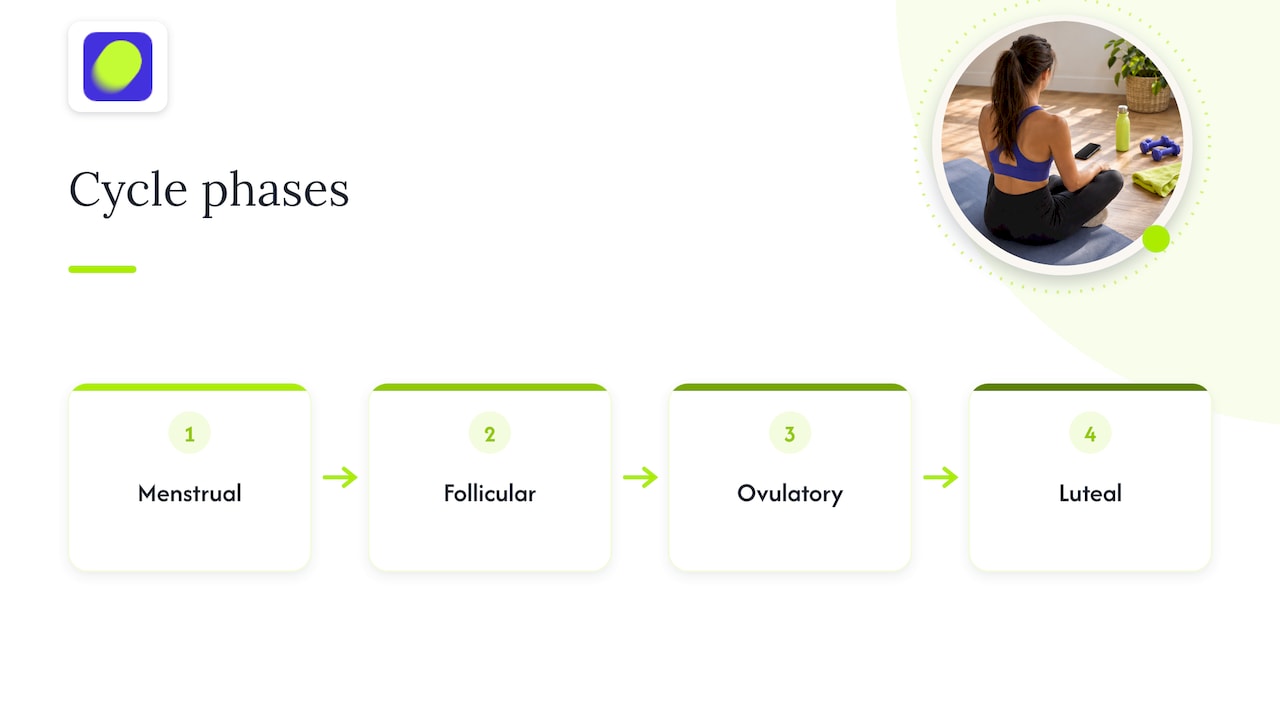
Your cycle has four broad phases: menstrual, follicular, ovulatory and luteal. Cycle syncing is the idea of matching your training to each one. Instead of doing the same workout every week, you lean into the way your body tends to feel.
The U.S. Office on Women’s Health explains that estrogen and progesterone are lowest at the start of your period. Energy may rise after your period ends and may dip again before the next one. That’s the pattern the whole trend is built on.
Here’s the catch: not everyone follows that pattern. And that’s okay. This is a tool for getting to know yourself, not a test you can fail.
So does it work? Honestly, the evidence doesn’t support prescribing the same phase-based plan for everyone.
The good news? You don’t need a perfect hormonal calendar to train well. The same Frontiers authors point out that symptoms can matter even when phase effects on performance are small. So paying attention to how you feel is a solid strategy.
These suggestions come from common guides such as Cleveland Clinic’s cycle-syncing overview. Treat them as options, not rules.
If your period is rough, movement can still help. ACOG says aerobic exercise like walking, jogging, biking or swimming can make menstrual pain feel better. For more ideas, this guide to exercise with period cramps shows how to scale effort to how you feel instead of following one routine all month.
With only two or three sessions a week, you don’t need four different programs. Keep one simple structure and change the intensity. This is our suggested approach, not a clinical protocol.
Then use a simple dial:
This is where an app helps. In Onemor, workouts led by our coaches come as guided sessions with sets, reps and rest timers, so you don’t have to plan anything. You just pick the version that fits your day. If you’re still finding a rhythm, our guide to finding your best time to go to the gym can help too.
Both the Office on Women’s Health and Cleveland Clinic suggest tracking your cycle dates, energy and workout responses for a few months. Here’s an easy way:
You may find your best lifting days cluster in one stretch of the month. Or you may find no pattern at all, which is useful to know. The Frontiers review also suggests building training around fatigue, sleep, stress, motivation and enjoyment, not only the calendar.
Irregular periods? Harvard researchers note that hormone patterns may not be predictable, which makes calendar-based phase plans especially unreliable. Energy-based tracking works better for you.
Some discomfort is normal. Some isn’t. MedlinePlus advises getting medical advice if:
For PMS, MedlinePlus says regular exercise through the month can reduce severity. It also says to contact a clinician if symptoms interfere with daily life. If your periods are painful, ACOG recommends talking with your ob-gyn.
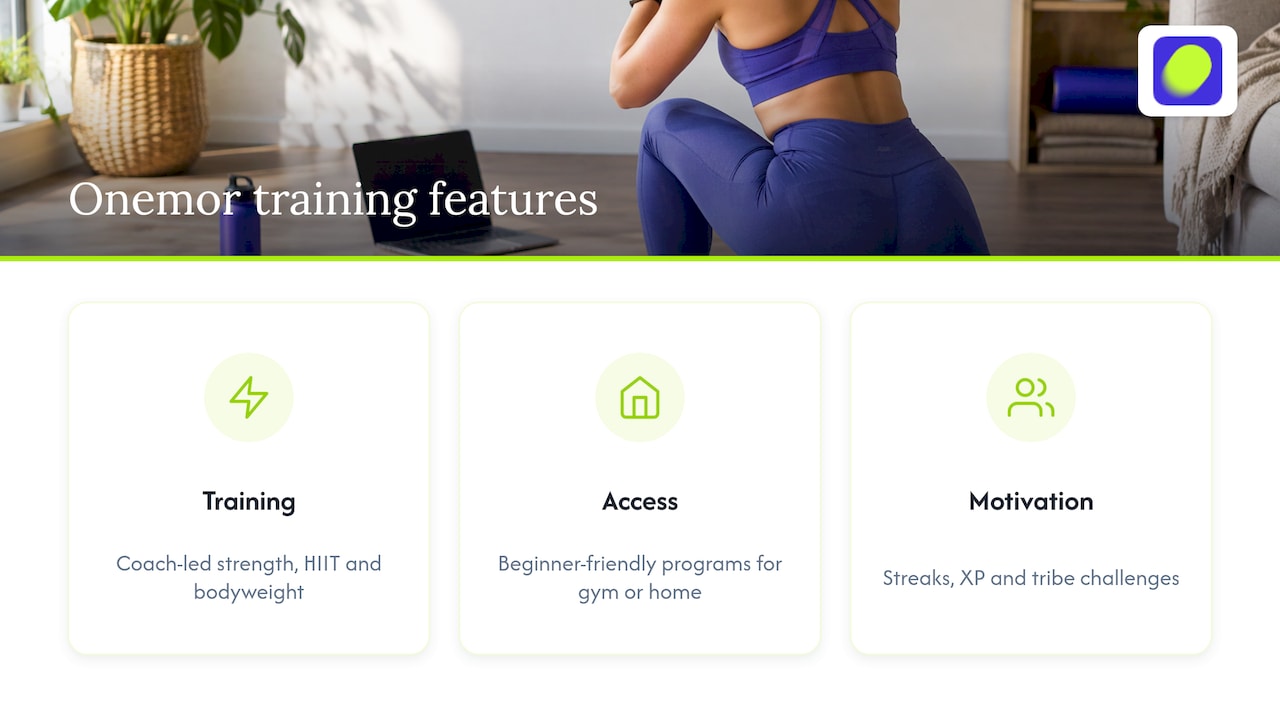
The real win in any cycle plan is showing up, week after week. Onemor is built for that. You get coach-led strength, HIIT, bodyweight and beginner-friendly programs for the gym or home. Streaks, XP and tribe challenges with friends help you keep going on the days you’d rather skip.
Ready to try it? Start with the free plan or see what Pro includes. If you’re comparing options, our roundup of the best workout apps for women is a good next step.
There isn’t good evidence to prescribe workouts by phase for everyone. Reviews find only trivial average differences in performance. Many people still find that tracking energy and symptoms helps them plan better weeks.
There’s no studied timeline. Tracking for a few months, about two to three cycles, is the usual advice for spotting your own patterns. Your training results will mostly come from consistency.
Irregular cycles may not follow predictable hormone patterns, so calendar phases can mislead. Base your workouts on daily energy instead. If you use hormonal birth control and have questions about exercise, ask your clinician.
Onemor gives you structured, coach-led sessions you can scale up or down based on how you feel that day. Pair it with a simple energy log to find your own rhythm.