Yes, micro workouts work, but the payoff depends on what you’re chasing. Short bouts of movement reliably cut sedentary time and build habits that stick. Real fitness gains, though, need enough intensity or enough of them stacked across the week. Use easy movement breaks to fight sitting, then layer in one to three harder “exercise snacks” on training days to actually move your fitness needle.
TL;DR:
- Micro workouts are effective for building habits and reducing sedentary time, especially through frequent movement breaks and occasional exercise snacks.
- High-intensity movement snacks, like stair sprints or quick circuit efforts, can improve cardiorespiratory fitness if done regularly and with sufficient effort.
- Every session of moderate or vigorous activity counts toward weekly goals, with vigorous efforts converting to double the moderate effort minutes.
- To see measurable fitness gains, incorporating one to three higher-intensity sessions per week is recommended, alongside daily movement breaks.
- Using a structured app like Onemor can simplify habit formation through short, coach-led sessions and integrated tracking.
Micro workouts split into two camps, and knowing the difference changes how you use them.
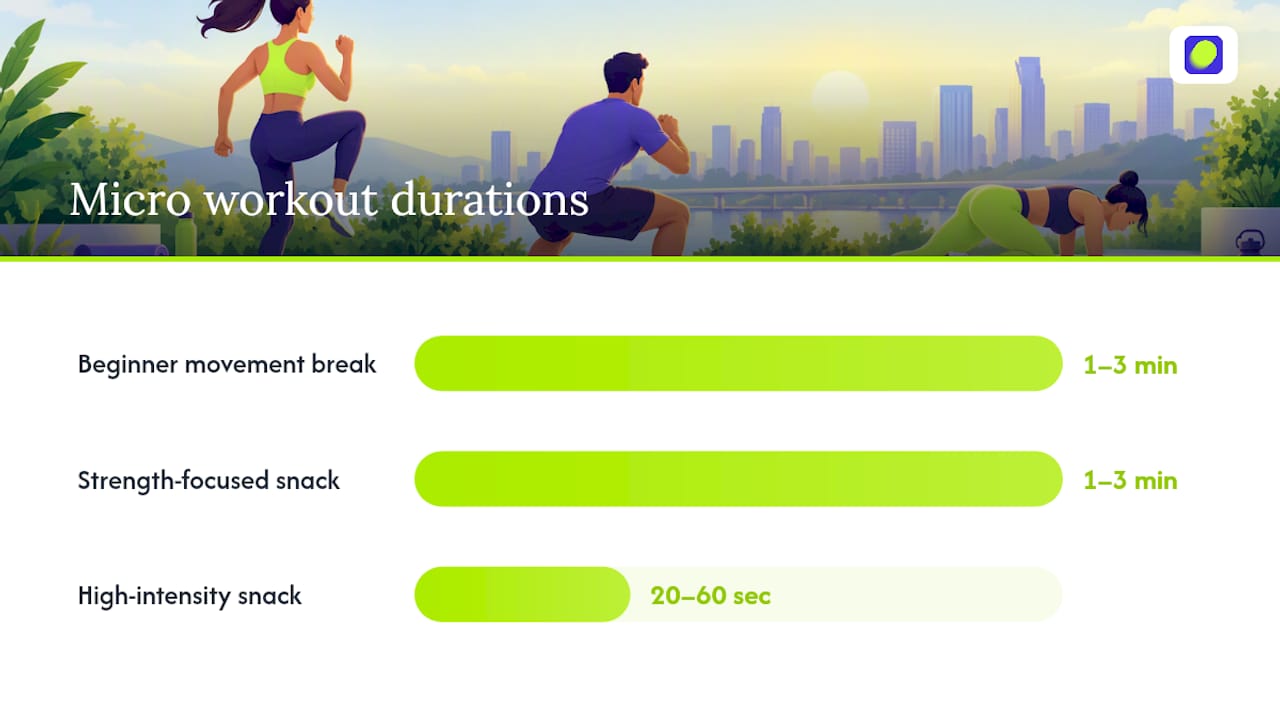
Movement breaks are low-intensity resets, usually one to five minutes: a walk to the mailbox, a stretch between meetings, a few bodyweight squats while your coffee brews. Exercise snacks are shorter but harder, typically 20 seconds to 5 minutes of real effort, like stair sprints or a fast set of pushups.
What matters more than the clock is intensity and how the minutes add up over your week. A five-minute stroll and a five-minute stair sprint are both “short,” but they land in completely different training zones.
Common building blocks for either type include:
The evidence here is more encouraging than most people expect, and it comes with real limits worth knowing upfront.
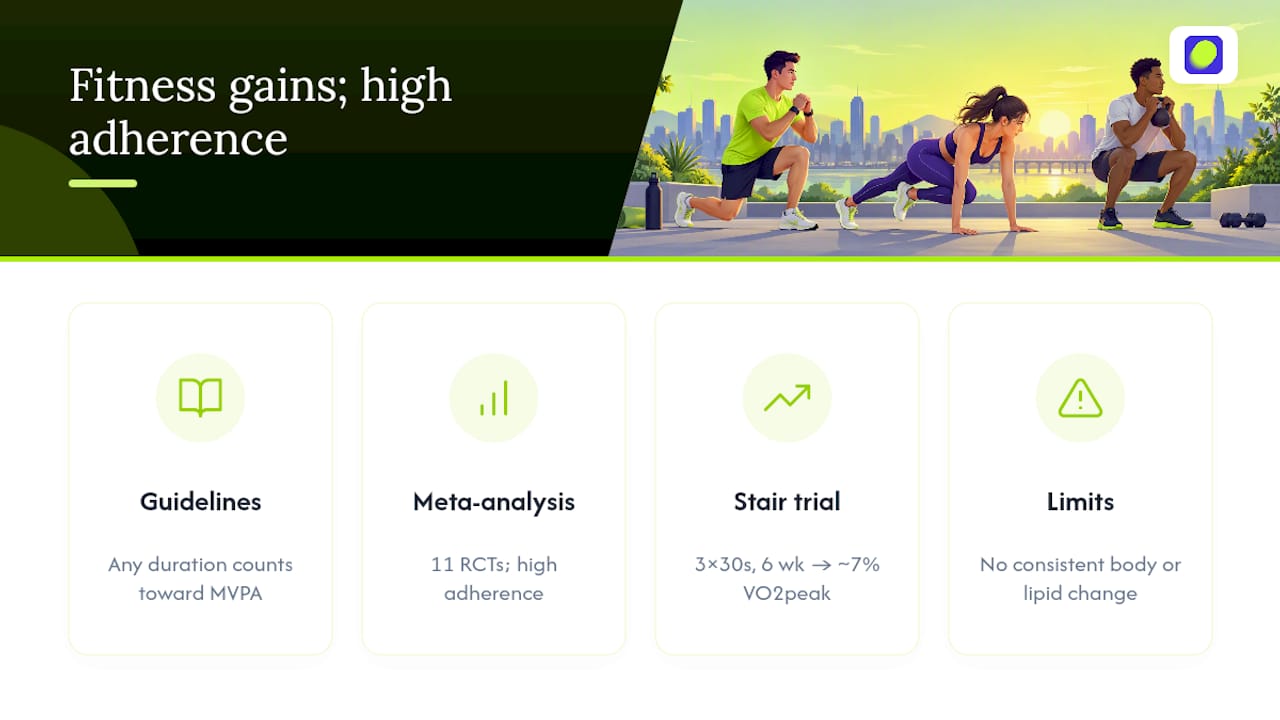
The Physical Activity Guidelines from HHS dropped the old rule that activity only “counted” in bouts of 10 minutes or more. Now, any duration of moderate or vigorous movement adds toward your weekly target of moderate-to-vigorous physical activity as recommended.
The adherence number that matters: A 2026 systematic review and meta-analysis of 11 randomized trials found exercise snacks improved cardiorespiratory fitness, and reported high compliance and adherence. Body composition and blood lipids, though, didn’t budge consistently.
A 2024 randomized trial backs up the intensity piece directly. Inactive young adults who did three 30-second all-out stair-climbing bouts, three times a week for six weeks, raised their VO2peak by roughly 7%. Their maximal fat oxidation didn’t improve, which tells you these snacks are a fitness lever, not a fat-burning shortcut.
Put together: feasibility and habit-building are strong wins. Measurable fitness change still needs either real intensity or real volume behind it.
You don’t need a plan with twelve variables. You need three templates you can grab depending on your energy and your clock.
No stairs handy? Loaded tote bags or filled water bottles work fine as substitutes for rows and carries.
Pro Tip: Under time pressure, technique always beats speed.
If you want a structured warm-up before pushing into the high-intensity version, this 5 to 10 minute dynamic warm-up gives your joints a fair chance before you sprint stairs.
The templates only work if they attach to something you already do. Anchor movement breaks to fixed cues: after you make coffee, between calendar blocks, right when you park the car.
Two simple weekly structures cover most goals:
Track it simply. A short note in your phone, a reminder app, or streak-based tracking in a fitness app all work. Habit-stacking, tying the snack to something you already do daily, beats any elaborate schedule you’ll abandon by Thursday.
Short doesn’t mean careless. A few checks keep micro workouts productive instead of injury-prone.
Pro Tip: *Progress your intensity, not your duration, first.
The accounting is simpler than most people assume. HHS guidance confirms every bout of moderate-to-vigorous movement counts toward your weekly total, no minimum length required. The CDC’s activity guidance adds the conversion rule: one minute of vigorous effort counts roughly like two minutes of moderate effort.
Here’s the math in practice:
Muscle-strengthening work doesn’t fold into that cardio total. You still need two separate strength sessions weekly, snack-sized or otherwise, to cover the full guideline.
The app is built around short, structured sessions with coach-led workouts including built-in sets, reps, and rest timers, so short workout snacks or longer strength blocks stay on track without planning needed.
Users can choose coach-led snacks between activities, participate in group challenges to maintain motivation with friends, or add guided strength micro-sessions weekly to cover muscle-strengthening goals. Habit-tracking features encourage consistency in an engaging way.
Most fitness apps assume you have an hour and a plan. Onemor assumes you have three minutes and a phone. The app’s free plan gives you coach-led sessions built around timers, sets, and reps, so a stair sprint or a strength snack between calls takes zero setup on your part.
Streaks and tribe challenges keep the habit part honest, since showing up for two minutes with friends watching beats showing up alone for an hour you keep skipping. If you want a routine matched to your schedule and goals rather than guessing which template fits, find your program and let a coach handle the planning while you handle the showing up.
Very few routine activities hit 500 calories in 30 minutes for an average adult. CDC estimates show running at 5 mph or fast cycling burns closer to 295 calories in 30 minutes for a 154-pound person, so 500 usually requires sustained vigorous effort or a heavier body weight.
Several short bouts of movement, like stair climbs, squats, and brisk walking bursts, can match a 20-minute walk in total moderate-equivalent minutes if the intensity and frequency add up. The HHS guidelines confirm that all such bouts count toward your weekly total regardless of length.
A focused 10-minute session at real intensity can improve cardiorespiratory fitness, especially when repeated several times weekly, according to a 2026 meta-analysis of exercise snack trials. It won’t replace all the benefits of longer training, but it beats doing nothing and builds a habit you can expand later.
Yes. Spreading movement breaks across your day cuts sedentary time and, per Mayo Clinic reporting on activity snacks, can sharpen focus after each break. Pairing that with one or two higher-intensity snacks daily covers both the habit side and the fitness side.
Yes. Onemor’s coach-led sessions include built-in timers and rep guidance sized for short sessions, and streaks paired with tribe challenges keep the daily habit going. Current plan details are available on the Onemor site.