Make workouts fun by choosing movement formats you genuinely like, adding a social or gamified layer, and matching intensity to your personal preference. Enjoyment isn’t a bonus feature. Research shows it predicts whether you’ll stick with exercise months later, and even light gamification has been shown to increase daily steps by roughly 1,600 in controlled trials. Onemor was built around exactly this idea: structured, coach-led sessions with streaks and tribe challenges baked in.
You don’t need a personality transplant to enjoy exercise. You need the right combination of tactics, and most people are only using one or two of these when eight are available.
None of these tactics requires more willpower. They require better design. Music reduces the feeling of effort without changing the actual work. Gamification gives your brain a reason to return tomorrow. Social formats change who you’re doing this for. Intensity matching means you’re not white-knuckling through a pace someone else picked for you. Novelty keeps your attention from going numb. Micro-workouts remove the excuse that you don’t have time. And a closing ritual gives your nervous system a clean, positive note to end on, which matters more than most people realize when it comes to building a habit that lasts past week two.
Start with two of these, not all eight. Trying to overhaul your entire routine at once is how good intentions die by Thursday.
Gamification isn’t a gimmick tacked onto fitness apps to look modern. A 2026 randomized trial found that autonomy-supportive gamified interventions increased both physical activity and intrinsic motivation in university students compared with a non-gamified digital program. When the game elements support your sense of choice instead of pressuring you, they work.
Gamification, right-sized, moves the needle. Trials on gamified digital interventions have recorded increases of roughly 1,600 steps a day in some studies, which is a meaningful jump for something as simple as a streak counter or a point system.
But more features don’t mean more motivation. A 2025 study modeling gamification design found an S-shaped relationship: moderate feature richness helps engagement, while piling on too many mechanics causes overload and hurts retention. Past a certain point, badges, leaderboards, and streak notifications start competing with each other for your attention instead of reinforcing the same goal.
A few practical rules keep gamification useful instead of exhausting:
Pro Tip: Use progressive disclosure. Unlock advanced features like leaderboards or tribe rankings only after two or three weeks of consistent use, once the basics have already built the habit.
Working out “with people” isn’t automatically motivating. What actually predicts commitment is social capital, meaning the trust and reciprocity you build within a group, not simply showing up in the same room as other people. Research on group training programs found that social capital predicts stronger exercise intention and commitment more reliably than group presence alone. A crowded gym class where nobody talks to anyone does far less for you than a small group of five people checking in on each other weekly.
That distinction should shape how you pick a social format:
Online formats can preserve this connection just as well as in-person ones. The growth of online class formats shows that remote group training can scale social connection rather than dilute it, as long as the format is designed for genuine interaction rather than passive viewing.
Test any social format for two weeks before judging it. If you find yourself looking forward to check-ins rather than dreading them, that’s your retention signal. If you’re relieved when a session gets canceled, the format probably isn’t the right fit, even if the group itself is great.

How you frame exercise in your head changes whether you keep doing it. Interventions that emphasize the enjoyable, appealing side of movement, rather than the obligation to be healthy, raise attendance and predict long-term engagement. This is called a process mindset: focusing on how a workout feels right now instead of the distant outcome it’s supposed to produce.
Intensity matters just as much as mindset. Enjoyment predicts habit and exercise frequency more strongly when your training intensity matches your own preference and tolerance, a pattern researchers call intensity-trait agreement. Push a low-intensity-preference person into HIIT five days a week and enjoyment collapses, no matter how “effective” the program looks on paper.
Ask yourself three quick questions to figure out your own intensity preference:
If your answers point toward moderate and sustained, look for lower perceived-effort options: steady-state cardio, flow-based strength circuits, or longer intervals with shorter rest. If you thrive on short, hard bursts, keep the intervals but shrink the rest periods rather than adding more total volume. The goal isn’t to train harder. It’s to train in the zone where enjoyment and effort actually coexist for you specifically.
Small environmental choices change how hard a workout feels, often more than the workout itself changes.
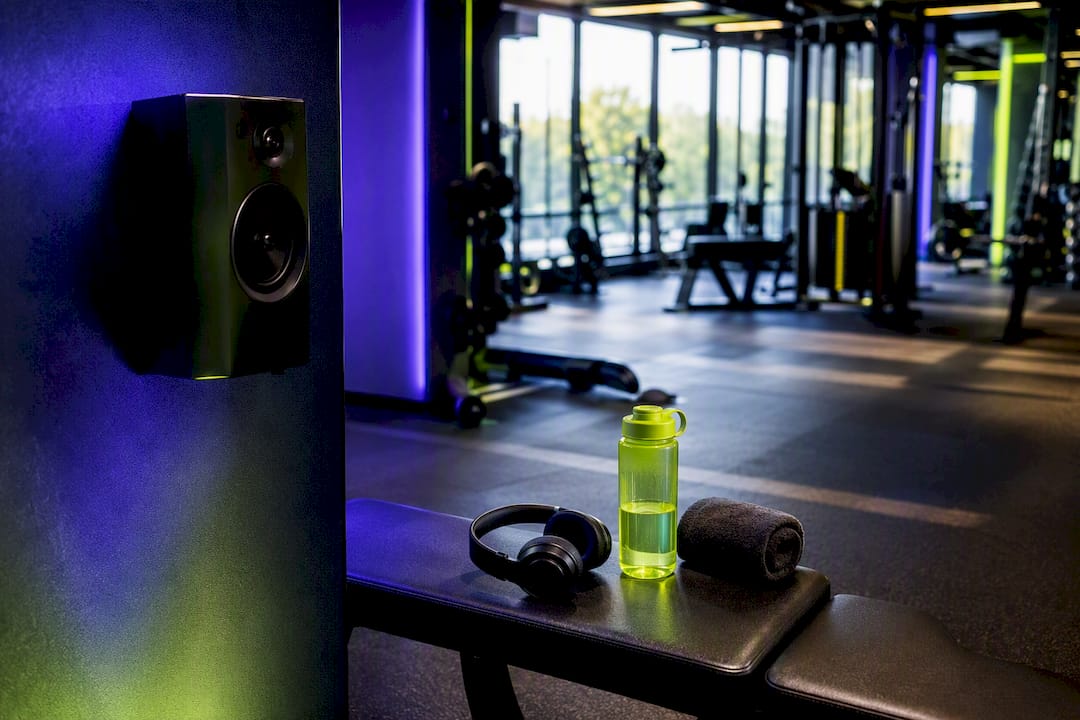
Song selection depends on the workout type. Fast tempo tracks in the 120 to 140 beats per minute range suit intervals and strength sets, syncing effort bursts to rhythm. Slower, layered music works better for steady-state cardio or mobility work, where you want your mind to settle rather than spike.
Podcasts and audiobooks fit lower-intensity sessions best. Walking, incline treadmill work, or easy cycling gives your attention enough bandwidth to actually follow a story, which is part of why these formats feel like less of a “workout” even though the calorie burn is real.
Environment changes the emotional texture of a session. Moving a run outdoors, rearranging a home workout space so it doesn’t double as a laundry pile, or adjusting lighting to something warmer than fluorescent overhead can shift a session from tolerable to genuinely pleasant.
A short home setup checklist worth running through once:
Short sessions work because they lower the mental barrier to starting, and starting is most of the battle. A five-minute session that leaves you feeling good does more for long-term habit than a 45-minute session you dread and eventually skip, since positive affect right after exercise is one of the strongest predictors of doing it again.
Concrete examples that fit almost any schedule:
These add up. The Physical Activity Guidelines for Americans count activity cumulatively, meaning four five-minute sessions genuinely stack toward the same weekly target as one 20-minute block.
A quick tracking checklist to keep this honest:
Treat this less like a program and more like a personal experiment. You’re not trying to find the “correct” way to work out. You’re collecting data on what you specifically enjoy.
Decision rules to apply at the end:
Everything in this playbook needs some kind of structure to actually run, and that’s the gap Onemor was built to close.
Onemor suits Gen-Z and young adults who want structured, short sessions without spending an hour planning their own routine. During your first week, pay attention to which tribe challenge or coach-led format you look forward to repeating. That’s your signal for what to build the rest of your month around.
Most advice on enjoying exercise treats fun as a mood, something you either feel or don’t on a given day. The research says otherwise. Enjoyment is closer to a design problem: the right music, the right group, the right intensity, applied consistently, and the feeling follows. Don’t wait to “get motivated” before trying any of this. Pick one tactic from this article, test it for a single week, and pay attention to whether you actually want to repeat it. That’s the only signal that matters.
— Alb
Onemor gives you a faster starting point than building your own experiment from scratch. Instead of stitching together a playlist app, a separate tracker, and a group chat to test social accountability, you get coach-led sessions, streaks, XP, and tribe challenges already built into one place. It suits exactly the reader this article is for: someone who wants structure and results without spending hours designing their own routine.
If the social angle from this article resonated, explore Onemor’s tribe challenges to see how the small-group format works in practice. If you’d rather start with a guided session and build from there, download Onemor and run your own one-week test this week. Pay attention to which session you look forward to repeating. That’s the one worth building your routine around.