The best starter format is a consistency streak or a small-team challenge of a few people. It works because progress is visible every single day, the rules are simple enough to explain in one sentence, and small teams build the kind of accountability that keeps people showing up even when motivation dips. Below you’ll find ready-to-run formats, scoring shortcuts, and communication scripts you can copy today.
Picking the right format matters more than picking the “best” one. A challenge that fits your group’s size, fitness range, and schedule will always beat a flashier idea that nobody finishes. Here are ten formats worth trying, each with a quick setup note so you can launch without overthinking it.
Pro Tip: Never launch a challenge without deciding your scoring method first. Groups that pick the format before the math tend to discover, halfway through, that their scoring system accidentally punishes the people who need encouragement most.
Most challenges don’t fail because the idea was bad. They fail because the scoring system quietly discouraged the people who needed encouragement most. Fixing that starts with three decisions made before day one.
Pro Tip: Write your grace-day policy into the very first message you send. If people only hear about it after they’ve already missed a day, it reads as damage control instead of a built-in feature.
Group formats don’t just feel more fun. They measurably outperform solo workouts. A randomized trial testing social network comparisons found that social comparison increased attendance substantially after adjustment, with the strongest results coming from conditions that combined team support with visible comparison, not comparison alone.
Separate field research backs this up from another angle: adding a social requirement to an exercise program increases how often people show up, and socially connected exercise drives stronger long-term engagement than programs people run solo.
There’s a design nuance worth knowing here. What actually drives adherence is usually task cohesion, meaning a shared, measurable goal, rather than social cohesion, or simply liking your teammates. That has real implications for how you build a challenge:
Here’s the skeleton for a challenge you can launch without building anything from scratch.
Launch checklist:
Scoring sheet, in plain terms:
Your communications calendar should run kickoff on day one, a check-in on day three, a midpoint activation around day 15 to 18 (this is exactly when engagement typically dips, so a pre-planned midpoint push matters more than people expect), and a finale message with results and a next-challenge teaser.
Group energy is a double-edged sword. It gets people moving harder than they would alone, which is exactly why injuries tend to spike during competitive fitness challenges if you don’t build in guardrails.
Start every challenge with a clear disclaimer that participants should scale movements to their own ability, not to whoever’s ahead on the leaderboard. Competitive step or mileage challenges should cap daily increases rather than reward reckless jumps. Skill-progression challenges (pull-ups, running distance, load increases) need built-in regressions listed alongside the milestone itself, so nobody feels forced to attempt the full version before they’re ready.
Warm-ups and mobility work deserve their own line in the challenge rules, not just a mention in passing. If your challenge involves any kind of load or intensity progression, write a simple rest rule into the scoring: multiple missed rest days in a row should trigger a friendly check-in message, not a points penalty. Groups running relay or event-based challenges should schedule at least one full practice run before the actual event, ideally with someone watching form, not just times.
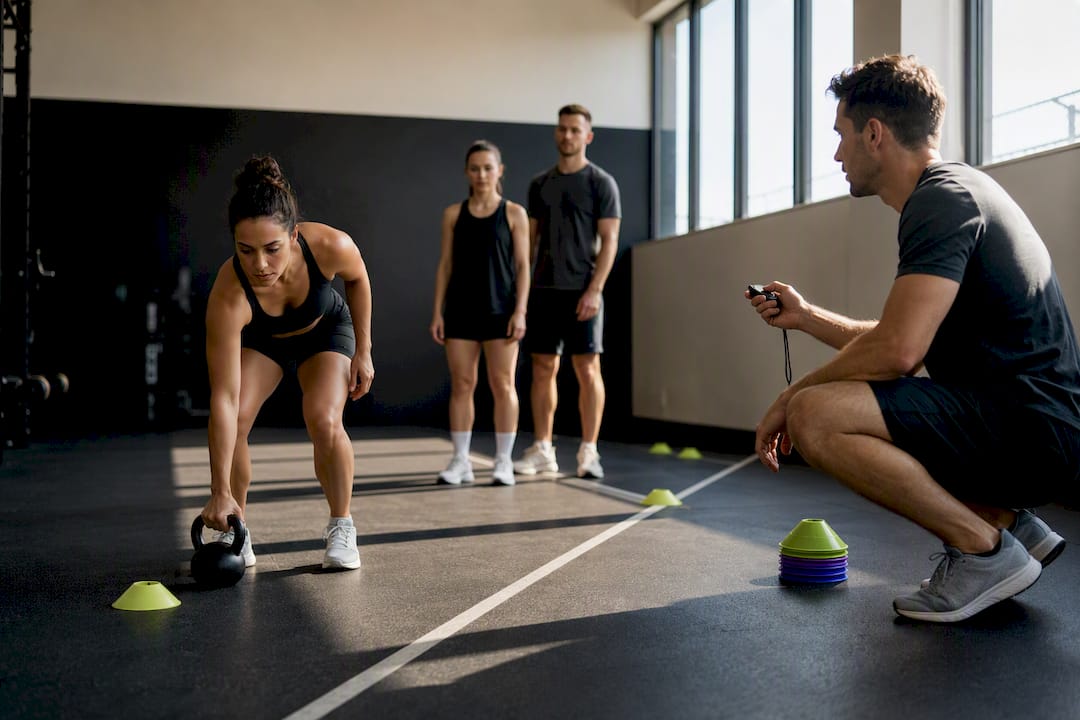
The goal is a challenge that pushes people past their comfort zone without pushing anyone into overtraining or injury. A little friction in your rules now saves you a much bigger problem in week three.
Motivation dips are normal, and predictable, which means you can plan around them instead of reacting to them. Most organizers under-prepare for the middle of a challenge, assuming the excitement from kickoff will carry through to the finish. It won’t, and that’s fine, because you can build the fix directly into your challenge design.
Public recognition works better than most organizers expect, even for people who claim they don’t want attention. A quick shout-out for showing up five days straight, not just for winning, tells quieter participants their consistency is noticed. Rotate who gets spotlighted so it’s not always your fastest or strongest member getting the mic.
Give people a reason to check in beyond the workout itself. A quick poll (“What’s your win this week?”) or a photo thread turns a fitness challenge into a small community, and small communities are far stickier than leaderboards alone. Segmented reminders help here too: daily nudges for quieter members and a weekly digest for your most active participants keep everyone informed without spamming the people already showing up on their own.
Framing matters as much as tactics. “You’re behind” kills motivation. “You’ve got three days to hit this week’s floor goal” gives people something concrete to act on instead of something to feel bad about.
Rewards don’t need a big budget to work. What matters is that the structure rewards more than just first place, because a challenge that only celebrates the winner quietly tells everyone else their effort didn’t count.
Studios that run team-based challenges with layered incentives like these tend to see stronger enrollment. Industry write-ups have reported team formats driving notably higher enrollment compared to individual-only sign-ups, largely because the reward structure gives more people a real reason to opt in.
A challenge that’s too easy bores your strongest members. One that’s too hard scares off everyone else before they even start. The fix isn’t picking a single difficulty. It’s building tiers into the same challenge.
Start with a floor goal low enough that a true beginner can hit it in their first week without modification. Layer a middle tier for your average, semi-consistent gym-goer. Then add a ceiling goal for your most experienced members to chase, whether that’s extra reps, added weight, or a faster pace. This is the same floor-and-ceiling logic from your scoring system, just applied to difficulty instead of points.
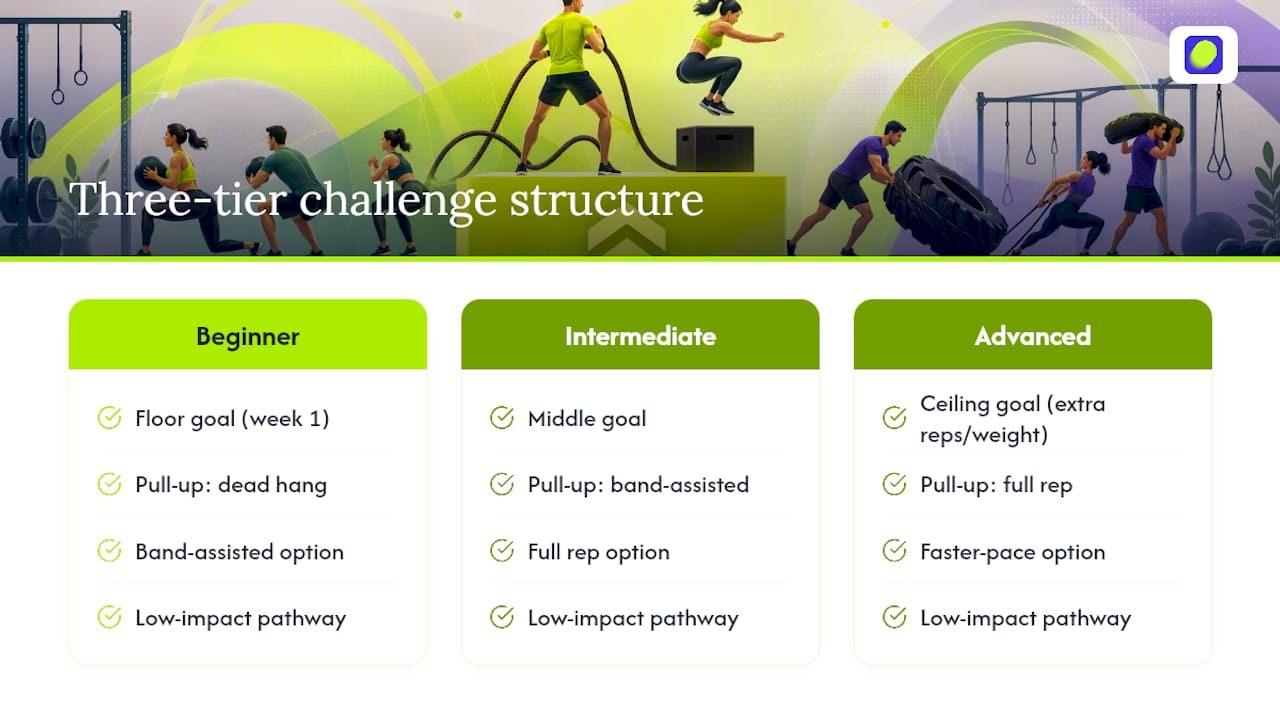
For skill-based challenges especially, list regressions right next to the main goal. A pull-up challenge should show the dead hang and the band-assisted version alongside the full rep, so nobody feels like they’re competing in a different league than everyone else. For inclusive group settings, low-impact and accessible formats deserve equal billing in your promotional messaging, not a footnote after the “real” workout is described. Guidance on building accessible, low-impact fitness formats is a useful reference if your group spans a wide range of ability levels or includes participants managing injuries.
The clearest sign your difficulty tiers are working: people at every level are still checking in by week three, not just your top performers.
Manual tracking works fine for a five-day sprint with eight friends in one group chat. It falls apart fast once you’re running a 6-week challenge with fifty people, six teams, and a leaderboard nobody wants to update by hand every night. That’s the exact point where an app stops being a nice-to-have and starts saving you hours a week, since automated reminders and live leaderboards remove the admin that quietly kills most organizers’ enthusiasm halfway through a challenge.
Some fitness apps support group energy with tribe-based challenges that let you set up team or individual formats with streaks and XP tracking built in, so participants see their progress update automatically instead of waiting for you to post a weekly spreadsheet. Guided workouts with sets, reps, and rest timers clarify what each day of the challenge involves, and coach-led sessions provide structured guidance rather than a loose list of suggested exercises.
If you’re organizing for a group of friends, a gym community, or a workplace team and you’re tired of chasing screenshots for proof of workouts, check out the Onemor tribe page to see how challenges run inside the app. And if your group wants guided programming behind the challenge itself rather than building workouts from scratch, find your program and get your first challenge running this week.