Let's get something straight right away: the gym is not a requirement for getting fit. It never was. And if waiting for the perfect membership, the right equipment, or the ideal schedule has been keeping you from starting — this article is for you.
The fitness industry has been selling the idea that results only happen inside a building filled with machines. But the truth? Some of the most effective, body-changing workouts you can do require nothing more than your own bodyweight, a little bit of space, and a plan that actually makes sense for your life.
Here's what actually works — and why.
Most people who struggle to get fit aren't struggling because they don't have a barbell. They're struggling because they don't have a clear plan. They start Monday with zero structure, do random exercises they found on a YouTube rabbit hole, feel sore and confused by Wednesday, and quit by the weekend.
The gym doesn't fix that. A plan does.
Whether you're training at home, in a park, in your dorm room, or in a hotel room while traveling — a structured program built around your goals is the single most important factor in whether you see results or not. Everything else is secondary.
Let's be real about both sides of this.
Home workouts CAN help you build muscle, lose fat, increase endurance, improve flexibility, and build a consistent routine. Research consistently shows that bodyweight training, when programmed properly with progressive overload, produces comparable results to gym training for most people — especially beginners and intermediates.
What home workouts require more creativity around: very heavy compound lifts like barbell squats and deadlifts. If your goal is competitive powerlifting, you'll need a gym eventually. But for the vast majority of people — who just want to look good, feel strong, and stay healthy — home training is more than enough.
Here are the foundational movement patterns that work regardless of where you train:
The key is progression. The reason people plateau isn't because they ran out of exercises — it's because they stopped challenging their body. Add reps, slow down the tempo, reduce rest time, or level up the variation. Always be progressing.
Three okay workouts a week, every week for 3 months, will outperform ten brutal sessions followed by a two-week break every single time. The science is clear on this — consistency is the variable that matters most.
And here's the uncomfortable truth: you're more likely to stay consistent with something you can do at home, on your schedule, without commuting, paying for parking, or waiting for machines. The friction of going to a gym is real — and removing that friction matters more than most people realize.
This is exactly why building a home workout habit, especially in the beginning, can fast-track your results in ways a gym membership often can't.
Here's a simple framework that works for most people starting out:
You don't have to follow this exactly. The point is to train each muscle group roughly twice a week and include recovery. Structure matters. Random doesn't work.
If you want to invest a little, a few affordable items can add a lot of variety to home training:
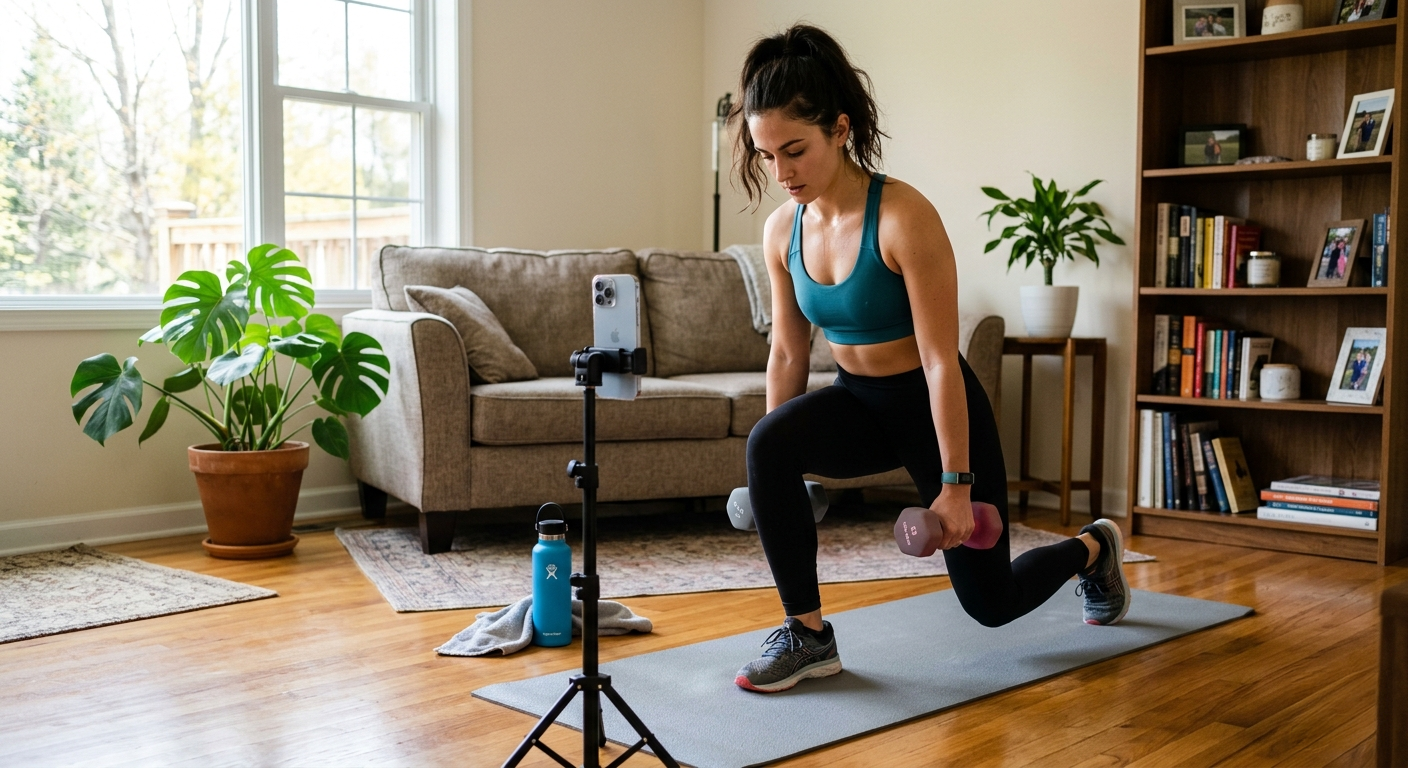
But again — none of this is mandatory to start. Start with what you have. Upgrade as you go.
Stop asking "is this enough?" and start asking "am I progressing?" That's the only question that matters. If you're doing more reps than last week, moving faster, recovering better, feeling stronger — you're winning. The location is irrelevant.
The best workout is the one you actually do, consistently, over time. That's it. No loophole, no hack, no shortcut.
And when you have a real program guiding you — one that tells you exactly what to do each day, tracks your progress, and connects you with a community keeping you accountable — the results follow. Not because you found a magic formula. Because you showed up.
📥 Ready to level up? Download the Onemor app free today — available on iOS. Find your program, join your tribe, and start training with real coaches straight from your home.
💪 Stop improvising. Start progressing. Download Onemor free and get a training plan that works — no gym required. Find your program at onemor.com.