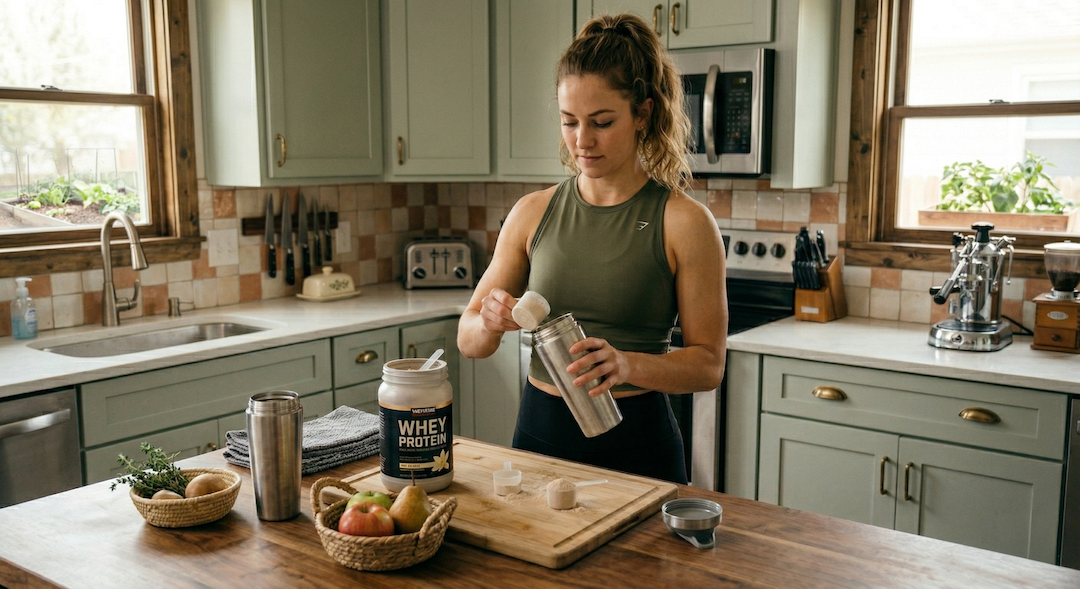
Nutrition advice has a serious overcomplicated problem. Every time you open a fitness account, someone is pushing a new protocol β fasted training, carb cycling, intermittent fasting windows, eating only specific foods at specific times, avoiding entire food groups. It's exhausting, it's confusing, and honestly? Most of it isn't necessary.
Here's what actually matters when it comes to fueling your workouts: eating in a way that gives you energy, supports recovery, and doesn't make you miserable. That's it. Let's break it down without the noise.
The most important nutrition principle for working out isn't what supplement you're taking or what superfood you're eating. It's whether you're fueling your body appropriately before and after training.
Before a workout, your body needs available energy β primarily from carbohydrates. After a workout, your body needs protein to repair the muscle tissue you just stressed and carbohydrates to replenish glycogen stores.
That's the core loop. Everything else is fine-tuning.
π₯ Ready to level up? Download the Onemor app free today β available on iOS. Find your program, join your tribe, and start training with real coaches at onemor.com.
The goal of a pre-workout meal is simple: give your body fuel without making you feel heavy, sluggish, or nauseous during training. This means a mix of carbohydrates (for energy) and a moderate amount of protein (for muscle protection), with low fat and low fiber β both of which slow digestion and can cause discomfort when you're moving hard.
Timing matters too. Eat a larger meal 2-3 hours before training. If you're closer to your workout β 30-60 minutes out β go for something smaller and easily digestible.
Great pre-workout options:
Banana with peanut butter (30-60 min before)
Oats with berries and a scoop of protein powder (2 hrs before)
Rice cakes with honey and a boiled egg (45 min before)
Greek yogurt with granola and fruit (1.5-2 hrs before)
Toast with eggs (1.5-2 hrs before)
Cardio circuits (burpees, mountain climbers, high knees) β burns fat and builds endurance
Notice what's not on that list: complicated smoothie bowls with 15 ingredients, expensive pre-workout supplements, or any kind of "detox" drink. Real food works.
Post-workout, your muscles are like a sponge β they're primed to absorb nutrients and begin the repair process. The window isn't as rigid as the old "30-minute anabolic window" myth suggested, but eating within 1-2 hours of training is genuinely useful.
The priority here is protein. Your muscles broke down during training. Protein provides the amino acids needed to rebuild them stronger.
Great post-workout options:
Chicken or turkey with rice and vegetables
Protein shake with a banana and oat milk
Cottage cheese with fruit and granola
Tuna or salmon with sweet potato
Eggs with avocado toast
Notice a pattern? Protein + carbs. Every time. Simple.
π Pair great nutrition with a great training program. Onemor gives you personalized workouts built around your goals. Start free at onemor.com β and fuel your progress the right way.
Protein. By a significant margin.
Most people β especially those new to training β dramatically undereat protein. The general recommendation for active individuals is 0.7-1g per pound of bodyweight per day. For a 150-pound person, that's 105-150g of protein daily. Most people eating a standard diet get maybe half that.
Low protein intake means slower muscle growth, slower recovery, more soreness, and less favorable body composition changes over time. It also means you'll feel hungrier throughout the day, since protein is the most satiating macronutrient.
You don't need to track every gram obsessively. But making a conscious effort to include a quality protein source in every meal is one of the highest-leverage changes you can make.
This one gets skipped over constantly but it matters more than most people realize. Even mild dehydration β around 2% of body weight β measurably reduces exercise performance, impairs focus, increases perceived effort, and slows recovery.
A simple rule: drink water consistently throughout the day, not just during your workout. By the time you feel thirsty, you're already mildly dehydrated. Aim for roughly 2-3 liters daily as a baseline, more on training days or in hot weather.
And no β coffee, energy drinks, and soda don't count toward your hydration goal. Water and electrolyte drinks do.
Here's the liberating part: you don't need to eat perfectly to see results. You don't need to meal prep every Sunday, track every calorie, or avoid going out with friends.
The 80/20 principle applies here β if 80% of your meals are whole, nutritious foods that support your training, the other 20% of flexible eating has minimal impact on your long-term results.
What kills progress isn't a slice of pizza on Friday. It's months of chaotic eating with no protein, no structure, and no awareness. Build the foundation, be flexible within it, and stop stressing about perfection.
Eat real food. Prioritize protein at every meal. Have carbohydrates before and after your workouts. Stay hydrated. Don't overthink the rest.
Nutrition should support your training β not become another source of anxiety. The goal is to feel energized, recover well, and enjoy eating. All of that is possible without a 40-ingredient meal plan or a supplement stack.
Start simple. Stay consistent. Adjust as you go.
π² Download Onemor free on the App Store. Search "Onemor" or visit onemor.com to get started β your first 21 days of Pro are completely free, no credit card required.
π₯ Great nutrition + a great training plan = real results. Take the free Onemor quiz and get matched with a program built for your goals. Start today at onemor.com β your first 21 days are on us.
Let's have the conversation that nobody in the fitness space wants to have because it's uncomfortable: there's a difference between resting and quitting. And most of us β at some point β have called quitting by a softer name to feel better about it.
"I'm just taking a break." "My body needs recovery." "I'll get back to it next week." These statements can be completely true. Or they can be the story we tell ourselves when we've quietly given up but aren't ready to admit it yet.
This isn't about being hard on yourself. It's about being honest with yourself β because the path back only starts when you're clear about where you actually are.
Legitimate rest is intentional. It's planned recovery β a rest day built into your program, a deload week after a hard training block, an extra night of sleep because your body is sending clear signals. Legitimate rest makes you better.
Quitting dressed as rest is different. It starts with one skipped session that turns into a few days, that turns into a week, that turns into "I'll restart properly on Monday," that turns into three weeks off. It has no intention. It has no return plan. It just quietly expands.
The honest question isn't "am I resting?" It's "what do I actually plan to do next, and when?"
π² Download Onemor free on the App Store. Search "Onemor" or visit onemor.com to get started β your first 7 days of Pro are completely free, no credit card required.
Understanding the psychology here is genuinely useful. People don't usually quit because they're lazy or don't care. They quit because:
The results didn't come as fast as expected
The routine felt boring and repetitive
Life got complicated and the habit lost its slot in the schedule
They were following a program that didn't fit their life
They had no accountability and nobody noticed when they stopped
Motivation dipped and there was no system in place to carry them through
None of these reasons are character flaws. They're structural problems. And structural problems have structural solutions.
Here's the thing about motivation: it's real, it matters, but it is absolutely not reliable. Waiting to feel motivated before you train is the same as waiting to feel hungry before you buy groceries. Sometimes the feeling doesn't come until you've already started.
β
Research on habit formation consistently shows that action precedes motivation, not the other way around. You don't get motivated and then start β you start, and the motivation often follows. The first five minutes of almost any workout are the hardest. After that, something shifts.
β
The athletes you admire? They don't always feel like training either. The difference is they've built systems that don't require feeling ready. They just go.
π₯ Build a system that carries you through the low-motivation days. Onemor gives you a community, streak tracking, and coaches who keep you moving. Start free at onemor.com.
Be real with yourself for a moment. Ask these questions:
When I skip training, do I have a specific plan for when I'll return β or is it vague?
Is my body actually fatigued and signaling recovery, or am I just not in the mood?
Have I been "about to start again" for more than two weeks?
If a friend were watching my choices, would I call what I'm doing rest or avoidance?
There are no wrong answers here β just honest ones. And honest answers are the only ones that lead anywhere useful.
Here's the most important thing to understand: there's no fitness debt. You don't owe anyone a return to training by a certain date. The path back is always open, always available, and always starts from wherever you currently are β not from where you were before you stopped.
β
The people who make the most progress long-term aren't the ones who never stop. They're the ones who consistently restart β faster and faster each time, with less guilt and more grace. The muscle memory is still there. The discipline is still there. It comes back quicker than you think.
Lower the bar. Seriously. When you're coming back after a break, the worst thing you can do is try to pick up exactly where you left off or launch into a brutal restart. That's how you get sore, discouraged, and quit again within a week.
β
Start with something so easy it almost feels too easy. A 20-minute session. Three days a week. Something achievable enough to string together a few wins. Momentum is built on wins, not on suffering.
β
Then add accountability. Tell someone. Join something. Train with a friend, a coach, a community. The research on social accountability in exercise is overwhelming β people are significantly more consistent when they know someone else is paying attention.
Not "why did you stop?" Not "how long have you been off?" Just: what are you doing tomorrow?
β
If the answer is training β even something small, even just 20 minutes β then you're not quitting. You're resting. And tomorrow, you restart.
Be honest with yourself. Be kind to yourself. Then go.
β¬οΈ Download Onemor now and access personalized workout programs, real coaches, and a community that keeps you consistent. Free to download at onemor.com β start today.
πͺ The Onemor community is ready when you are. Coaches, accountability, and a plan that fits your life. Take the free quiz and come back stronger at onemor.com.
If the words "high protein diet" make you picture plain chicken breast, sad rice, and flavorless protein shakes β we need to talk. Because somewhere along the way, fitness culture convinced an entire generation that eating for results means eating joylessly. And that's just not true.
You can hit your protein goals and actually enjoy your food. In fact, you have to β because if your meals are boring, you're not going to stick to them. Consistency beats perfection, and you'll be way more consistent eating food you love.Here are real meal ideas that are high in protein, easy to make, and actually worth eating.
Before we get to the food, let's quickly ground this. Protein isn't just for bodybuilders. It's the building block for muscle repair and growth, the most satiating macronutrient (meaning it keeps you fuller longer), and a key player in metabolism and hormonal health.
If you're training regularly and not hitting your protein targets, your body is essentially trying to build a house without enough bricks. You'll see slower muscle development, longer recovery times, and more persistent soreness.
The general target: 0.7-1g per pound of bodyweight per day. For most active people, that's somewhere between 100-160g daily. Sounds like a lot β but spread across three meals and a snack, it's very doable. Especially when the food is actually good.
Mornings are your first opportunity to load up on protein and set the tone for the day. Skip the sugary cereal and try these instead:
Greek Yogurt Parfaitβ
Layer full-fat Greek yogurt (20g protein per cup) with granola, berries, and a drizzle of honey. Takes 3 minutes. Tastes like dessert. Hits 25-30g of protein easily.
Eggs Any Way You Like
Three whole eggs gives you 18g of protein before you've added anything else. Scramble with spinach and feta, make a quick omelette, or go poached over sourdough toast with hot sauce. Simple, cheap, and genuinely delicious.
Protein Smoothie Done Right
Blend: 1 scoop protein powder, 1 banana, 1 cup oat milk, 1 tbsp peanut butter, handful of ice. That's 30-35g of protein in a cup, and it tastes like a milkshake. No chalk, no weird aftertaste if you choose a quality powder.
Smash Burgers at Home
Ground beef patties smashed thin, a slice of good cheese, pickles, mustard, and a brioche bun. Each patty is 20-25g of protein. Make two. Pair with a side salad. This is not boring fitness food β this is just a burger that happens to fuel your gains.
β
Chicken Rice Bowl, But Make It Interesting
The classic chicken and rice doesn't have to be bland. Season your chicken with smoked paprika, garlic, and cumin. Add roasted peppers, black beans, avocado, and a chipotle sauce. That's a burrito bowl. It's 40g+ of protein and it goes hard.
β
Tuna Stuffed Avocado
Mix canned tuna with Greek yogurt (instead of mayo), lemon, and black pepper. Stuff it in halved avocados. Done in 5 minutes, 30g of protein, zero cooking required.
Salmon with Sweet Potato and Greens
Pan-sear a salmon fillet in garlic butter. Roast sweet potato wedges with olive oil and sea salt. Steam or sautΓ© some broccoli or asparagus. This meal looks like restaurant food, takes 25 minutes, and delivers 40-45g of protein.
β
Steak Stir Fry
Thin-sliced beef, peppers, onions, broccoli, and a soy-ginger-sesame sauce over rice. Ready in 15 minutes. High protein, high flavor, and it genuinely feels like a treat.
β
Turkey Meatballs with Pasta
Ground turkey meatballs baked in the oven, served with marinara and pasta of your choice. Pair with a side of cottage cheese as a hidden protein boost in the sauce. 40g+ protein, classic comfort food.
Cottage cheese with hot sauce and crackers (25g protein)
String cheese + hard boiled eggs + fruit
Edamame with sea salt (17g protein per cup)
Protein bar (choose one with 20g+ protein and minimal sugar)
Turkey roll-ups with cream cheese and cucumber
The goal with snacks is to bridge the gap between meals without crashing. Protein-forward snacks keep blood sugar stable, reduce cravings, and help you hit your daily protein target without needing enormous portions at main meals.
You don't have to prep every meal every Sunday. But having a few ready-to-go components in your fridge reduces the chance of defaulting to junk when you're tired and hungry.
Batch cook some rice or quinoa. Hard boil a dozen eggs. Grill 4-5 chicken thighs. Having these basics ready means you can assemble a solid high-protein meal in under 5 minutes, any time of day.
That's not a rigid meal plan. It's just preparation. And it's the difference between a week where you hit your targets and a week where you don't.
High protein eating doesn't require sacrificing flavor, spending hours in the kitchen, or eating the same four foods on rotation. It requires creativity, a bit of preparation, and the willingness to see nutrition as something enjoyable rather than punishing.
Eat food that tastes good. Hit your protein. Train consistently. Watch what happens.
π₯ Ready to level up? Download the Onemor app free today β available on iOS. Find your program, join your tribe, and start training with real coaches at onemor.com.
π½οΈ Ready to match great nutrition with a great training plan? Onemor pairs you with coaches and programs built for real results. Start your free 21-day trial today